



This Day in Legal History: Nix v. Hedden
On April 24, 1893, the U.S. Supreme Court received submissions in Nix v. Hedden, the famous case asking whether a tomato should be treated as a fruit or a vegetable. The question sounds like the setup to a joke, but the legal issue was practical and financial: under the Tariff Act of 1883, imported vegetables were taxed, while fruits were not.
That meant the classification of tomatoes had real consequences for importers bringing tomatoes into the United States. The plaintiffs argued that tomatoes are fruits in the botanical sense because they grow from the flower of the plant and contain seeds. The government argued that, whatever botanists might say, tomatoes were commonly bought, sold, cooked, and eaten as vegetables.
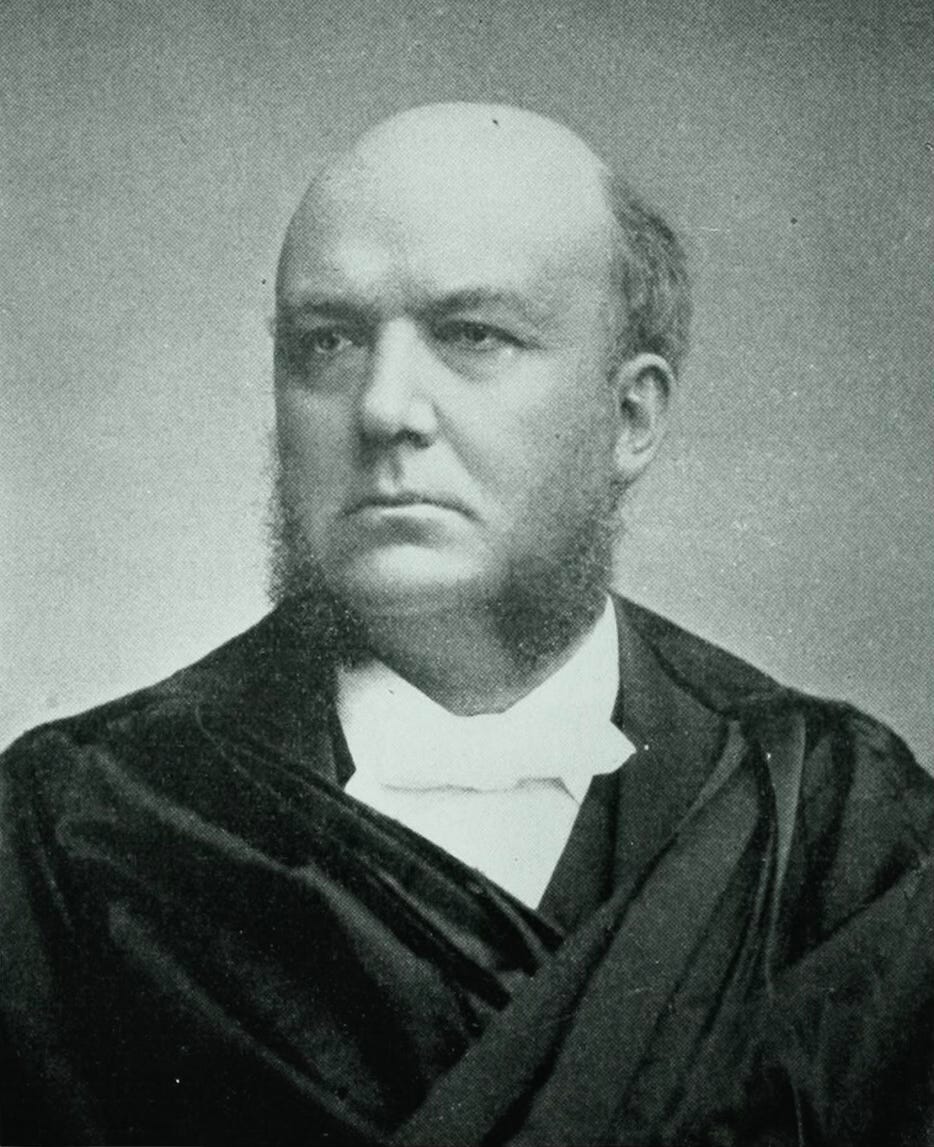
The Supreme Court sided with the government. In its decision, the Court held that the tariff law should be read according to the ordinary meaning of the words “fruit” and “vegetable,” not their technical scientific meanings. Justice Horace Gray explained that tomatoes are usually served with dinner, not dessert, and are understood in common speech as vegetables.
The case became a lasting example of how courts interpret statutes by looking at the way language is used in everyday life. It also shows that legal disputes often turn less on abstract definitions than on context, usage, and consequences. Nix v. Hedden remains memorable because it turns a simple grocery-store question into a lesson about statutory interpretation: the tomato may be a fruit to a botanist, but for tariff law in 1893, it was a vegetable.
Federal prosecutors in Manhattan have charged U.S. Army Sgt. Gannon Ken Van Dyke with allegedly using classified information to profit from prediction-market bets tied to a military raid involving former Venezuelan President Nicolás Maduro. Van Dyke, who was stationed at Fort Bragg in North Carolina, allegedly helped plan and carry out the operation that resulted in Maduro and his wife, Cilia Flores, being brought to New York in January.
Prosecutors say he began trading on Polymarket markets related to Maduro and Venezuela on Dec. 26, 2025, shortly before the Jan. 3, 2026 raid. According to the indictment, Van Dyke made more than $400,000 from those trades. The government alleges that, after making the money, he tried to hide the proceeds. He is charged with violating the Commodity Exchange Act, wire fraud, and making an unlawful monetary transaction. The Commodity Futures Trading Commission also brought a related enforcement action against him. Van Dyke was expected to appear first in federal court in North Carolina before later appearing in the Southern District of New York. Counsel information for him was not immediately available.
Soldier Aware Of Maduro Raid Bet On Polymarket, Feds Say - Law360
U.S. District Judge Esther Salas warned that proposed federal data privacy legislation could undermine state laws meant to protect judges and other public officials from having their personal information exposed online. Salas has pushed for stronger privacy protections since 2020, when a lawyer went to her New Jersey home and killed her 20-year-old son, Daniel Anderl. Congress later passed the Daniel Anderl Judicial Security and Privacy Act, which shields federal judges’ personal information online. Since then, more than a dozen states, including New Jersey, New York, and Maryland, have adopted similar protections for state judges, and some laws also cover law enforcement officers, prosecutors, and family members.
Salas raised her concerns at an American Bar Association conference in Boston as House lawmakers consider federal privacy bills that would create national standards and preempt state laws. The bills, called the GUARD Financial Data Act and the SECURE Data Act, would require covered companies to limit collection of consumer data and give people rights to access or delete their information. But unlike New Jersey’s Daniel’s Law, the federal proposals would not let individuals sue companies for privacy violations. Salas said replacing stronger state protections with weaker federal rules could put judges across the country at greater risk. House committee representatives either declined to comment or did not respond.
NJ judge whose son was killed warns against weakening state data privacy laws | Reuters
Spirit Aviation told a New York bankruptcy judge that it is in advanced talks with the federal government over a major financing package that could help keep its second Chapter 11 case on track. The airline’s lawyer, Marshall Huebner of Davis Polk, confirmed that negotiations are underway but did not verify reports about the possible size of the package or whether the government would receive an ownership stake. He said the proposed funding could do more than simply support the bankruptcy case and could position Spirit to compete strongly after restructuring. Spirit plans to seek court approval of the financing on April 30.
The financing discussions come after the war involving the U.S., Israel, and Iran caused jet fuel prices to rise sharply, disrupting Spirit’s existing reorganization plan. The airline had previously proposed canceling general unsecured claims and restructuring around support from secured noteholders, but it postponed seeking approval to send that plan to creditors. Judge Sean Lane approved a $533 million sale of about 20 aircraft to CSDS Aircraft and also granted Spirit a 90-day extension of its exclusive right to file a Chapter 11 plan. Spirit also disclosed that it missed an interest payment, triggering a default under its debtor-in-possession loan. The noteholder group funding much of that loan said it intends to enforce its rights and would oppose any relief that harms the lenders.
Spirit In ‘Advanced’ Talks With Gov’t For Ch. 11 Financing - Law360


