


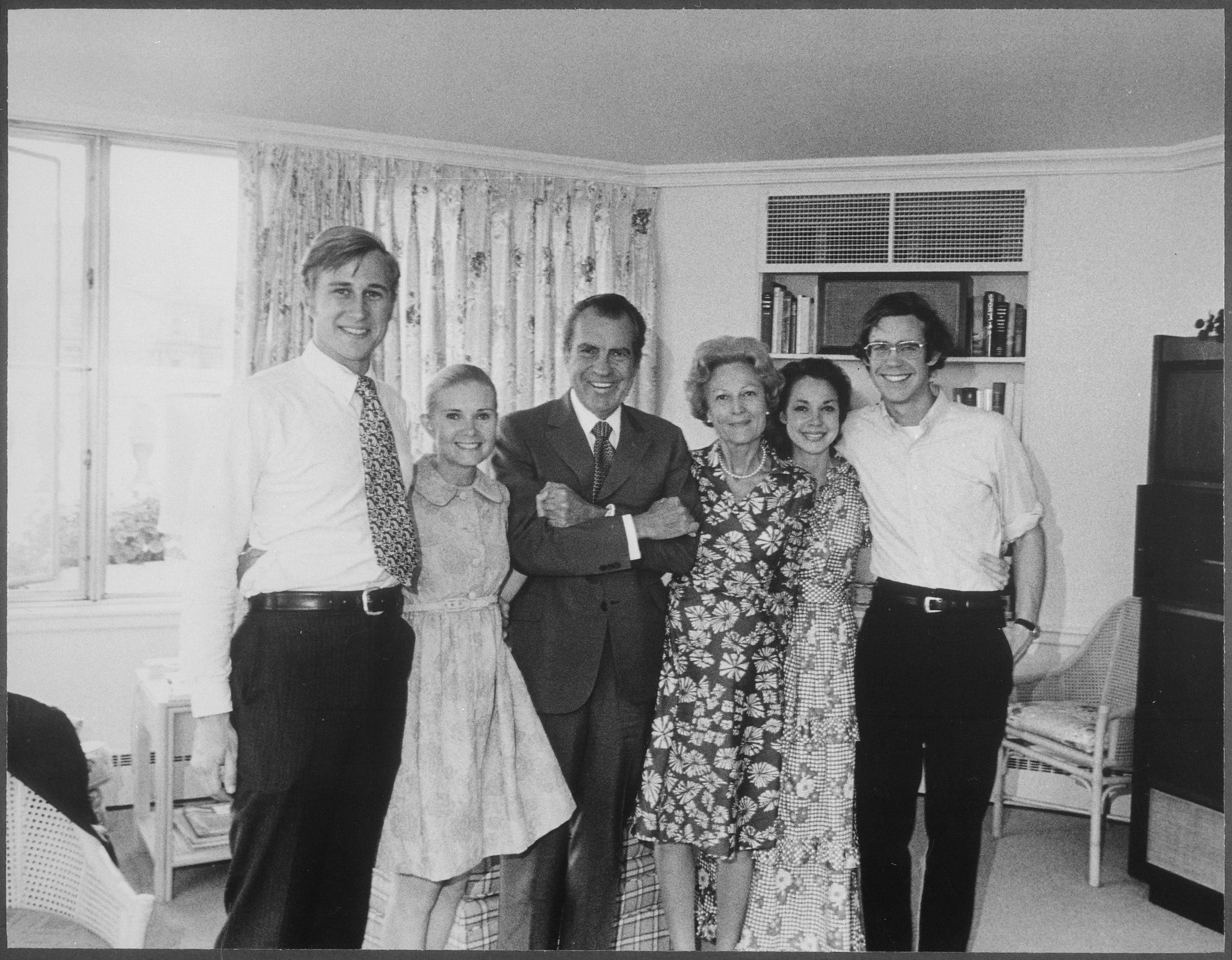
This Day in Legal History: Richard Nixon Dies
On April 22, 1994, Richard Nixon died at the age of 81, marking the end of a presidency that left a lasting imprint on American legal history. Nixon’s legacy is inseparable from the Watergate scandal, a constitutional crisis that tested the limits of presidential power. The scandal began with a break-in at the Democratic National Committee headquarters and expanded into a wide-ranging investigation of abuse of executive authority. As evidence mounted, legal battles emerged over whether a sitting president could withhold information under claims of executive privilege.
The issue came to a head in the landmark Supreme Court case United States v. Nixon, where the Court unanimously ruled that the president must comply with a subpoena to release tape recordings. This decision significantly narrowed the scope of executive privilege, establishing that it is not absolute and cannot be used to obstruct justice. The ruling reinforced the principle that even the president is subject to the rule of law. Facing near-certain impeachment, Nixon resigned in August 1974, becoming the first U.S. president to do so.
His resignation demonstrated the strength of constitutional checks and balances, particularly Congress’s oversight authority and the judiciary’s role in resolving disputes over executive power. In the years that followed, Watergate prompted reforms such as the War Powers Resolution and amendments to campaign finance laws. Legal scholars continue to cite the episode as a defining moment in the development of accountability for high-ranking officials. Nixon’s death in 1994 closed a chapter, but the legal principles shaped during Watergate remain central to debates over presidential authority.
West Virginia reached an $11 million settlement with Roblox to address concerns about child safety on the platform. The agreement follows a nine-month investigation led by Attorney General JB McCuskey, which found that existing safeguards exposed children to explicit content and potential predators. As part of the deal, Roblox must implement mandatory age verification before users can access chat features, aiming to reduce anonymous misuse. The platform will also restrict adults from contacting users under 16 unless they are verified trusted connections. Additional protections include default safe-content settings for minors and alerts when young users enter private chats for the first time.
The settlement allocates funds over several years, including money for public safety campaigns, internet safety specialists, and educational workshops. Roblox stated that the agreement aligns with its broader goal of improving digital safety and collaborating with regulators. This deal comes amid similar actions by other states, including a recent agreement in Nevada with comparable age verification measures. Multiple lawsuits across the country accuse Roblox of failing to prevent adults from exploiting minors on the platform. Many of these cases have been consolidated in federal court in California, where plaintiffs allege harm resulting from online grooming.
W.Va. Strikes $11.5M Deal With Roblox Over Kid Safety - Law360
A divided U.S. Court of Appeals for the Fifth Circuit ruled that Texas can require public schools to display the Ten Commandments in every classroom, overturning a lower court order that had blocked the law. The decision upheld Texas Senate Bill 10, finding that the requirement does not violate the Constitution’s protections against government establishment of religion or its guarantees of religious freedom. The majority reasoned that the law does not force anyone to adopt religious beliefs or interfere with how individuals practice their faith.
The challenge was brought by families from various religious and nonreligious backgrounds, who argued that the mandate infringes on their right to control their children’s religious upbringing. Their attorney indicated plans to appeal the ruling to the U.S. Supreme Court. Texas Attorney General Ken Paxton praised the decision, calling it a victory for the state and emphasizing the historical influence of the Ten Commandments.
The ruling was not unanimous, with a strong dissent arguing that the court ignored binding Supreme Court precedent. The dissent pointed to a 1980 Supreme Court decision that struck down a similar Kentucky law, suggesting the Texas measure should also be unconstitutional. By reversing the earlier injunction, the appeals court cleared the way for the law to take effect while further appeals are expected.
Texas can require Ten Commandments in classrooms, US appeals court rules | Reuters
Labor Secretary Lori Chavez-DeRemer stepped down from her role in U.S. Department of Labor amid controversy tied to an internal watchdog investigation into alleged misconduct. The probe reportedly examined claims of an inappropriate relationship with a subordinate, along with other workplace concerns, though some allegations were publicly disputed. Her departure follows weeks of media coverage and discussion during a congressional oversight hearing.
The White House announced that Chavez-DeRemer will move to a private-sector position, while Deputy Secretary Keith Sonderling will serve as acting head of the agency. In public statements, Chavez-DeRemer highlighted her efforts to support workers, expand job training, and address economic issues during her tenure, while administration officials praised her leadership.
The situation also involved broader personnel disruptions, including reports that several aides were placed on leave or left their positions. Additional complaints and allegations—some denied or unproven—contributed to scrutiny surrounding her leadership. Her husband was also investigated over separate allegations, though no charges were filed.
Chavez-DeRemer’s exit adds to other recent Cabinet-level departures during Donald Trump’s administration. Lawmakers, including Representative Rosa DeLauro, criticized the situation as a leadership failure and called for a replacement focused on the department’s mission. Observers noted that Sonderling could be a leading candidate for the permanent role, though no official nomination has been announced.
Trump’s Labor Secretary Steps Down - Law360
A federal appeals court, the U.S. Court of Appeals for the Sixth Circuit, ruled that a nearly 160-year-old ban on home distilling is constitutional, deepening a disagreement with another appellate court. The court said the prohibition is a valid way for Congress to ensure collection of excise taxes on distilled spirits, reasoning that allowing home production could lead to widespread tax evasion. The case was brought by John Ream, who wanted to distill whiskey at home for personal use.
The ruling comes shortly after the U.S. Court of Appeals for the Fifth Circuit reached the opposite conclusion, finding the same law unnecessary and unconstitutional. This disagreement between appellate courts—known as a circuit split—raises the likelihood that the U.S. Supreme Court will step in to resolve the issue. Ream’s legal team has already indicated plans to appeal.
The law at issue dates back to 1868, when Congress enacted it during Reconstruction to combat liquor tax evasion. Violations can carry significant penalties, including prison time and fines. In upholding the ban, the majority opinion emphasized Congress’s longstanding rationale that prohibiting home distilling encourages consumers to buy taxed alcohol instead. A dissenting judge, however, argued the case should not proceed because Ream failed to show he faced a real risk of prosecution.
US appeals court calls 158-year-old home distilling ban constitutional, creates split | Reuters


