



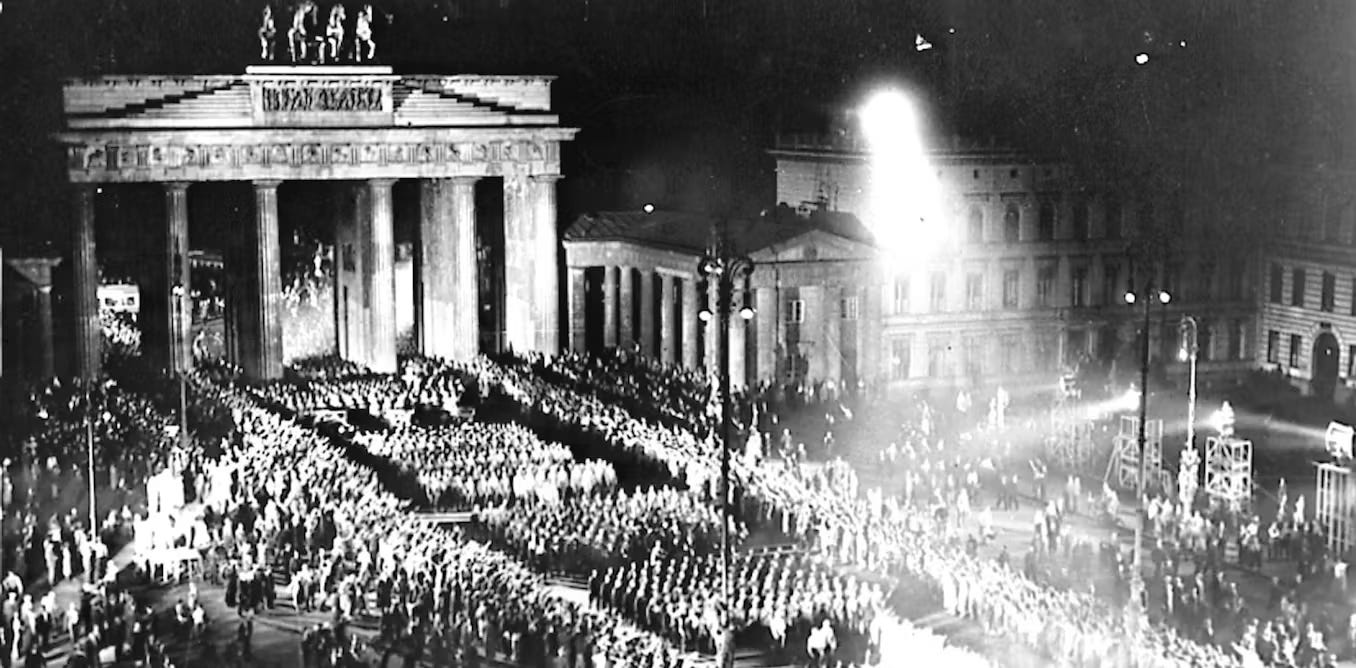
This Day in Legal History: Hitler Appointed Chancellor
On January 30, 1933, Adolf Hitler was appointed Chancellor of Germany, a moment that marked the beginning of one of the darkest legal and political transformations in modern history. Contrary to popular belief, Hitler did not seize power in a coup; his rise was accomplished through entirely legal means under the Weimar Constitution. Once in office, the Nazi regime moved swiftly to erode civil liberties, beginning with the Reichstag Fire Decree, which suspended constitutional protections like freedom of speech, assembly, and due process. This decree, signed by President Hindenburg, gave the government extraordinary powers under the guise of national emergency.
Shortly thereafter, the Enabling Act of March 1933 granted Hitler the authority to enact laws without the involvement of the Reichstag, including laws that violated the constitution itself. The judiciary, instead of serving as a check on executive overreach, largely complied or cooperated, enabling legal persecution of Jews, political dissidents, and other marginalized groups. Laws were passed systematically to isolate, disenfranchise, and ultimately exterminate entire populations, all with the appearance of legality and bureaucratic order.
What happened in Germany is a stark reminder that authoritarianism often arrives wrapped in the language of law and order. The rule of law is not inherently just—it depends on who writes the laws, how they are enforced, and whether constitutional checks are robust enough to resist consolidation of power. Today, as various democracies grapple with executive overreach, politicized judiciaries, and emergency powers, the legal path taken in 1933 offers a chilling historical parallel. The slow erosion of legal norms, once set in motion, can be devastatingly hard to reverse.
A federal appeals court ruled that the Trump administration unlawfully ended Temporary Protected Status (TPS) for roughly 600,000 Venezuelans living and working in the United States. The Ninth Circuit Court of Appeals agreed with a lower court that Homeland Security Secretary Kristi Noem exceeded her authority by terminating protections that had been extended under the Biden administration. The court emphasized that, since Congress created TPS 35 years ago, no administration had claimed the power to cancel a country’s designation while it remained in effect. Judges found that the statute’s language clearly limits executive authority and does not permit unilateral termination mid-designation.
Despite the ruling, the decision will not immediately restore protections because the U.S. Supreme Court has allowed the policy to remain in effect while the case continues on appeal. The court noted that the termination has left hundreds of thousands of migrants in fear of detention, deportation, and family separation, often to countries where they previously faced violence. The ruling also upheld a finding that TPS protections for Haitians were unlawfully ended, though the administration has pursued separate efforts to terminate those protections. One judge wrote separately to argue that the policy was influenced by racist stereotyping, citing public statements by senior officials about Venezuelan and Haitian migrants. Advocacy groups welcomed the ruling but stressed that, because of the Supreme Court’s order, affected migrants remain vulnerable in the meantime.
Trump administration unlawfully ended Venezuelans’ legal status, US court rules | Reuters
A significant wave of attorneys has left the U.S. federal government since Donald Trump returned to office, fueling a major shift in the legal workforce. Between January and November 2025, over 8,500 licensed attorneys exited federal service, leading to a net loss of 6,524—one of the sharpest declines in decades. The Department of Justice (DOJ) was especially affected, with notable departures from its Civil Rights Division and Federal Programs Branch, and the closure of its Tax Division. Some resignations were linked to policy disagreements, while others were the result of force reductions or shifting departmental priorities.
This exodus has dramatically reshaped the hiring market for large law firms. In 2025, top-grossing firms hired over 1,100 lawyers directly from government positions, more than doubling the rate seen in prior years. Recruiters report a flood of interest from government attorneys, many of whom began reaching out even before Trump’s inauguration. However, while high-ranking officials and prosecutors remain in demand, lower-level attorneys without niche skills are facing a tougher private market.
The overall federal workforce, not just lawyers, has contracted significantly under Trump’s renewed efforts to reduce government size. The DOJ alone has seen a net loss of nearly 9,000 employees. While the number of federal lawyers remains close to 2017 levels, the recent surge in departures marks a striking reversal of long-standing hiring trends.
Lawyers leaving US government drive workforce shift | Reuters
Massachusetts Governor Maura Healey has proposed legislation that would block other states from deploying their National Guard troops into Massachusetts without her approval. The move comes in response to President Donald Trump’s controversial use of the National Guard in 2025, when troops from various states were sent to cities like Chicago and Los Angeles without consent from local governments—breaking with long-standing norms regarding domestic military deployment.
Several states already have similar laws, designed to prevent out-of-state Guard deployments unless coordinated through mutual agreement or in federally controlled situations. However, legal gray areas remain when the federal government asserts control over state troops. Last year, the Trump administration attempted to deploy federalized National Guard units from California and Texas to assist immigration enforcement in Portland, Oregon. That effort was met with lawsuits from state officials, who claimed no valid emergency justified the action; the troops were withdrawn before the legal battle concluded.
Healey’s bill aims to reinforce state sovereignty over such deployments and to guard against federal overreach in the absence of local consent. The National Guard is typically used across state lines only in emergency situations like natural disasters, and even then, usually with approval from affected states.
Massachusetts bill aims to block National Guard deployment from other states | Reuters
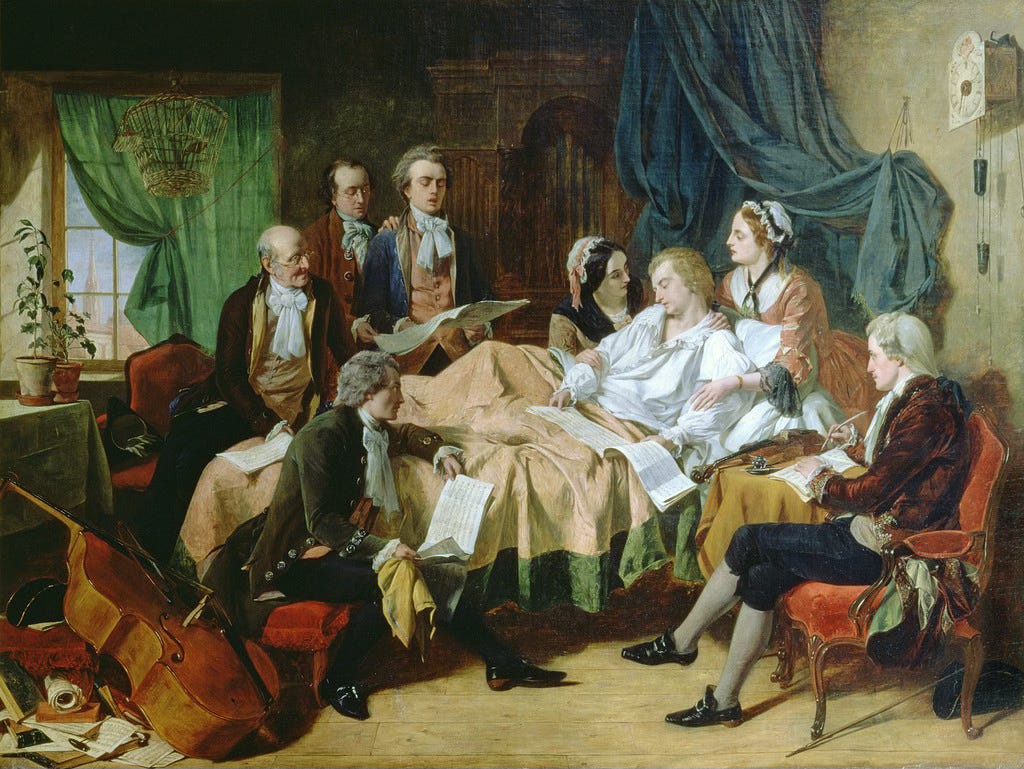
This week’s closing theme is by Wolfgang Amadeus Mozart.
This week’s closing theme is the Lacrymosa from Mozart’s Requiem in D minor, a work shrouded in both mystery and mourning. Mozart began composing the Requiem in 1791, the final year of his life, and died before completing it—adding an eerie depth to a piece already suffused with sorrow and transcendence. The Lacrymosa movement in particular is a haunting meditation on grief, built around the Latin text “Lacrimosa dies illa” (“That tearful day”), which describes the final judgment and the weeping of the soul.
The music swells with mourning, yet carries within it an unmistakable dignity—grief not as chaos, but as reckoning. Today, as we reflect on events that echo the legal and moral breakdowns of the past—and resound in the present—the Lacrymosa feels like a fitting elegy. It reminds us that great tragedy often begins under the guise of order, and that mourning is not only for the dead, but for the living systems and values that can perish when unchecked power takes root.
Mozart, though apolitical and far removed from the 20th century, composed music that reaches across time to articulate the emotional weight of collective loss. The unfinished nature of the Requiem also mirrors the historical unfinished business of justice—how societies reckon with their past, or fail to. This piece, suspended between the sacred and the human, between hope and despair, offers a solemn moment of reflection as the week closes.
Without further ado, the Lacrymosa from Mozart’s Requiem in D minor – enjoy.


