


This Day in Legal History: Butler Act
On March 13, 1925, the Tennessee General Assembly approved the Butler Act, a statute that made it unlawful for public school teachers to present any theory that denied the biblical account of human creation. The law specifically prohibited teaching that humans evolved from lower forms of life, reflecting growing tensions between scientific ideas and religious beliefs in early twentieth-century America. Tennessee lawmakers framed the statute as a way to protect traditional moral values in public education. Critics, however, immediately argued that the law restricted academic freedom and undermined the teaching of modern science.
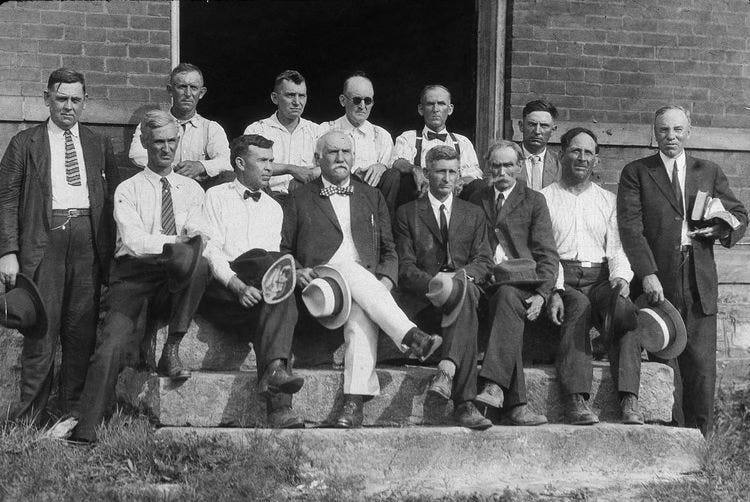
The controversy quickly escalated when a young teacher, John T. Scopes, agreed to challenge the statute. Scopes was charged with violating the Butler Act after he allowed evolution to be discussed in his classroom. His prosecution led to the famous 1925 Scopes “Monkey” Trial in Dayton, Tennessee. The trial drew national attention and featured two of the era’s most prominent legal figures: Clarence Darrow for the defense and William Jennings Bryan for the prosecution. Their courtroom clash turned the case into a dramatic public debate over science, religion, and the role of government in shaping school curricula.
Although Scopes was ultimately convicted and fined $100, the trial exposed deep cultural divisions within the United States. Media coverage portrayed the proceedings as a symbolic struggle between modern scientific thinking and religious fundamentalism. Over time, the Butler Act came to be seen by many as an example of government overreach into education and intellectual inquiry. Tennessee formally repealed the statute in 1967, decades after the trial had become a lasting symbol of the conflict between science and law.
Federal Circuit Judge Pauline Newman has asked the U.S. Supreme Court to review her ongoing challenge to a suspension imposed by her fellow judges. In a petition filed Thursday, the 98-year-old judge argues that the D.C. Circuit wrongly ruled that courts cannot review many challenges to judicial suspension orders under the Judicial Conduct and Disability Act. Newman contends that the statute should allow review when suspension decisions violate the law or the Constitution. Her petition claims the lower court misinterpreted the law by blocking challenges to actions that exceed the authority granted under the statute. Newman argues that her suspension effectively removes her from the bench without impeachment, which she says undermines constitutional protections for judicial independence and lifetime tenure.
The Federal Circuit’s judicial council first suspended Newman in 2023 after concerns that potential mental or physical health issues made her unable to perform judicial duties. The suspension followed her refusal to undergo medical evaluations requested by her colleagues and was characterized as serious misconduct. Although the suspension was initially set for one year, it has been renewed twice. Newman appealed through the internal judicial review process, but a national committee of judges upheld the suspension in 2024. She also challenged the suspension in federal court, arguing that parts of the judicial discipline law are unconstitutional. Both a district court and the D.C. Circuit dismissed the case, relying on a statutory provision stating that disciplinary orders under the act are final and not subject to judicial review. Newman now asks the Supreme Court to clarify whether courts may still review suspension orders that allegedly exceed legal or constitutional limits.
Judge Newman Takes Suspension Battle To Supreme Court - Law360
98-year-old judge asks US Supreme Court to hear case over her suspension | Reuters
The U.S. Commodity Futures Trading Commission (CFTC) has begun the process of developing regulations for prediction markets, issuing an advance notice of proposed rulemaking and asking the public for input on how the industry should be governed. The agency said the move is intended to support innovation while ensuring prediction markets operate within the framework of the Commodity Exchange Act. Interest in regulation has grown as more companies apply to register as designated contract markets, with many applications coming from prediction market platforms. These platforms allow users to trade on the outcomes of events such as sports games, elections, and entertainment awards.
The CFTC is seeking feedback on several issues, including whether margin trading should be allowed, what types of event contracts might be harmful to the public interest, and whether individuals with insider knowledge should be restricted from trading on certain outcomes. At the same time, the agency released staff guidance reminding platforms to avoid contracts that could be easily manipulated, such as those tied to specific player injuries or actions by a single referee. The guidance also explains that platforms can list new contracts through a self-certification process, although the CFTC can intervene if it believes a contract violates the law.
The regulatory effort comes amid ongoing legal disputes about who has authority over prediction markets. The CFTC maintains that it has exclusive jurisdiction, while several states have attempted to regulate or restrict these platforms under gambling laws. Meanwhile, members of Congress have introduced legislation that would ban certain types of event contracts, including those related to violence or death, and strengthen rules against insider trading on prediction markets.
CFTC Proposes Prediction Markets Rule - Law360
CFTC Seeks Public Comment on Advanced Notice of Proposed Rulemaking Relating to Prediction Markets
The Trump administration has filed a lawsuit against California seeking to block the state’s Advanced Clean Cars I (ACC I) regulations, arguing that the rules unlawfully interfere with federal authority over vehicle fuel economy standards. The lawsuit, brought by the U.S. Department of Justice and the Department of Transportation, targets California rules adopted in 2012 that require automakers to sell increasing numbers of low-emission and zero-emission vehicles. Federal officials claim the regulations effectively force manufacturers to meet stricter nationwide standards and function as a quota system for electric vehicles.
According to the complaint, California cannot impose its own limits on vehicle emissions because the federal Energy Policy and Conservation Act gives the federal government authority to set fuel-economy standards through the National Highway Traffic Safety Administration. The administration argues that California’s requirements could increase vehicle prices, reduce consumer choice, and disrupt the national auto market. Federal officials also say Congress revoked certain Clean Air Act waivers in 2025 that previously allowed California to enforce some emissions rules.
California leaders strongly dispute the lawsuit and say the state is defending policies designed to reduce pollution and expand access to cleaner vehicles. State officials argue the federal government is attempting to undermine California’s environmental regulations and its efforts to lead the transition to cleaner transportation. The lawsuit is part of a broader series of legal disputes between the federal government and California over vehicle emissions standards and electric-vehicle mandates.
Feds Sue To Stop California’s ‘Illegal’ EV Regulations - Law360
U.S. Customs and Border Protection (CBP) told a federal court that it is making progress on a system to refund about $166 billion in tariffs that were ruled unlawful. According to a court filing, the agency’s four-part refund system is between 40% and 80% complete, with the review portion the most developed and the mass-processing component the least finished. The system will include an online portal where importers and brokers can submit claims for reimbursement.
The filing was submitted to the U.S. Court of International Trade in response to an order from a judge directing the government to begin refunding tariffs after the U.S. Supreme Court struck down most of the tariffs in February. The Court’s decision invalidated tariffs collected since February 2024 but did not explain how refunds should be handled. CBP previously suggested building a new system to process claims rather than using its existing process, and officials say the new portal could begin accepting applications as soon as mid-April.
More than 330,000 importers paid the tariffs on roughly 53 million shipments, though only about 21,000 importers are currently registered to receive refunds. Refunds will go only to the companies that originally paid the tariffs, and there is no legal requirement that businesses pass the money on to consumers. Some companies, including FedEx, have said they will reimburse customers, while Costco indicated it may lower prices using the refunded funds. Meanwhile, new legal disputes are emerging as businesses and states challenge additional tariffs imposed after the Supreme Court ruling.
US customs agency says building system for tariff refunds is 40% to 80% complete | Reuters


