



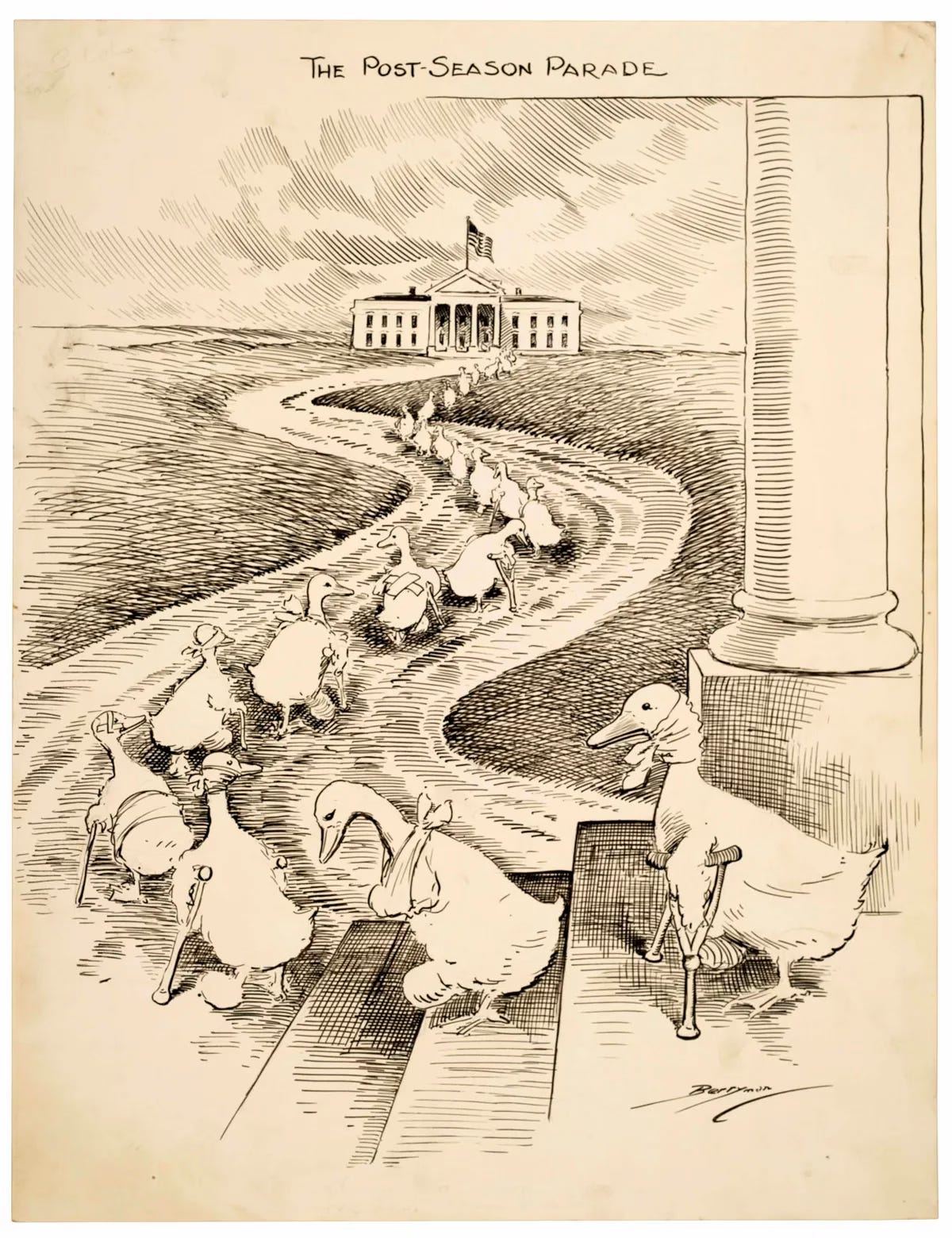
This Day in Legal History: 20th Amendment
On February 6, 1933, the 20th Amendment to the U.S. Constitution officially went into effect, reshaping the timeline of federal political power transitions in the United States. Commonly known as the “Lame Duck Amendment,” it was ratified just weeks earlier, on January 23, 1933, but became operative on this day. The amendment moved the inauguration dates of the president and vice president from March 4 to January 20 and newly elected members of Congress from March 4 to January 3.
This was a significant reform. Previously, there had been a long delay—about four months—between election and inauguration. The result was a period where outgoing officials retained power despite potentially losing their mandates, often leading to inaction and political stagnation. This was particularly problematic during times of crisis. For example, after Franklin D. Roosevelt won the 1932 election, he had to wait until March to take office while the nation was deep in the throes of the Great Depression, and President Hoover remained largely inactive.
The 20th Amendment also clarified procedures for what should happen if the president-elect dies before taking office, a scenario not fully accounted for in earlier constitutional provisions. Section 3 addresses this contingency, while Section 4 gives Congress the authority to legislate procedures for succession and emergencies.
By speeding up the transfer of power, the amendment reduced the influence of “lame duck” sessions, promoting a more responsive and democratic governance structure. It also underscored a constitutional shift toward greater efficiency in the federal system.
The Trump administration has appointed 33 new immigration judges, 27 of whom are temporary, following the dismissal or departure of over 100 judges since Trump’s return to office in January 2025. This reshaping of the immigration court system is part of a broader push to increase deportations and speed up case processing. The newly sworn-in judges will serve in courts across 15 states, including Texas, California, and New York.
A significant number of the appointees have military experience—half of the permanent judges and all of the temporary ones—reflecting a Pentagon-supported effort to deploy Defense Department lawyers into immigration roles. Critics, including the American Immigration Lawyers Association, argue that the mass firings have severely depleted judicial capacity, especially amid a record backlog of 3.2 million pending immigration cases.
The administration is also set to introduce a regulation reducing the time migrants have to appeal deportation rulings from 30 to 10 days. This fast-track process would give the Board of Immigration Appeals greater authority to summarily dismiss appeals, a move likely to draw legal challenges given prior rulings against similar reinterpretations of immigration law.
Trump administration names 33 new immigration judges, most with military backgrounds | Reuters
Brad Karp has stepped down as chairman of Paul, Weiss, Rifkind, Wharton & Garrison LLP following revelations of his extensive correspondence with Jeffrey Epstein. The emails, released by the Department of Justice, revealed years of personal and professional interaction between Karp and Epstein, including Karp’s praise of legal arguments dismissing victims’ claims and discussions about sensitive financial matters involving Epstein’s associates. Though Karp has not been accused of any criminal wrongdoing, the disclosures created internal and public pressure leading to his resignation.
Karp will remain at the firm in a non-leadership role, while corporate department head Scott Barshay has assumed the chairmanship. Barshay is known for high-profile mergers, including deals involving Chevron and Anheuser-Busch. Karp had led the firm since 2008, building its revenue significantly and taking on both corporate defense and progressive political causes.
The fallout also reignited criticism over Paul Weiss’ controversial 2025 deal with the Trump administration. In that arrangement, Karp brokered pro bono legal commitments in exchange for the rescission of an executive order that limited the firm’s federal work—an effort that involved direct lobbying by Robert Kraft and a meeting with Donald Trump.
Epstein emails lead Brad Karp to resign as Paul Weiss law firm chairman | Reuters
A federal jury in Phoenix has ordered Uber to pay $8.5 million to Jaylynn Dean, who said she was assaulted by a driver at age 19. The trial, the first of over 3,000 consolidated cases, served as a bellwether to assess the legal strength and settlement value of similar claims. The jury found the driver acted as an agent of Uber, making the company liable, but declined to award punitive damages.
Dean’s lawyers argued Uber knowingly failed to implement safety improvements despite rising reports of assaults. The case highlighted Uber’s marketing to women as a safe option, which attorneys said misled passengers about real risks. Dean was intoxicated when she ordered a ride in Arizona in 2023 and was allegedly attacked after the driver stopped the vehicle.
Uber denied liability, stating the driver had no criminal record and that the incident was unforeseeable. The company emphasized that it passed background checks and claimed the jury’s decision supported its broader safety efforts, though it plans to appeal.
The trial has implications for both Uber and Lyft, whose shares dipped following the verdict. Analysts believe the case may lead to enhanced background screening across the ride-hailing industry.
Uber ordered to pay $8.5 million in trial over driver sex assault claims | Reuters
A legal fight has emerged between a group of U.S. states and pharmacist T.J. Novak, a whistleblower seeking a portion of the $4.7 billion opioid settlement the states reached with Walgreens. Novak previously filed a federal False Claims Act case accusing Walgreens of unlawfully filling opioid prescriptions and billing government health programs. The U.S. government settled with Walgreens for $300 million, including $150 million tied to Novak’s claims—earning him a whistleblower payout of over $25 million.
Novak now argues that the states’ massive 2022 settlement with Walgreens also resolved his state-level claims under their respective false claims statutes, entitling him to additional compensation. The states dispute this, saying their deal addressed public nuisance concerns, not false claims violations. They warn that granting Novak a cut would force courts into a complex and inconsistent analysis across 28 different state laws and could open the door to broad whistleblower entitlements in future state actions.
Key states like Rhode Island, North Carolina, and Virginia filed briefs opposing Novak’s claim, stressing the differences in statutory frameworks and the nature of the claims resolved. The outcome could impact future whistleblower litigation involving parallel state and federal claims tied to nationwide corporate settlements.
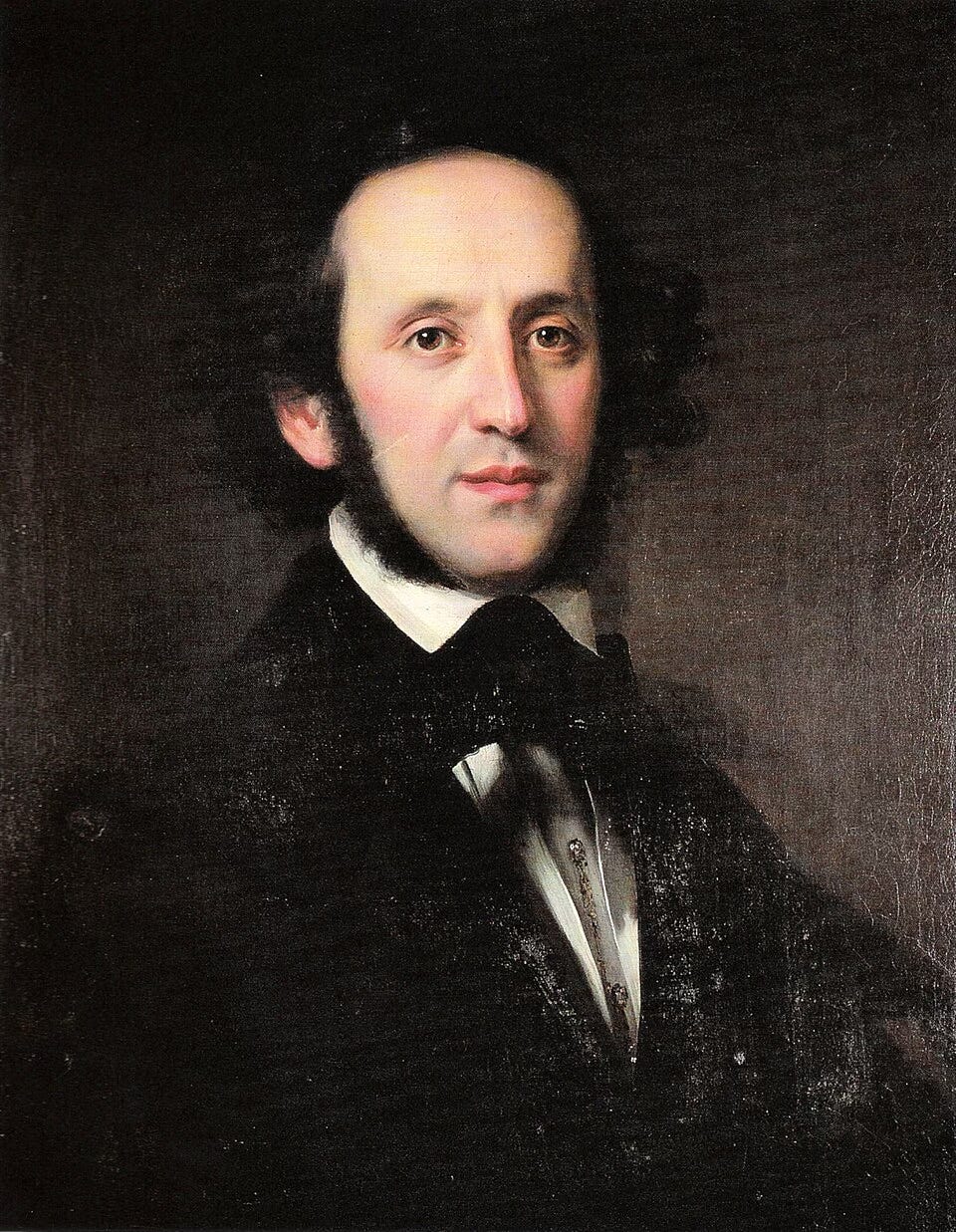
This week’s closing theme is by Felix Mendelssohn.
This week’s closing theme is Lied ohne Worte, Op. 109, by Mendelssohn, a composer whose refined lyricism shaped the early Romantic era. Born in 1809, Mendelssohn was a prodigy who bridged Classical form and Romantic expression with grace and clarity. His Lieder ohne Worte—or “Songs Without Words”—are brief piano pieces that aim to convey the emotional depth of a song, but without lyrics. Op. 109, one of the last in the series, is especially introspective and serene, a quiet farewell rendered in music alone.
Today, February 6, holds subtle resonance in Mendelssohn’s legacy. Though his death is commonly dated to November 4, 1847, some historical sources using the Julian calendar recorded it as February 6, making this date a quiet point of remembrance in certain circles. In that light, Lied ohne Worte, Op. 109, feels like a particularly appropriate selection—a final musical gesture from a composer who believed some feelings transcend words.
It’s also a fitting close to a week of heavy stories—legal struggles, political reshuffling, and institutional reckonings. Mendelssohn offers no commentary, just clarity and calm. In the hush of his music, we’re reminded that reflection doesn’t always need a headline.
Without further ado, Lied ohne Worte, Op. 109, by Felix Mendelssohn – enjoy!


