


This Day in Legal History: Lincoln Suspends Habeas Corpus
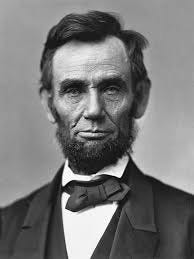
On April 27, 1861, President Abraham Lincoln authorized military officials to suspend the writ of habeas corpus along the rail lines between Philadelphia and Washington, D.C. The order came in the opening weeks of the Civil War, when Washington was vulnerable, Union troops were moving through hostile territory, and federal officials feared sabotage and rebellion along critical transportation routes.
Habeas corpus is one of the oldest protections in Anglo-American law, allowing a detained person to demand that the government justify their imprisonment before a court. By suspending it, Lincoln allowed military authorities to detain certain people without immediately producing them for judicial review. The legal problem was that the Constitution says habeas corpus may be suspended “when in cases of rebellion or invasion the public safety may require it,” but it does not clearly say which branch of government may do the suspending.
Lincoln argued that the rebellion created an emergency that required swift executive action. Critics argued that the suspension power belonged to Congress, not the president, because the Suspension Clause appears in Article I, the part of the Constitution dealing mostly with legislative powers. The conflict soon came to a head in Ex parte Merryman, after John Merryman, a Maryland secessionist, was arrested by military authorities and denied ordinary habeas review.
Chief Justice Roger Taney, sitting as a circuit judge, ruled that Lincoln had exceeded his constitutional authority and that only Congress could suspend the writ. Lincoln did not comply with Taney’s order, maintaining that the survival of the Union justified extraordinary action. Congress later gave statutory support for wartime habeas suspension, but the controversy over Lincoln’s initial action has remained central to debates over presidential power, civil liberties, and constitutional government during crisis.
The U.S. Supreme Court is set to hear a case involving Cisco Systems and the Alien Tort Statute, focusing on whether U.S. companies can face liability for allegedly helping foreign governments commit human rights abuses. The case comes from Falun Gong practitioners who claim Cisco built surveillance tools for China’s “Golden Shield” program that helped officials identify, detain, torture, and persecute members of the religious movement. A federal district court dismissed the case, but the Ninth Circuit revived much of it in 2023, finding the plaintiffs had plausibly alleged that Cisco aided and abetted violations of international law. Cisco argues that the Ninth Circuit improperly expanded the Alien Tort Statute by recognizing aiding-and-abetting liability even though Congress did not expressly create that cause of action. The company says the ATS was originally meant to cover only a narrow set of claims, such as piracy, violations of safe conduct, and harms to ambassadors. Cisco also relies on Supreme Court precedent to argue that courts should not create secondary liability unless Congress clearly authorizes it.
The Falun Gong plaintiffs respond that aiding-and-abetting liability has long been part of international law and is especially important when serious abuses require technology, infrastructure, or corporate support. They argue that torture, extrajudicial killing, disappearances, and prolonged arbitrary detention are already recognized as serious international-law violations that can support ATS claims. Business groups and the federal government warn that expanding ATS liability could chill foreign investment and interfere with U.S. foreign relations by forcing American courts to judge the conduct of foreign governments. Supporters of the plaintiffs argue that corporate accountability can discourage companies from profiting from foreign repression and can promote fair competition for businesses that follow human rights standards. The Supreme Court’s ruling could shape how much legal risk U.S. companies face when selling technology or services to governments accused of human rights abuses.
Justices To Focus On Alien Tort Statute In Cisco Spying Case
The U.S. Supreme Court is hearing Bayer’s attempt to limit or end a large wave of lawsuits over Roundup, the weedkiller Bayer acquired when it bought Monsanto in 2018. The case involves John Durnell, a Missouri man who won a $1.25 million jury verdict after claiming years of Roundup exposure contributed to his non-Hodgkin lymphoma. Bayer argues that federal pesticide law should block state-law failure-to-warn claims because the Environmental Protection Agency has approved Roundup labels without a cancer warning. The company says EPA approval shows the product was not legally “misbranded” and that Bayer could not substantially change the label without agency approval. Durnell’s lawyers argue that EPA registration does not make the label immune from challenge and that Missouri warning law mirrors federal requirements rather than adding new ones.
The dispute turns on the Federal Insecticide, Fungicide and Rodenticide Act, which regulates pesticide labeling and limits states from imposing requirements that differ from federal law. Bayer says more than 100,000 plaintiffs have brought Roundup-related cancer claims and that a Supreme Court win could largely end the litigation. The company has also proposed a $7.25 billion settlement to resolve many current and future claims, though some pending appeals and excluded claims would remain outside the deal. Agricultural and crop industry groups, along with the Trump administration, support Bayer, while environmental, farmworker, and public health groups support Durnell. Bayer warns that the lawsuits could threaten its ability to keep supplying glyphosate products to farmers. A decision is expected by the end of June.
US Supreme Court hears Bayer’s fight against Roundup lawsuits | Reuters
Elon Musk’s lawsuit against OpenAI, Sam Altman, Greg Brockman, and Microsoft is headed to trial in federal court in Oakland, California. Musk claims OpenAI betrayed its original nonprofit mission by creating a for-profit structure after he left the board, while using his name and early financial support to build what he calls a profit-driven enterprise. He is reportedly seeking $150 billion in damages, with money going to OpenAI’s charitable arm, and also wants OpenAI returned to nonprofit status. OpenAI denies wrongdoing and argues that Musk’s real motive is to regain control and help his own AI company, xAI. Microsoft also denies collusion and says its partnership with OpenAI began after Musk had left.
The trial is expected to feature testimony from major tech figures, including Musk, Altman, and Microsoft CEO Satya Nadella. Internal documents are likely to play a major role, including diary entries from Brockman that reveal tension inside OpenAI over Musk’s influence and the organization’s future. Musk’s side points to those materials as evidence that OpenAI’s leaders became focused on profit rather than the public-benefit mission. OpenAI’s side says Musk knew about possible restructuring plans, wanted to be CEO, and later attacked the company after it became successful. The case comes as OpenAI faces heavy competition, major computing costs, and possible IPO plans, while Musk’s xAI is also trying to compete in the AI market. The broader fight is not just about money, but about who controls one of the most influential companies in artificial intelligence.
Elon Musk’s trial against Sam Altman to reveal the ongoing power struggle for OpenAI | Reuters
Cole Tomas Allen, a 31-year-old California man, is expected to appear in Washington federal court after allegedly trying to breach security at the White House Correspondents’ Association Dinner while President Donald Trump was present. Authorities say Allen shot at a U.S. Secret Service agent at a hotel checkpoint before being tackled and arrested. The agent was hit, but a tactical vest stopped the shot, and the agent was later released from the hospital. Formal charges had not yet been filed at the time of the report, but prosecutors said Allen is expected to face charges including assault on a federal officer and using a firearm during a crime of violence. Officials also said more serious charges, including attempted assassination, could still be considered as the investigation continues.
Authorities say Allen traveled from California to Washington by train and booked a room at the Washington Hilton, where the dinner was held. They also say he left family members a manifesto referring to himself as the “Friendly Federal Assassin” and discussing plans to target senior Trump administration officials. Acting Attorney General Todd Blanche said Trump may have been among the intended targets. The shooting disrupted the high-profile dinner, forced attendees to take cover, and led security personnel to move senior officials out of the room. Monday’s court hearing is expected to be brief, with a judge advising Allen of his rights and prosecutors likely asking that he remain detained. The incident has renewed concerns about security for Trump and other public officials.
Suspect in Washington dinner shooting set to appear in court | Reuters


