



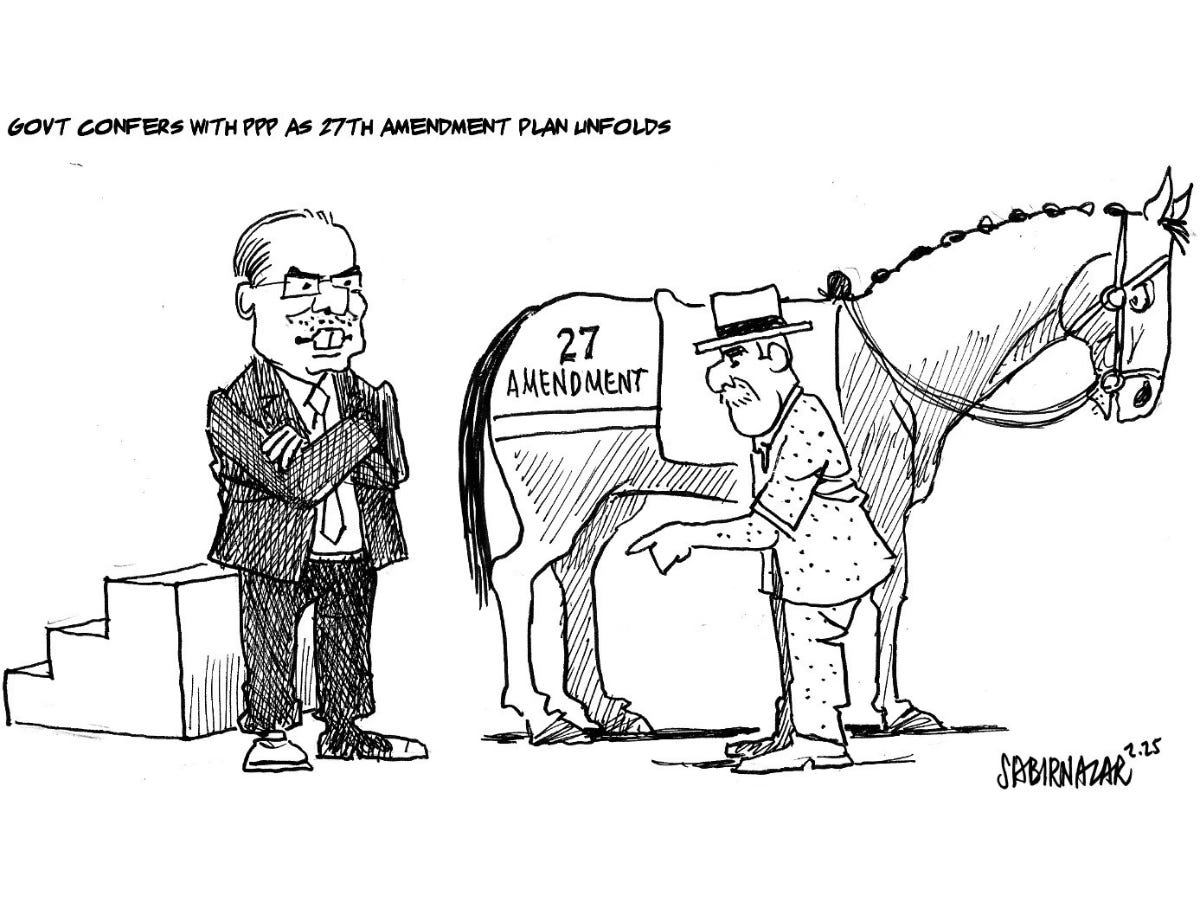
This Day in Legal History: 27th Amendment
On May 19, 1992, the 27th Amendment to the United States Constitution was officially published in the Federal Register, ending one of the longest and oddest ratification stories in American legal history. The amendment provides that any law changing the compensation of members of Congress cannot take effect until after an election for the House of Representatives has taken place. Put more simply, Congress may vote to change its own pay, but it cannot make that change immediate. The rule gives voters a chance to respond before the pay change takes effect.
What makes the 27th Amendment unusual is not only what it says, but how long it took to become law. It was originally proposed by James Madison in 1789 as part of the same set of amendments that produced the Bill of Rights. Most of those amendments were ratified quickly, but this one lingered for more than two centuries. Because Congress had not set a ratification deadline, the amendment remained legally available for state approval. In the 1980s, a renewed ratification campaign helped bring it back to public attention. Michigan became the 38th state to ratify it in May 1992, giving it the three-fourths approval required by Article V of the Constitution.
The amendment’s publication in the Federal Register on May 19 marked the formal public recognition that it had become part of the Constitution. Its ratification raised a serious legal question about whether an amendment proposed in the 18th century could still be valid in the 20th century. The answer, at least for amendments without a deadline, was yes. The 27th Amendment stands as a reminder that constitutional change can move slowly, sometimes across generations, and still become binding law.
The Supreme Court agreed to hear a case about whether Title IX’s protections against sex discrimination in federally funded education programs extend to employees, including college professors and coaches. The case was brought by former Augusta University professor Thomas Crowther and former Georgia Tech women’s basketball coach MaChelle Joseph, both of whom lost their jobs after workplace-conduct investigations. Crowther claimed Augusta University retaliated against him and discriminated against him based on sex after it suspended him and declined to renew his contract. Joseph argued that Georgia Tech fired her in retaliation for her complaints about unequal treatment of women’s athletics and female athletes. Their cases reached the Eleventh Circuit together, where the court ruled that Title IX clearly protects students, but that its application to employees is less certain. That ruling placed the Eleventh Circuit on one side of a broader circuit split.
The Fifth, Seventh, and Eleventh Circuits have taken a narrower view of Title IX employment claims, while the First, Second, Third, and Fourth Circuits have allowed employees to bring certain Title IX claims. The solicitor general agreed with the Eleventh Circuit’s narrower reading but urged the Supreme Court to take the case because lower courts are divided. The case gives the justices a chance to decide whether professors, coaches, and other school employees can use Title IX directly to sue for workplace sex discrimination or retaliation.
High Court To Examine Title IX Protections For Coaches, Profs - Law360
A New York state judge partially granted Luigi Mangione’s request to keep certain evidence out of his upcoming murder trial. Mangione is accused of killing UnitedHealthcare CEO Brian Thompson outside a Manhattan hotel in December 2024 and has pleaded not guilty. Justice Gregory Carro ruled that police unlawfully searched Mangione’s backpack during his arrest in Pennsylvania without a warrant. Because of that, some items found during the first search, including a loaded handgun magazine, a cellphone, and a computer chip, will be suppressed. But the judge allowed other evidence from a later police-station search of the backpack, including a gun, silencer, USB drive, and red notebook.
Carro also rejected Mangione’s effort to suppress his initial statements to police, finding that they were not obtained through an illegal interrogation. The ruling gives the defense a partial win, but prosecutors say they still have substantial evidence tying Mangione to the shooting, including DNA, fingerprints, video footage, and other items. Mangione’s state trial is scheduled to begin on September 8 and is expected to last about six weeks. He also faces separate federal charges, though earlier rulings in that case removed the possibility of the death penalty.
Judge grants accused CEO killer Mangione’s bid to suppress evidence due to unlawful search | Reuters
State lawmakers have rejected dozens of anti-vaccine bills backed by Make America Healthy Again supporters, showing limits to the movement’s influence in state legislatures. The bills sought to roll back or end policies such as school vaccination requirements, but public health groups and medical associations mounted successful opposition campaigns. Groups including American Families for Vaccines and the American Academy of Pediatrics argued that vaccine mandates remain broadly supported and are important for public health. Their strategy focused especially on Republican-controlled states, where advocates used polling and personal appeals to persuade lawmakers that opposing vaccines could be both medically risky and politically unpopular. Anti-vaccine proposals increased this year because MAHA-aligned groups coordinated efforts across multiple states. Still, bills failed in places including Idaho, West Virginia, Tennessee, South Dakota, Florida, and Iowa. The debate is unfolding as Health Secretary Robert F. Kennedy Jr., a longtime vaccine skeptic, has taken steps against mandatory immunization policies, though some changes have been paused in litigation. Both sides expect the issue to continue, with anti-vaccine advocates encouraged by hearings and organizing momentum, while public health advocates say more legislation is likely to appear in future sessions.
US states reject anti-vaccine bills as public health groups fight MAHA | Reuters
My column for Bloomberg this week argues that a federal gas tax holiday would be a poor answer to rising gas prices because it would do little for household affordability while further weakening transportation funding. Gas prices are being driven by forces Congress cannot easily fix by statute, including conflict involving Iran and instability around the Strait of Hormuz.
Lawmakers are nevertheless showing bipartisan interest in suspending the federal gas tax, including President Donald Trump, Sen. Josh Hawley, and House Speaker Mike Johnson. The political appeal is clear because gas prices are highly visible and give lawmakers a simple way to say they are responding to voters’ economic pain. But the federal gas tax has been frozen at 18.4 cents per gallon since 1993, even as infrastructure costs have continued to rise. Suspending it would take revenue away from the Highway Trust Fund, which helps pay for highways, roads, bridges, and mass transit.
The column argues that Congress should separate the problem of household hardship from the problem of transportation finance. Instead of cutting the gas tax, lawmakers could provide targeted help through refundable credits, direct payments, commuter assistance, or flexible transportation support for low- and moderate-income households.
If Congress insists on a gas tax holiday, it should at least pair it with an immediate dedicated backfill and longer-term reforms such as indexing the gas tax to inflation, adopting mileage-based fees, or modernizing road-use charges. The larger point is that high gas prices are real, but a gas tax holiday is a badly targeted discount financed by a transportation system that is already financially strained.


