


This Day in Legal History: Opium is Prohibited in the US
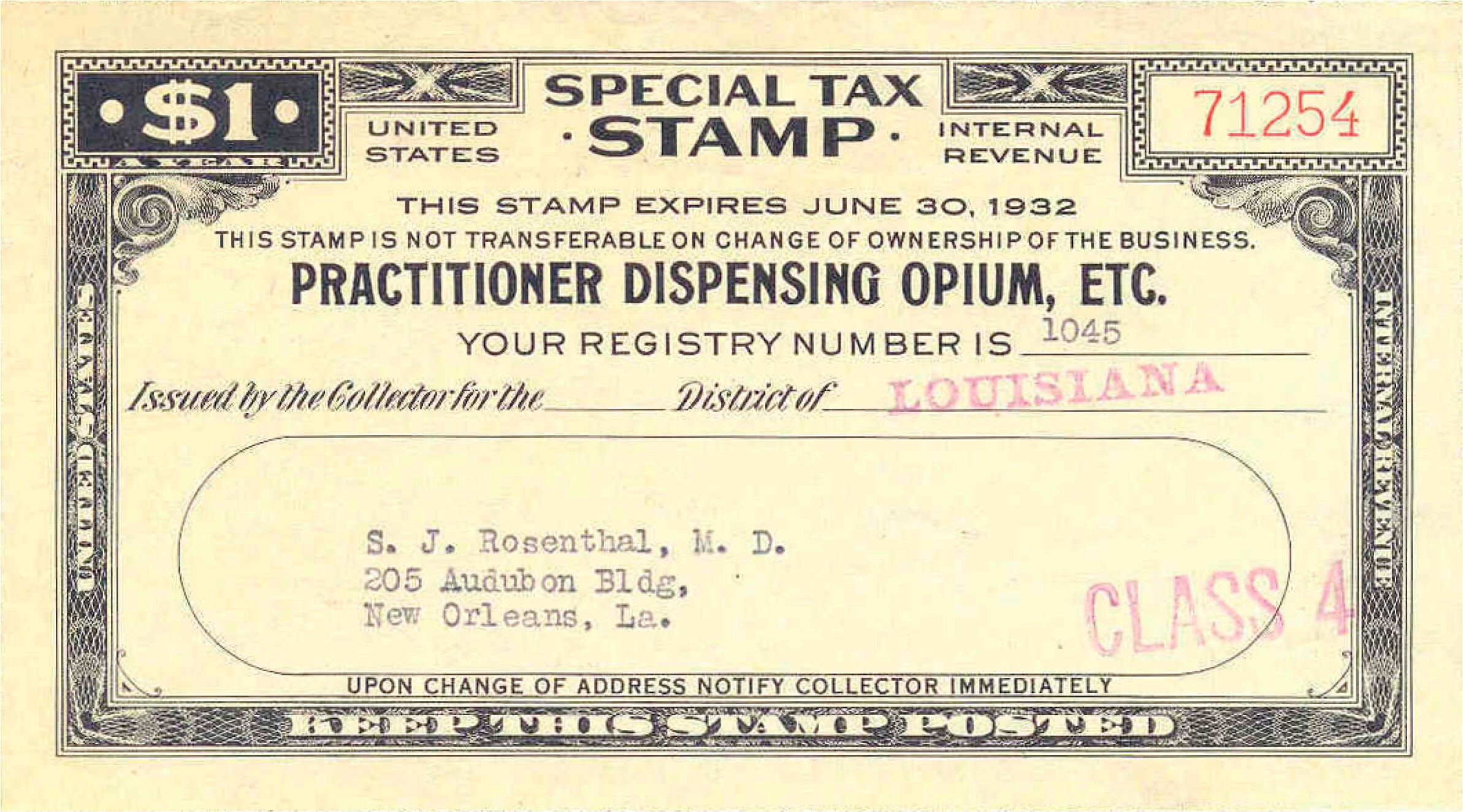
On February 9, 1909, the United States took its first significant federal step toward regulating narcotics when Congress passed a law banning the importation of opium for non-medical purposes. The act, officially titled “An Act to Prohibit the Importation and Use of Opium for Other Than Medicinal Purposes,” marked the beginning of a century-long evolution in American drug policy. While opium had long been associated with addiction and social issues—particularly in Chinese immigrant communities—prior regulation had occurred mostly at the state and local levels. This federal statute aimed to curb both domestic consumption and the growing international trade in opium, which had become a concern for moral reformers, physicians, and public officials.
The 1909 law was as much a product of racialized anxieties and diplomatic concerns as it was a health policy. U.S. officials were influenced by the growing global temperance movement and international agreements like those discussed at the International Opium Commission in Shanghai that same year. Domestically, the law paved the way for a broader federal role in drug control, leading to later landmark legislation such as the Harrison Narcotics Tax Act of 1914. It also helped define narcotics as a matter of federal concern rather than simply a moral or local issue.
While the 1909 statute was limited in scope—it did not criminalize possession or use, only importation—it established the principle that Congress could regulate substances in the interest of public health and welfare. That principle would be expanded in later decades as the War on Drugs developed. The opium ban illustrates how early 20th-century American legal policy began to intertwine with international diplomacy, race, and evolving conceptions of public health.
A landmark trial began this week in a California state court to determine whether Instagram and YouTube can be held liable for allegedly harming a young woman’s mental health through addictive platform design. The plaintiff, a 20-year-old woman identified as K.G.M., claims that Meta (parent company of Instagram and Facebook) and Google (which owns YouTube) designed their platforms in a way that fostered addiction from a young age, contributing to her depression and suicidal ideation. Her legal team argues the companies were negligent, failed to provide warnings, and that the platforms substantially contributed to her psychological harm.
A verdict in her favor could open the door for thousands of similar lawsuits currently pending against major tech firms like Meta, Google, Snap, and TikTok. Notably, Snap and TikTok settled with the plaintiff before trial, while Meta CEO Mark Zuckerberg is expected to testify. The defense plans to emphasize external influences in K.G.M.’s life and highlight efforts they’ve made around youth safety.
The case challenges longstanding U.S. legal protections under Section 230 of the Communications Decency Act, which generally shields internet companies from liability for user-generated content. However, if the jury accepts the argument that the harm stems from platform design rather than content, it could weaken those defenses. Parallel legal battles are underway, including over 2,300 federal lawsuits and a separate trial in New Mexico where Meta is accused of enabling child sexual exploitation.
Instagram, YouTube addiction trial kicks off in Los Angeles | Reuters
The Trump administration has appealed a federal court ruling that requires the U.S. Department of Transportation to release frozen funding for the $16 billion Hudson Tunnel Project, which aims to upgrade vital rail infrastructure connecting New York and New Jersey. Judge Jeannette Vargas issued a preliminary injunction ordering the unfreezing of the funds after officials from both states warned that construction would cease due to lack of financing. The administration filed a notice of appeal two days later.
The funding had been halted in September pending a review of the project’s adherence to new federal restrictions on race- and sex-based criteria in contracting. According to a source, Trump recently proposed unfreezing the money if Democrats agreed to rename Washington Dulles Airport and New York’s Penn Station after him—an offer that was widely condemned.
The Hudson Tunnel, which was damaged during Hurricane Sandy in 2012, remains a critical piece of rail infrastructure, handling over 200,000 passengers and 425 trains each day. The Gateway Development Commission, which oversees the project, expressed readiness to resume work once funding is reinstated. Approximately $2 billion of the $15 billion federal allocation—approved under the Biden administration—has already been spent.
Trump administration appeals ruling on releasing New York City tunnel funds | Reuters
A divided panel of the U.S. Court of Appeals for the Fifth Circuit upheld the Trump administration’s policy of mandating detention without bond for individuals arrested during immigration enforcement operations. The 2-1 decision is the first appellate ruling to affirm the policy, despite widespread opposition from hundreds of lower-court judges across the country who have deemed it unlawful. The ruling applies to Texas and Louisiana, states that hold the largest populations of immigration detainees.
The policy relies on an expanded interpretation of the term “applicants for admission” under federal immigration law. Traditionally applied to individuals arriving at the border, the Department of Homeland Security argued in 2025 that it also applies to undocumented individuals already residing in the U.S. This interpretation was adopted by the Board of Immigration Appeals and made mandatory by immigration judges nationwide.
The case before the court involved two Mexican nationals, Victor Buenrostro-Mendez and Jose Padron Covarrubias, who had previously persuaded lower courts they were wrongly denied bond hearings. The appeals court reversed those rulings, with Judge Edith Jones writing that the statute’s plain text supported the administration’s view. Judge Dana Douglas dissented, arguing that the interpretation stretched beyond what Congress intended in the 1996 immigration law.
Other circuit courts are expected to weigh in on similar challenges, and the issue may ultimately reach the U.S. Supreme Court.
US appeals court upholds Trump’s immigration detention policy | Reuters
A federal appeals court has denied the Trump administration’s request to delay proceedings in its appeal to reinstate executive orders targeting four major U.S. law firms. The U.S. Court of Appeals for the D.C. Circuit ruled that the cases—challenging orders against Perkins Coie, WilmerHale, Jenner & Block, and Susman Godfrey—will move forward and be combined with a related appeal involving attorney Mark Zaid’s revoked government security clearance.
The Justice Department had sought to postpone the law firm appeals until after the Zaid case was decided, a move that could have delayed resolution for months. But the court rejected that approach, siding with the law firms, which argued they deserved a timely judgment on whether the government unlawfully targeted them.
Trump’s executive orders accused the firms of using the legal system against him and criticized their diversity policies, directing the government to strip them of security access and limit their interactions with federal agencies. Four federal judges previously struck down the orders as unconstitutional, finding they violated free speech and due process rights. The administration is now appealing both those rulings and the one involving Zaid.
Trump administration loses bid to delay appeals over law firm executive orders | Reuters


