



This Day in Legal History: May Day vs. Law Day
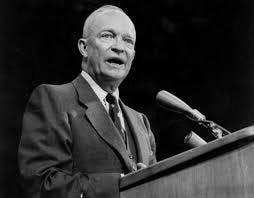
On May 1, 1958, the United States marked the first Law Day, a civic observance created after President Dwight D. Eisenhower designated the date as a national occasion to honor the rule of law. Eisenhower’s proclamation called on lawyers, journalists, broadcasters, schools, and civic groups to help the public better understand the American legal system. Congress later gave the observance formal status in 1961, making May 1 the country’s official annual Law Day. The American Bar Association traces the idea to its former president Charles S. Rhyne, who wanted a national celebration of the legal system and the constitutional principles that support it.
But May 1 already carried a different legal meaning long before it became Law Day. In the 1880s, organized labor made May 1 central to the campaign for the eight-hour workday. Labor leaders had called for May 1, 1886, to be the date when eight hours would be treated as the standard legal day’s work. Workers around the country responded with strikes and rallies, turning May Day into an enduring symbol of labor rights. In Chicago, the demonstrations led into the Haymarket events, where violence, prosecutions, death sentences, and later pardons made the episode a lasting part of the legal history of labor organizing, criminal justice, and political speech.
That makes May 1 one of the more complicated dates on the American legal calendar. Officially, it is Law Day, a celebration of courts, constitutional government, and respect for legal institutions. Historically, it is also May Day, a reminder that many legal protections were not simply handed down by courts or legislatures. They were demanded by workers, protesters, organizers, and communities willing to challenge existing law in the hope of changing it.
A California federal trial over Elon Musk’s challenge to OpenAI’s shift toward a for-profit structure was paused Thursday after Musk’s lawyers appeared to accidentally make Musk’s $97.4 billion offer for OpenAI assets fair game at trial. The issue began when Jared Birchall, who runs Musk’s family office, testified that he helped organize investors who made the offer because they believed Sam Altman’s role on both sides of OpenAI’s restructuring created a conflict. OpenAI’s lawyers then challenged Birchall’s testimony, arguing that his views about Altman were partly based on what attorneys told him rather than his own firsthand knowledge.
Judge Yvonne Gonzalez Rogers sent the jury home early and questioned Birchall herself, pressing him on how the investor group arrived at the massive offer amount. She seemed unconvinced by his answers and told Musk’s counsel that they had “opened the door” to evidence that previously had been limited by a magistrate judge. The judge then demanded to know who on Musk’s team suggested asking Birchall about the offer, and attorney Marc Toberoff ultimately said he had. Birchall also acknowledged that Toberoff created the financial analysis behind the offer and sent a letter to California regulators opposing OpenAI’s restructuring.
Musk’s lawyers argued that OpenAI first brought up the offer letter during Musk’s cross-examination and that there had been confusion about whether the document was admitted by agreement. Judge Gonzalez Rogers did not immediately decide how to handle the dispute and set a Friday hearing on the issue and jury instructions. The broader trial centers on Musk’s claim that OpenAI, Altman, Brockman, and Microsoft breached OpenAI’s charitable-trust obligations by moving away from its nonprofit mission for private gain. Earlier in the day, the judge also barred Musk’s AI expert from testifying about broad catastrophic risks of artificial intelligence, saying the case is about breach of trust, not the future danger of AI.
OpenAI Judge Pauses Trial To Probe Musk Attys On $97B Bid - Law360 UK
Purdue Pharma received approval from a New York bankruptcy judge for a $125 million settlement with McKinsey & Co. over claims connected to McKinsey’s consulting work on Purdue’s opioid sales and marketing. U.S. Bankruptcy Judge Sean H. Lane found the deal fair and reasonable, allowing Purdue to stay on schedule to exit Chapter 11 and activate its $7.4 billion bankruptcy plan. McKinsey will pay the settlement in two parts, starting with $65 million shortly after Purdue leaves bankruptcy. About $50 million from that first payment will go to personal injury claimants, while the remaining money will benefit state and local governments and Native American tribes through a trust.
The deal followed mediation involving Purdue, the unsecured creditors committee, and other parties, with the creditors committee prepared to sue McKinsey if settlement talks failed. Purdue’s bankruptcy has been heavily shaped by disputes over opioid-related liability, the Sackler family’s contributions, and the legality of releasing third-party claims. The Supreme Court’s 2024 ruling against nonconsensual third-party releases forced Purdue and its creditors to renegotiate the plan. The revised plan now includes a $6.5 billion Sackler family contribution and $900 million from Purdue. Purdue will be dissolved and replaced by Knoa Pharma, a public benefit company focused on addiction treatment and overdose reversal medications. The settlement also comes after McKinsey separately agreed to pay $650 million to resolve federal charges tied to its Purdue work.
Purdue’s $125M McKinsey Deal Gets OK Ahead Of Ch. 11 Exit - Law360
A Reuters analysis found that Big Law hiring remains heavily concentrated among a small group of elite law schools, even though remote recruiting was expected to broaden access. In 2025, only 16 law schools sent at least half of their graduating class into associate jobs at firms with 251 or more lawyers. By contrast, 89 ABA-accredited schools placed 10% or fewer of their graduates in those jobs, and 11 schools placed none. Half of all law schools together produced only 10% of the 7,869 new large-firm associates, while just 21 top schools produced half of them.
Nikia Gray of the National Association for Law Placement said the profession’s emphasis on pedigree continues to block opportunities for capable students outside elite schools. During the pandemic, large-firm recruiting moved online, which made it easier for firms to interview students from more schools. But that change has not significantly widened the hiring pipeline. One reason is that firms are recruiting earlier, sometimes during students’ first year before law school grades are available. With less law-school performance data to review, firms may lean more on undergraduate records, work experience, and the prestige of the law school itself.
The article also notes that Columbia Law School had the highest percentage of 2025 graduates going to large firms, at 78%, and that most of the schools sending at least half their graduates into Big Law are also among the U.S. News “T-14.” The broader message is that recruiting technology changed, but the underlying hierarchy did not. Remote interviews may have made access to interviews easier, but they have not erased the structural advantage held by students at the most prestigious law schools.
Pipeline to Big Law jobs stays narrow despite recruiting shifts | Reuters


