


This Day in Legal History: Truman Doctrine
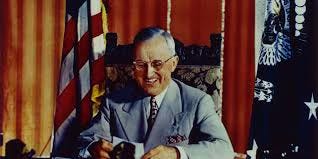
On May 22, 1947, President Harry S. Truman signed legislation authorizing American aid to Greece and Turkey, giving legal force to what became known as the Truman Doctrine. The law provided economic and military assistance to both countries at a moment when U.S. leaders feared that instability in the eastern Mediterranean could expand Soviet influence. Greece was in the middle of a civil war, while Turkey faced pressure over control of strategic territory and access between the Black Sea and the Mediterranean. Britain had previously played the leading role in supporting Greece and Turkey, but after World War II it told the United States it could no longer bear that burden.
Truman responded by asking Congress to approve aid, arguing that the United States had to support “free peoples” resisting outside pressure or armed minority movements. By signing the bill, Truman transformed that broad statement of foreign policy into statutory authority backed by federal money. Legally, the act mattered because it showed how Cold War policy would often be made: the president would identify a global threat, and Congress would authorize funds and tools to respond. It also helped normalize large peacetime commitments abroad, a sharp change from earlier American reluctance to enter long-term foreign entanglements. The statute became an early foundation for the national security state that grew through later aid programs, alliances, intelligence activities, and military commitments.
The Truman Doctrine also raised enduring questions about the balance of power between Congress and the president in foreign affairs. Congress approved the aid, but the broader doctrine gave presidents a flexible language for intervention that could be invoked well beyond Greece and Turkey. In that sense, May 22, 1947, was not just a date in diplomatic history; it was a legal turning point in how the United States authorized, funded, and justified its Cold War role in the world.
A Ninth Circuit panel appeared uncertain about whether Jack Daniel’s proved enough to win its trademark dilution-by-tarnishment claim against VIP Products over the “Bad Spaniels” dog toy. The judges focused especially on whether Jack Daniel’s had shown that anything beyond the words “Jack Daniel’s” was famous enough to qualify for dilution protection. Judge Andrew Hurwitz pressed Jack Daniel’s counsel on whether the company could rely on the fame of its name to protect broader elements of its label and bottle design. Jack Daniel’s argued that the court should consider the full context of the toy, including its bottle-like appearance and bathroom-humor references. VIP, by contrast, argued that the analysis should be limited to the famous mark itself and the allegedly diluting mark, not the entire product presentation.
The case began after VIP made a dog toy parodying a Jack Daniel’s bottle with poop-themed jokes, prompting years of litigation over trademark infringement, dilution, parody, and free speech. The U.S. Supreme Court previously ruled that VIP could not use the Rogers test because the toy used another company’s trademark-like features to identify VIP’s own product. On remand, the district court rejected Jack Daniel’s infringement claim but again found dilution by tarnishment, which VIP appealed. VIP also raised a First Amendment challenge to the federal tarnishment law, though both VIP and the federal government suggested the Ninth Circuit could decide the case without reaching that constitutional issue. The Justice Department intervened to defend the law’s constitutionality while also acknowledging that waiver or insufficient proof could let the panel avoid the First Amendment question.
9th Circ. Questions Jack Daniel’s’ TM Win Over ‘Bad Spaniels’ - Law360
Meta has settled a closely watched lawsuit brought by Breathitt County School District in Kentucky over costs allegedly tied to youth mental health harms from social media. The case was important because it was the first school-district case against social media companies scheduled for trial on these claims. Breathitt had accused Meta, YouTube, Snap, and TikTok of designing platforms that kept young users engaged in harmful ways and contributed to anxiety, depression, self-harm, and other student mental health problems. The district sought more than $60 million, including money for a 15-year mental health program and an order requiring changes to allegedly addictive platform features. Meta’s settlement follows earlier settlements by YouTube, Snap, and TikTok, meaning Breathitt’s case is now fully resolved.
The case was a bellwether, meaning it was chosen as a test case to help courts and parties evaluate similar lawsuits. About 1,200 school districts are pursuing related claims, and thousands of other social-media addiction lawsuits are pending in California state and federal courts. Meta said it resolved the case amicably and pointed to teen-safety tools such as Teen Accounts and parental controls. Lawyers for the school district said they remain focused on claims brought by the other districts. The settlement avoids a June 15 trial that could have shaped settlement talks and strategy across the broader litigation. Other major school systems, including Los Angeles and New York City, have filed similar lawsuits, while DeKalb County, Georgia, has claimed billions in future mental health costs.
OpenAI has expanded its group of outside law firms as it faces major litigation, complex business deals, and a possible future IPO. Reuters reports that the company, recently valued at $852 billion, now works with more than a dozen large U.S. law firms. OpenAI, CEO Sam Altman, and lawyers from Wachtell Lipton and Morrison & Foerster recently defeated Elon Musk’s lawsuit claiming that OpenAI had departed from its original nonprofit mission. That ruling removed one potential obstacle to a possible IPO, which sources have said could happen as soon as September. Wachtell has also handled major OpenAI transactions since ChatGPT launched, including large fundraising deals involving Microsoft, Nvidia, and other investors.
Wachtell is a central player for OpenAI in both deal work and litigation. The firm is defending OpenAI in a lawsuit from Musk’s xAI alleging that OpenAI and Apple monopolized markets involving smartphones and generative AI chatbots. In a separate xAI trade secrets case, OpenAI hired Munger, Tolles & Olson. Latham & Watkins has worked on OpenAI deals, including a $4 billion credit line, and is also helping defend the company in copyright lawsuits brought by authors, comedians, and news organizations. OpenAI is arguing in those copyright cases that using material to train AI systems is protected by fair use. Wilson Sonsini is defending OpenAI in a case claiming ChatGPT engaged in unauthorized practice of law, an allegation OpenAI rejects by arguing that ChatGPT is not a lawyer and does not practice law.
OpenAI grows stable of law firms for high-stakes lawsuits, deals | Reuters


