


This Day in Legal History: The Northwest Ordinance
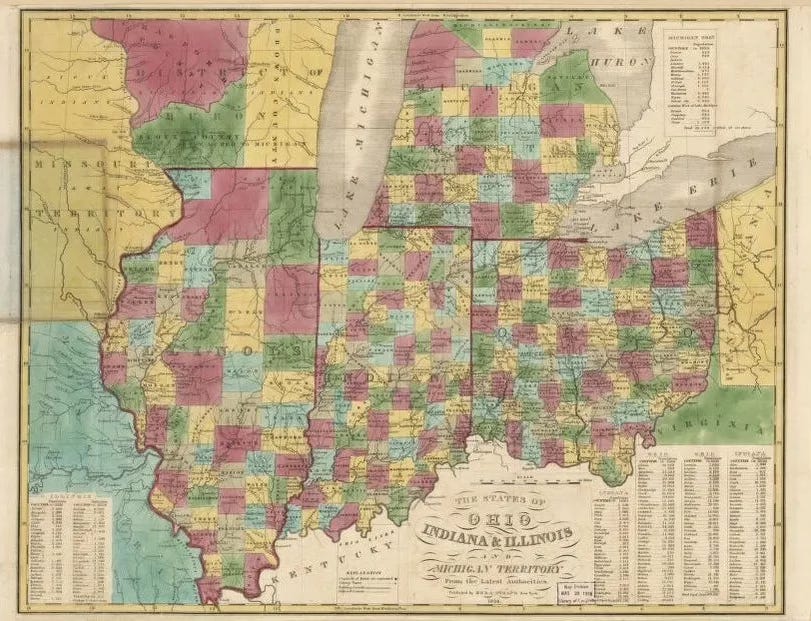
On July 13, 1787, the Confederation Congress adopted the Northwest Ordinance, one of the most important laws in American history—and one passed under the Articles of Confederation, before the Constitution even existed. Its formal subject was dry: how to govern the vast territory north and west of the Ohio River. But in answering that question, it set precedents that shaped the entire future of the nation.
The Ordinance did several remarkable things at once. It created an orderly process by which frontier territories would move through stages of self-government and eventually be admitted to the Union as new states—fully equal to the original thirteen, not as colonies or dependencies. That single principle, that new territory would become co-equal states rather than subordinate possessions, distinguished the American project from every empire that had come before. The Ordinance also guaranteed a set of rights to settlers in the territory: freedom of religion, the right to trial by jury, habeas corpus, and proportionate representation—a bill of rights in miniature, adopted before the Bill of Rights.
And in its most consequential provision, Article 6, the Ordinance banned slavery throughout the Northwest Territory—the future states of Ohio, Indiana, Illinois, Michigan, Wisconsin, and part of Minnesota. It was the first time the national government prohibited slavery in a defined territory, drawing a line that would harden over the decades into the divide between free states and slave states, and setting up the bitter fights over the expansion of slavery that culminated in the Civil War. The significance of July 13, 1787 is that a Congress often dismissed as weak and ineffectual produced a statute of enduring genius—a template for national growth, an early charter of liberties, and a foundational stand, however partial, against slavery.
Apple has sued OpenAI in federal court in Northern California, accusing the AI company of a systematic scheme to steal its trade secrets in order to break into consumer hardware. It’s a striking reversal for two companies that struck a high-profile partnership back in 2024. Apple’s complaint alleges misappropriation of trade secrets and breach of contract, claiming OpenAI leaned on former Apple employees—more than 400 now work there—along with aggressive recruiting and supplier relationships to vacuum up confidential information. Apple points a finger at OpenAI’s hardware chief, a former Apple vice president, alleging he told job candidates still employed at Apple to bring “actual parts” to interviews for “show and tell,” and that another departing employee downloaded dozens of files on unreleased products. Trade-secret law protects confidential business information that gives a company a competitive edge, and the case will turn on whether OpenAI crossed the line from lawfully hiring talent—people are allowed to change jobs and use their general skills—into unlawfully exploiting Apple’s protected secrets. Given the two firms’ size and the stakes in the AI hardware race, this is shaping up to be a marquee tech dispute.
Apple sues OpenAI alleging misappropriation of trade secrets, court records show | Reuters
A federal judge has ruled that disabled Justice Department immigration lawyers can keep working from home while they press a lawsuit challenging the department’s return-to-office mandate. Two attorney-advisers at the immigration courts won a preliminary injunction from Judge Patricia Tolliver Giles in the Eastern District of Virginia, temporarily halting the no-telework policy as applied to them. Their claim rests on the Rehabilitation Act, the federal statute requiring the government, as an employer, to provide reasonable accommodations to employees with disabilities—here, remote work they say is necessary to protect their health. The administration’s broad directive ordering federal workers back to the office full-time collided with that individualized duty. A preliminary injunction isn’t a final ruling; it means the plaintiffs showed they’re likely to win and would suffer irreparable harm without relief. The significance is the tension it spotlights: a government-wide, one-size-fits-all workplace policy still has to bend to statutory disability-accommodation rights, and this ruling suggests courts will enforce that limit even against the executive’s management of its own workforce.
US judge says DOJ lawyers can work from home pending lawsuit over telework policy | Reuters
The administration extended work permits for hundreds of thousands of immigrants with Temporary Protected Status from Haiti and six other countries just hours before they were set to expire. It’s worth being precise about what actually changed. TPS is a humanitarian designation that lets people from countries in crisis live and work here legally. Last month the Supreme Court cleared the way for the administration to end TPS for Haitians and Syrians—but what was extended here is narrower: the validity of the employment-authorization documents that workers and employers rely on for I-9 and E-Verify purposes. Haitians got two extra weeks, to July 24; those from Syria, Ethiopia, Somalia, Yemen, South Sudan, and Myanmar got one. The underlying TPS designations remain in legal limbo, awaiting district-court orders expected at the end of July. The significance is both humanitarian and practical: the reprieve came as some employers had already begun terminating these workers, and it underscores how much uncertainty TPS holders are living under—their ability to keep a job now measured in days and weeks while the courts sort out their status.
US extends work permits for Haitians, other immigrants with Temporary Protected Status | Reuters
And finally, a federal appeals court has sanctioned a lawyer for filing a brief riddled with fake, AI-generated case citations—the latest entry in a fast-growing genre. The Eleventh Circuit rebuked the attorney with a line destined for law-review footnotes: “Whatever the merits of artificial intelligence, it is no substitute for actual intelligence.” The problem is by now familiar: generative AI tools will, with total confidence, invent case names, citations, and quotations that do not exist—”hallucinations”—and lawyers who paste that output into filings without checking are presenting fictional law to a court. That breaches a basic professional duty. Under Rule 11 and the courts’ inherent authority, attorneys must certify that their legal contentions are grounded in real, existing law, and courts have been escalating the consequences—reimbursed fees, fines, and public reprimands—as the same mistake keeps recurring despite repeated warnings. The significance isn’t that AI is banned from law practice; it plainly isn’t. It’s that the tool doesn’t dilute the lawyer’s responsibility one bit. You can use AI to draft, but you still have to verify, because when you sign a brief you vouch for every citation in it—and “the computer made it up” is not a defense.
US appeals court rebukes lawyer over fake, hallucinated case citations | Reuters


