



This Day in Legal History: Revenue Act of 1862
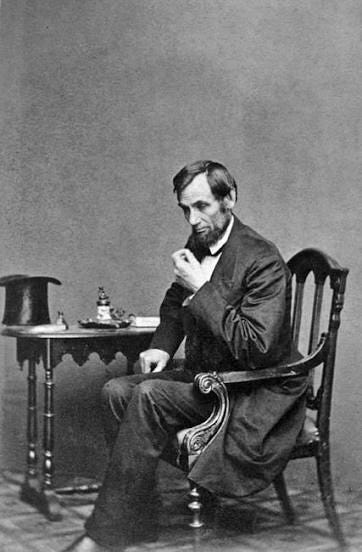
On this day in legal history, July 1, 1862, President Abraham Lincoln signed the Revenue Act of 1862, one of the most important financing measures of the Civil War. The Union war effort required enormous amounts of money, and Congress could no longer rely only on tariffs, loans, and traditional sources of federal revenue. The act created the Office of the Commissioner of Internal Revenue, the direct predecessor of today’s Internal Revenue Service.
This new office gave the federal government an administrative structure for assessing and collecting taxes across the country. The law also expanded the federal government’s role in the financial lives of ordinary Americans. It imposed a 3% tax on annual incomes between $600 and $10,000 and a 5% tax on incomes above $10,000. Although modest by modern standards, this was a major shift in American tax law because it treated income itself as a source of federal revenue.
The act also included taxes on goods, licenses, businesses, and other transactions, helping create a broader national tax system. Its purpose was practical and urgent: to raise the money needed to preserve the Union. But its legal significance went beyond the battlefield. The Revenue Act of 1862 helped normalize the idea that the federal government could collect taxes directly from individuals. The Civil War income tax was later allowed to expire, but the machinery of federal tax administration had been built.
Decades later, the Sixteenth Amendment would give Congress clearer constitutional authority to impose a national income tax. July 1, 1862, therefore marks a turning point in the legal history of federal taxation and the growth of national administrative power.
The Supreme Court ruled that President Trump’s executive order attempting to end birthright citizenship is invalid. In an opinion by Chief Justice John Roberts, the Court held that children born in the United States to parents who are undocumented or only temporarily present still meet the requirements of the 14th Amendment’s Citizenship Clause. Roberts wrote that the Constitution makes those children citizens at birth because they are born on U.S. soil and are subject to U.S. law.
The executive order, signed on January 20, 2025, never took effect because federal courts blocked it while lawsuits moved forward. Earlier, the Supreme Court had limited the power of lower courts to issue nationwide injunctions, but the legal challenges to the order continued through class-based and case-specific proceedings.
The Court’s majority relied heavily on the history of birthright citizenship, including English common law, the purpose of the 14th Amendment after Dred Scott, and the 1898 decision in United States v. Wong Kim Ark. Roberts rejected the administration’s argument that citizenship should depend on whether a child’s parents had permanent allegiance or domicile in the United States.
Justice Brett Kavanaugh agreed that the order was invalid, but he based his reasoning on federal statute rather than the Constitution. Justices Samuel Alito, Clarence Thomas, and Neil Gorsuch dissented in different ways, arguing that the majority misread the 14th Amendment’s history or failed to address important limits on birthright citizenship.
Supreme Court strikes down Trump’s order ending birthright citizenship | SCOTUSblog
The Supreme Court ruled that Idaho and West Virginia may enforce laws limiting girls’ and women’s school sports teams to athletes the states classify as biologically female. Justice Brett Kavanaugh wrote the main opinion, saying the laws do not violate Title IX or the Constitution’s Equal Protection Clause.
The Court was unanimous that the challenged laws do not violate Title IX, but the justices split over the constitutional issue, especially as applied to Becky Pepper-Jackson, the West Virginia student at the center of one case. Kavanaugh reasoned that Title IX permits schools to have separate teams based on sex and that, when the law was enacted, “sex” referred to biological sex. He also said states have important interests in safety and competitive fairness, and that courts should not be required to create individualized exceptions for athletes who have taken puberty blockers or hormones. The decision reversed lower-court rulings that had blocked Idaho and West Virginia from enforcing their bans.
Justice Clarence Thomas joined the majority and wrote separately to emphasize his view that sex is binary and biological. Justice Neil Gorsuch also wrote separately, focusing on the idea that Title IX, as a funding statute, must give schools clear notice of any conditions attached to federal money. Justice Sonia Sotomayor, joined by Justices Elena Kagan and Ketanji Brown Jackson, agreed that West Virginia’s law did not violate Title IX but dissented on the constitutional question. Sotomayor argued that the Court should have allowed more factual development on whether Pepper-Jackson, who had not gone through male puberty, was actually similarly situated to cisgender girls for athletic purposes.
The Supreme Court declined to hear Cathy Harris’s appeal after lower courts allowed President Trump to remove her from the U.S. Merit Systems Protection Board. Harris, a Democratic member and former chair of the board, had challenged her firing under a law that limited removal of board members to cases of inefficiency, neglect, or misconduct. The Court’s refusal came one day after it ruled 6-3 that similar removal protections for Federal Trade Commission members were unconstitutional. Because Merit Systems Protection Board members had nearly identical protections, Harris’s case was strongly affected by that new ruling.
The same appeals court decision that rejected Harris’s claim also upheld Trump’s firing of Gwynne Wilcox, a Democratic member of the National Labor Relations Board. The Merit Systems Protection Board is especially important because it hears appeals from federal employees who have been disciplined or fired. Harris warned that the decision weakens the board and threatens the independence of the civil service system. Her removal had temporarily left the three-member board without enough members to decide certain cases, though a later Senate confirmation restored a quorum. The ruling may also affect other lawsuits brought by officials Trump removed from independent agencies. More broadly, the decision gives the White House greater authority over agencies that were originally designed to have some protection from direct political control.
After FTC ruling, US Supreme Court turns away labor board member fired by Trump | Reuters


