



This Day in Legal History: Roe v. Wade
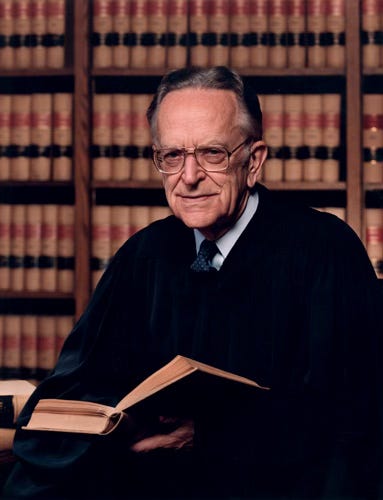
On January 22, 1973, the United States Supreme Court issued its landmark decision in Roe v. Wade, fundamentally reshaping American constitutional law and reproductive rights. In a 7–2 ruling, the Court held that the Due Process Clause of the Fourteenth Amendment protects a person’s right to privacy, which includes the right to choose to have an abortion. The case arose after a Texas woman, known under the pseudonym “Jane Roe,” challenged state laws that criminalized abortion except to save the life of the mother. Writing for the majority, Justice Harry Blackmun articulated a constitutional framework that balanced the state’s interest in regulating abortions with an individual’s right to privacy.
The Court introduced a trimester system, giving states greater regulatory power as pregnancy progressed but prohibiting outright bans on abortion in the first trimester. This decision effectively invalidated abortion restrictions in dozens of states and became one of the most politically and legally contentious rulings in American history. Roe expanded the constitutional interpretation of the right to privacy, which had been previously recognized in cases like Griswold v. Connecticut, but its grounding in substantive due process quickly became a lightning rod for critics.
Opponents of the ruling argued that the Constitution did not explicitly guarantee a right to abortion, while supporters saw it as a critical protection of bodily autonomy and gender equality. Over the next five decades, Roe faced continual challenges and legislative efforts aimed at narrowing its scope. Ultimately, in 2022, the Court overturned Roe in Dobbs v. Jackson Women’s Health Organization, returning authority to regulate abortion back to individual states and ending federal constitutional protection for abortion rights. The legacy of Roe v. Wade continues to shape legal discourse, political identity, and reproductive healthcare policy in the United States.
A federal appeals court has lifted a temporary order that had limited immigration agents from using tear gas and force against peaceful protesters in Minneapolis, a city currently at the center of a legal and political clash over immigration enforcement. The lower court’s injunction—issued by U.S. District Judge Kate Menendez—had aimed to protect demonstrators as they protested President Trump’s mass deployment of ICE and Border Patrol agents throughout the area. The Biden-era precedent of restrained enforcement has been upended by Trump’s aggressive tactics, which now include militarized agents patrolling streets and confronting U.S. citizens, particularly people of color, demanding identification and sometimes using force.
The protests intensified after an ICE agent fatally shot Renee Nicole Good, an American citizen monitoring ICE activities. In response to mounting legal challenges, including a suit from the Minnesota state government and its largest cities, the Trump administration has doubled down. Not only did the Department of Homeland Security appeal the injunction, but the Justice Department has also launched a criminal investigation into Minnesota Governor Tim Walz and Minneapolis Mayor Jacob Frey, both Democrats, accusing them of obstructing federal law enforcement.
The 8th Circuit Court of Appeals granted a temporary stay of the injunction while it considers a longer-term ruling, effectively allowing ICE to resume more aggressive tactics in the meantime. Critics, including Walz and Frey, warn that the Trump administration is intentionally provoking unrest to justify escalated federal intervention. The administration defends its actions as necessary to combat fraud, particularly among Minnesota’s Somali community, which Trump has disparaged in stark terms. The legal and political standoff continues, with lawsuits and investigations adding to the tension.
The U.S. Supreme Court appeared reluctant to endorse President Trump’s unprecedented attempt to fire Federal Reserve Governor Lisa Cook, signaling concern over the potential threat to the central bank’s independence. During oral arguments, justices from across the ideological spectrum questioned whether Trump had the authority to remove Cook without due process, especially given the lack of precedent and the vague legal standard for removing Fed officials “for cause.”
The administration cited unproven mortgage fraud allegations—claims Cook denies—as grounds for dismissal. However, several justices, including conservatives like Brett Kavanaugh and Amy Coney Barrett, expressed concern that firing a Fed governor without a hearing or judicial review could set a dangerous precedent and politicize the central bank. Chief Justice John Roberts and Justice Elena Kagan questioned whether minor or disputed past conduct could justify removal without any formal process.
Cook argued the allegations were merely a pretext for her removal over policy disagreements, particularly her resistance to Trump’s pressure to cut interest rates. The Court’s skepticism reflects unease about weakening safeguards designed to insulate the Fed from political interference. District Judge Jia Cobb previously blocked Cook’s removal, citing due process concerns and insufficient legal cause.
A decision from the Court is expected by June. If the justices rule in Cook’s favor or remand the case for further proceedings, it could reinforce limits on presidential power over independent agencies.
US Supreme Court appears reluctant to let Trump fire Fed’s Lisa Cook | Reuters
The Trump administration has launched a new immigration enforcement campaign in Maine, dubbed “Operation Catch of the Day,” with a focus on targeting criminal offenders—though internal sources indicate the true emphasis is on refugee populations, especially Somalis. Over 100 federal immigration agents have been deployed to the state, intensifying fears in immigrant communities and sparking political backlash.
Maine Governor Janet Mills, a Democrat currently running for a U.S. Senate seat, criticized the operation as unwelcome and politically motivated. This mirrors broader national trends, with Trump having already surged thousands of agents into other Democratic-led areas, such as Minnesota, where tensions recently escalated after ICE officers fatally shot a U.S. citizen. In Lewiston, Maine’s second-largest city and home to a longstanding Somali refugee community, the mayor condemned ICE’s tactics as inhumane and fear-driven.
Despite Trump’s framing of the effort as a crackdown on criminality, many targeted individuals have no criminal records. Critics argue the campaign serves more as political theater than public safety. Meanwhile, public support for such operations has eroded, especially as aggressive enforcement methods—including tear gas and raids—become more visible. DHS has defended its actions and criticized local leaders like Mills for not fully cooperating with federal immigration enforcement.
Trump administration starts immigration operation in Maine | Reuters
In my latest piece for Forbes, I examine the absurdity of President Trump’s renewed push to acquire Greenland—this time by threatening tariffs on countries that don’t support the plan. Far from making foreign governments pay, these tariffs would, once again, function as a consumption tax on Americans. Drawing from the Kiel Institute’s data, I show that during the 2025 “Liberation Day” tariff campaign, 96% of the costs fell on U.S. importers and consumers, not foreign exporters. This new Greenland-linked tariff threat follows the same script, only now it’s not even pretending to protect American industry—it’s economic coercion for a geopolitical fantasy.
I describe how tariffs, sold as leverage, collapse trade volumes without lowering foreign prices. Countries like Brazil and India didn’t budge on pricing; they just shipped elsewhere. Meanwhile, Americans paid more for less. I also highlight how small businesses and low-income households feel the pain first, as import costs ripple through the economy, raising prices on both foreign and domestic goods. Despite the $200 billion in customs revenue collected, it amounts to a regressive tax—not a clever policy move.
The deeper issue, as I argue, is the unchecked executive power to unilaterally impose tariffs. Current law enables the president to take sweeping trade actions with little oversight, and we’re now seeing that power used not for national defense or economic stability, but to punish allies for not acquiescing to a real estate deal. I call on Congress to reclaim its constitutional role in trade policy and set clear limits on executive authority in this arena. Otherwise, we’re left with a precedent where tariffs become tools of vanity projects—not national strategy.
Tariffs For Greenland—Or, ‘I’ll Hold My Breath Until You Turn Blue’


