



This Day in Legal History: The Indian Removal Act of 1830
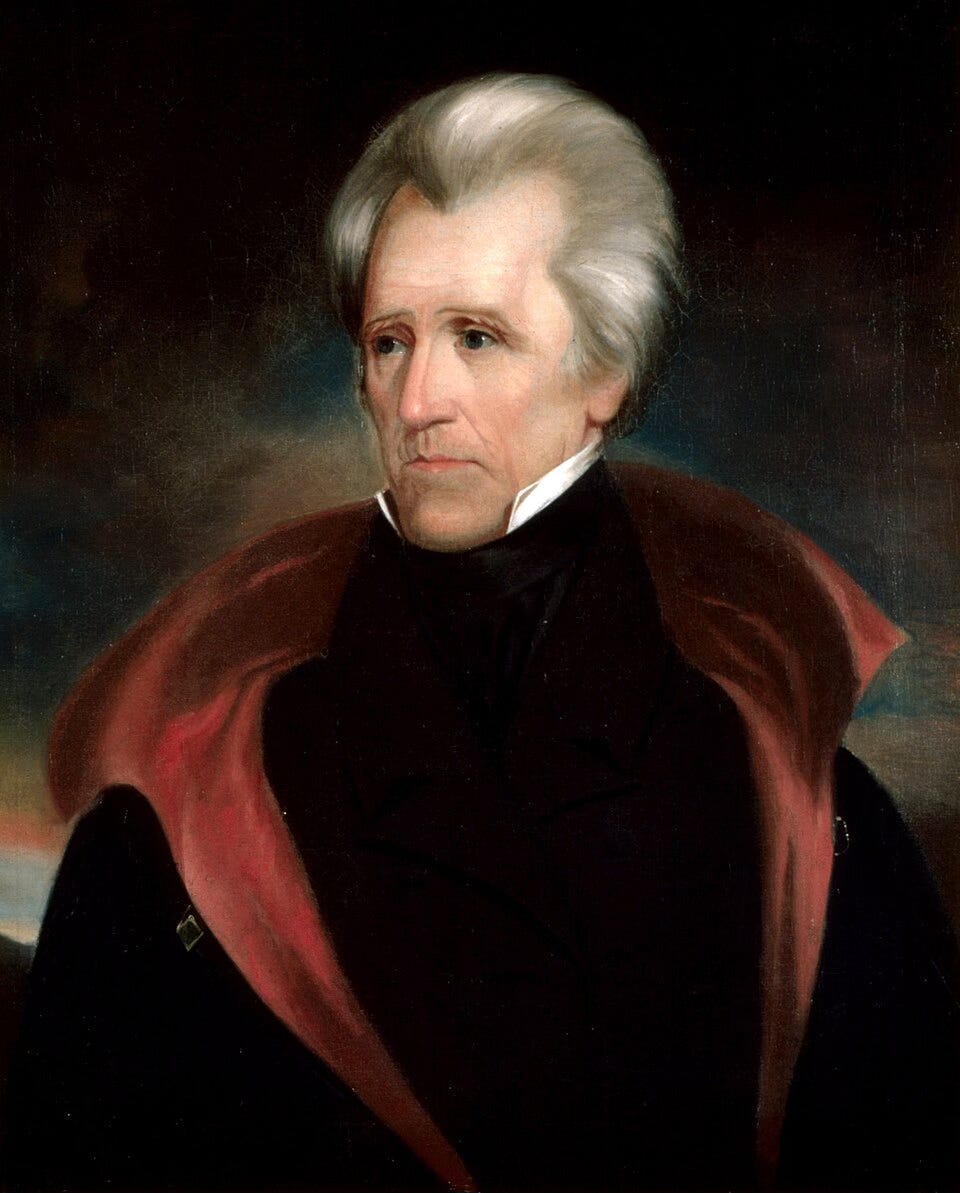
On this day May 28, 1830, President Andrew Jackson signed the Indian Removal Act, authorizing the federal government to “negotiate” the relocation of Native American tribes east of the Mississippi to lands in what is now Oklahoma. On its face the statute framed displacement as voluntary, treaty-based, and compensated; in practice it became the legal scaffolding for the forced expulsion of the Cherokee, Choctaw, Chickasaw, Creek, and Seminole nations, culminating in the Trail of Tears.
The bill passed the House by just five votes, with Davy Crockett among its most prominent dissenters. The years that immediately followed produced the Marshall Court’s foundational Indian law trilogy — Johnson v. M’Intosh, Cherokee Nation v. Georgia, and Worcester v. Georgia — the last of which Jackson famously (and probably apocryphally) refused to enforce. The doctrinal residue of the Removal era is still in force today: tribes remain “domestic dependent nations,” Congress still claims a “plenary power” over them, and the Supreme Court is still relitigating what reservation boundaries actually mean — most recently in McGirt v. Oklahoma in 2020 and Haaland v. Brackeen in 2023. The 1830 Act was not the beginning of dispossession in North America, but it was the moment Congress took ownership of the policy and dressed it in the language of statute. Whatever else May 28 marks on the calendar, in legal history it marks the day removal became American law.
Dutch coatings giant AkzoNobel, the maker of Dulux paint, told Sherwin-Williams and Nippon Paint Wednesday that their €12.5 billion ($14.6 billion) joint takeover proposal is not a “superior proposal” and that the board would stay the course on its already-agreed merger with Axalta Coating Systems. The rejected offer, made at €73 per share, would have carved AkzoNobel up — Nippon taking the decorative paints business, Sherwin-Williams taking industrial coatings — and was the second pass after an earlier bid that the board had swatted away in April.
AkzoNobel’s reasons read like a Dutch corporate-law primer: the offer “did not come close to adequately reflecting” long-term value, the deal-certainty risk around regulatory clearances was too high, and the “interests of AkzoNobel stakeholders” were not adequately safeguarded. That last word is the legal tell. Under Dutch law, a listed company’s board is not bound by anything resembling Delaware’s Revlon duty to maximize shareholder value in a sale; it answers to a stakeholder model that explicitly weighs employees, creditors, suppliers, and the long-term interests of the enterprise alongside the shareholders. That gives a Dutch board far more room to reject a premium cash bid than a comparable U.S. target would have, especially with a friendly all-stock merger of equals (the Axalta deal) already on the table.
The combined AkzoNobel-Axalta entity, announced last November and worth roughly $25 billion, plans to list on the NYSE with dual HQs in Amsterdam and Philadelphia and Dutch tax residency — a structure that itself preserves the Dutch governance model post-close. The CMA in the U.K. has already opened a public comment period on the Axalta deal, and antitrust review is likely the live front to watch from here.
AkzoNobel Snubs €12.5B Sherwin-Williams, Nippon Paint Bid | Law360
The Trump administration is preparing to halt federal immigration and customs processing at airports located in jurisdictions it deems “sanctuary cities” or “sanctuary states,”, according to a report Reuters published. The mechanism, if implemented, would have Customs and Border Protection officers stop staffing inbound international arrival processing — meaning international passengers landing at, say, San Francisco, Boston, or Seattle would be unable to clear customs at those airports and would have to be diverted. The legal architecture here is unusual because CBP staffing decisions sit at the discretionary end of federal administrative law: the agency has wide latitude to deploy officers where it wants, and there is no statutory entitlement for any particular city to host a federal port of entry.
That said, a decision to use that discretion as punishment for a state or municipality’s refusal to honor ICE detainers would invite a familiar set of challenges — South Dakota v. Dole-style coercion arguments dressed up as preemption, anti-commandeering claims under Murphy v. NCAA and Printz v. United States, and APA challenges under State Farm to whatever administrative record the agency assembles. Several of the targeted jurisdictions have already won injunctions in earlier rounds of sanctuary-city funding fights, including against the prior conditioning of Byrne JAG grants on detainer compliance. The political move is obvious; the legal move is less so, and the administration will need to articulate a non-pretextual reason for the staffing change if it wants to survive arbitrary-and-capricious review. Whether airlines, airport authorities, or the states themselves will have standing to sue — and what kind of irreparable harm a redirected flight inflicts — is going to be the first set of questions a court has to answer.
US draws up plans to halt immigration, customs processing at ‘sanctuary city’ airports | Reuters
The Supreme Court reversed and remanded the Fourth Circuit’s decision reviving the National Association of Immigration Judges’ First Amendment challenge to a federal rule restricting what sitting immigration judges may say publicly about the agency that employs them. The per curiam opinion’s holding is narrow but striking: the Fourth Circuit, the justices said, committed an abuse of discretion by reviving the suit on a theory neither party briefed, a “drastic departure from the principle of party presentation” laid out in cases like United States v. Sineneng-Smith. The party-presentation principle is one of those background structural rules that doesn’t get a lot of airtime — the basic idea is that federal courts are passive instruments that decide the cases the parties bring them, not the cases judges wish the parties had brought — but here it became outcome-determinative.
Justice Clarence Thomas, joined by Justice Amy Coney Barrett, wrote separately to say the Fourth Circuit was also wrong on the merits because it ignored Elgin v. Department of the Treasury, the 2012 decision holding that the Civil Service Reform Act’s administrative-channeling regime is the exclusive route for covered federal employees to challenge adverse employment actions, even constitutional ones. The practical effect is that the immigration judges’ union now has to litigate its First Amendment claim through the Merit Systems Protection Board and then the Federal Circuit rather than in district court, and the case bounces back to the Fourth Circuit to redo the analysis on whatever ground the parties did actually raise. The Court also denied a cross-petition from the union. The case is Margolin v. National Association of Immigration Judges, No. 25-767; the merits cross-petition was No. 25-1009.
Justices Order Redo In Immigration Judges’ Free Speech Suit | Law360
A Sixth Circuit panel on Tuesday affirmed the dismissal of an attempt by Right to Life of Michigan and a group of parents to block enforcement of Proposal 3, the 2022 Michigan ballot initiative that wrote a fundamental right to reproductive freedom into Article I, Section 28 of the state constitution. The panel did not reach the merits — the case stopped at standing — and the opinion, written by Judge John K. Bush, is a clean illustration of how high the Article III standing bar is for pre-enforcement challenges of this kind. Standing requires the plaintiff to show an injury that is fairly traceable to the defendant’s conduct and likely to be redressed by a favorable decision, and the parents here couldn’t make the traceability link work: their theory was that the amendment might allow schools or other actors to help minors obtain contraception or abortion care without parental consent, but the complaint identified no specific enforcement action by Governor Whitmer, Attorney General Nessel, or Secretary of State Benson that was causing or threatening any such injury.
The panel reiterated the Lujan v. Defenders of Wildlife framework and quoted approvingly the rule that a “general allegation” that an executive officer is “generally responsible for executing” state law does not, by itself, establish standing to sue that officer. The court also rejected the plaintiffs’ attempt to bootstrap standing off the AG’s and governor’s authority to enforce Michigan’s consumer protection and civil rights statutes, calling those allegations too speculative. This is going to be the template for the next several rounds of post-Dobbs challenges to state constitutional reproductive-rights amendments: the merits questions about scope and federal preemption will keep coming, but plaintiffs are going to need a concrete enforcement target to even get a hearing.
6th Circ. Rejects Mich. Reproductive Rights Challenge | Law360


