



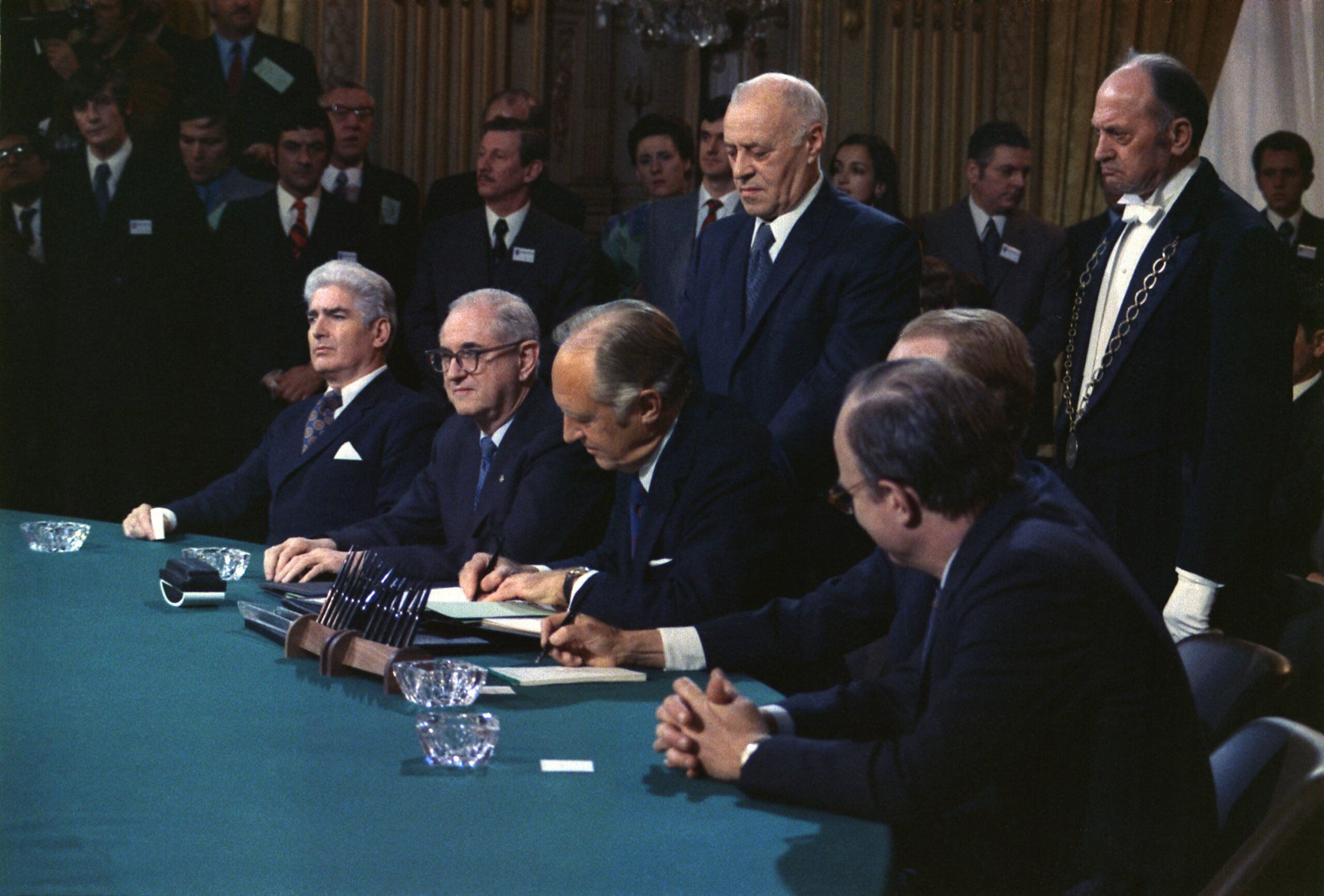
This Day in Legal History: Paris Peace Accords
On January 27, 1973, the United States signed the Paris Peace Accords, effectively marking the end of U.S. involvement in the Vietnam War. Though primarily a geopolitical and military agreement, the Paris Peace Accords had significant legal dimensions. Negotiated between the U.S., South Vietnam, North Vietnam, and the Viet Cong (under the banner of the Provisional Revolutionary Government), the accords represented a complex international legal settlement aimed at restoring peace in Vietnam and Southeast Asia.
The agreement included provisions for a cease-fire, the withdrawal of U.S. troops, the release of prisoners of war, and the recognition of South Vietnamese sovereignty. Legally, the accords posed a challenge to domestic and international law frameworks, particularly in the way the U.S. executive branch negotiated and signed the agreement without formal Congressional approval. This would later contribute to the debate around the War Powers Resolution, passed in 1973, which sought to limit the president’s ability to commit U.S. forces without legislative oversight.
Though hailed as a diplomatic breakthrough, the accords failed to bring lasting peace. North Vietnam eventually overran the South in 1975, raising legal questions about treaty enforcement and the durability of international peace agreements brokered without strong enforcement mechanisms.
A U.S. District Court judge in Minnesota is weighing whether to temporarily halt the Trump administration’s aggressive immigration enforcement operation in the state, which has come under intense scrutiny following the fatal shooting of Alex Pretti, a U.S. citizen and nurse. Local officials from Minnesota, Minneapolis, and St. Paul argue the federal crackdown involves unlawful tactics, including warrantless home raids and racial profiling, carried out by over 2,800 heavily armed agents—more than the total local police force. The Biden-appointed judge, Katherine Menendez, acknowledged the unprecedented nature of the case.
The administration, defending the operation, dismissed the lawsuit as baseless. However, video evidence contradicts the official account of Pretti’s death, showing he was unarmed and holding a phone when agents shot him, despite claims he posed a threat with a firearm. The incident has fueled widespread protests and demands for federal de-escalation from both state leaders and major Minnesota-based companies like Target and 3M.
President Trump has sent border czar Tom Homan to Minnesota, though it’s unclear whether this signals an expansion or reassessment of federal actions. Trump says his administration is “reviewing everything” and that immigration agents will eventually withdraw. Tensions have also spilled into Washington, with Senate Democrats vowing to block DHS funding, risking a partial government shutdown. Meanwhile, even some Republicans are questioning the administration’s approach.
US judge to consider pause to Minnesota crackdown as Trump dispatches border czar | Reuters
A federal judge in Boston has blocked the Trump administration from ending legal status for over 8,400 migrants from seven Latin American countries who had been allowed to live in the U.S. under family reunification parole programs. U.S. District Judge Indira Talwani issued a preliminary injunction, preventing the Department of Homeland Security from terminating the programs, which benefited migrants from Cuba, Haiti, Colombia, Ecuador, El Salvador, Guatemala, and Honduras.
These programs, created or expanded under President Biden, allowed U.S. citizens and green card holders to sponsor relatives while they awaited visa approval. The Trump administration moved to end the programs, claiming they were inconsistent with current enforcement priorities and enabled people to bypass traditional immigration processes.
Talwani found that the administration failed to justify its decision, noting the government neither provided evidence of fraud nor assessed the real-life consequences for affected migrants. Many had already sold homes or left jobs in their home countries. She ruled that DHS’s policy shift lacked a reasoned explanation and was therefore arbitrary and capricious under administrative law.
The ruling is part of a broader class action brought by immigrant rights advocates challenging Trump’s rollback of temporary protections. Talwani had previously tried to block similar efforts affecting hundreds of thousands of migrants, but those earlier rulings were overturned on appeal or by the Supreme Court.
US judge blocks Trump administration’s push to end legal status of 8,400 migrants | Reuters
My column for Bloomberg this week takes a look at the Empire State’s budget. New York Governor Kathy Hochul’s proposed no-tax-hike budget may appear fiscally cautious, but critics (includin me) argue it lacks the stable, long-term revenue needed to support key social programs like universal childcare. While the state currently enjoys relative revenue stability, the budget relies on temporary fixes, such as decoupling from parts of the federal tax code to generate $1.6 billion, instead of pursuing more durable sources of funding.
My critique centers on Hochul’s refusal to raise the top marginal corporate tax rate—currently 7.25% for large companies—which is lower than neighboring states like New Jersey (11.5%) and Connecticut (8.25%). I suggest raising the rate to at least 8.5% and making the existing corporate tax surcharge permanent. I argue that companies benefiting from New York’s infrastructure and market can afford modest increases, and are unlikely to relocate given regional and national tax landscapes.
Without securing permanent funding, the state risks repeating a familiar pattern: expanding programs in good times and cutting them during downturns. I warn that relying on temporary revenue maneuvers delays tough decisions and increases the likelihood of painful tax hikes or service cuts when the economy falters. In short, now is the time to align recurring revenues with long-term commitments, while conditions are favorable.


