



This Day in Legal History: The First Federal Income Tax
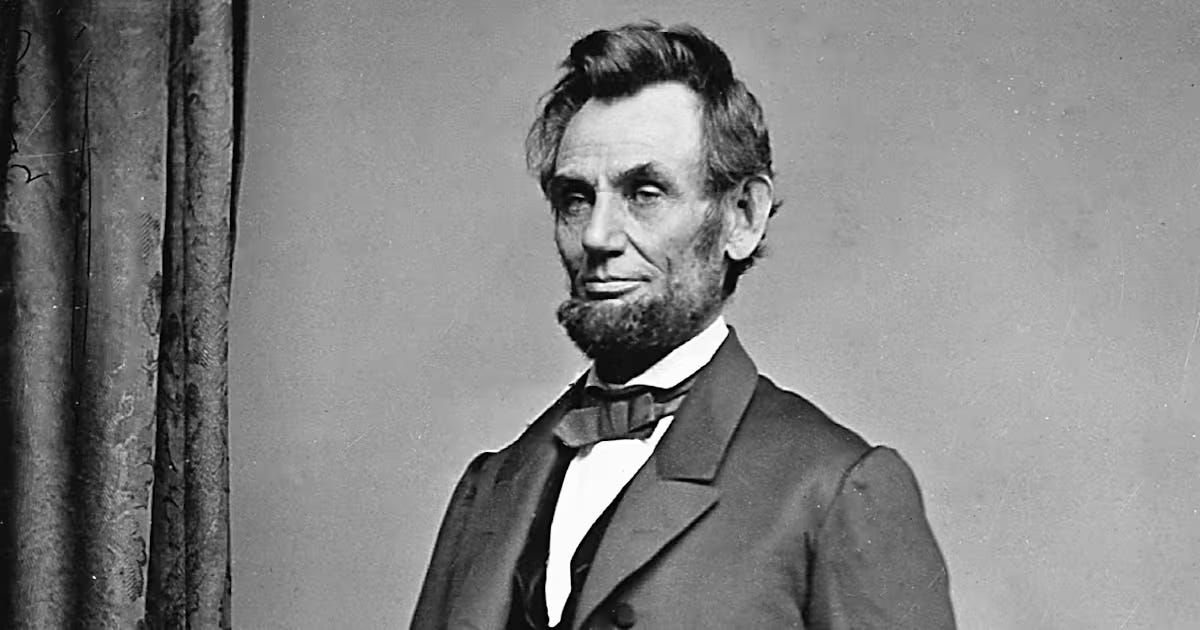
On August 5, 1861, President Abraham Lincoln signed the Revenue Act of 1861, and with it created the first federal income tax in the history of the United States. The country was three months into the Civil War, the Union’s costs were exploding, and the government needed money on a scale the old system of tariffs and land sales simply couldn’t provide. So Congress reached for something new: a tax of three percent on annual incomes over $800.
The 1861 income tax was, in practice, a bit of a false start. The $800 threshold meant only a small slice of the population owed anything, the administrative machinery to collect it barely existed, and in fact no income tax was ever actually collected under the 1861 Act—it was superseded the next year by the Revenue Act of 1862, which built the real apparatus, including the office of the Commissioner of Internal Revenue, the direct ancestor of the modern IRS. But the significance of August 5, 1861 is conceptual and enduring: it was the moment the federal government first asserted the power to tax the incomes of individual Americans directly.
That assertion would be contested for decades—the Supreme Court struck down a later income tax in 1895, and it took the Sixteenth Amendment in 1913 to settle the question for good. But the line runs straight from Lincoln’s wartime measure to the entire modern federal tax system. It’s a fitting anniversary for a day when one of our stories is about the fees and sanctions flowing from a lawsuit against the IRS—the very institution whose origins trace back to this Civil War revenue scramble. The income tax was born of necessity, in the middle of the gravest crisis the country ever faced, and it’s been at the center of American political and legal argument ever since.
After Trump’s roughly $10 billion lawsuit against the IRS was thrown out as brought in “bad faith,” a federal judge ordered him to pay the legal fees of those who fought it—and now the Justice Department is fighting the size of that bill. In this particular case, the challengers are seeking a fairly modest sum, around $43,500. But it’s part of a much bigger pattern: according to a Bloomberg analysis, attorneys have sought fees topping $100,000 in at least ten cases over the past year, totaling more than $2.5 million, and the DOJ is pushing courts to throw out or shrink many of those requests. Here’s the legal mechanism at work. Ordinarily in American litigation, each side pays its own lawyers—that’s the “American rule.” But courts can shift fees onto a party as a sanction when a lawsuit is frivolous or brought in bad faith, which is exactly what happened with the IRS suit, a case that also named Trump’s sons and alleged harm from the leak of the family’s tax records. Fee-shifting like this is meant to deter abusive litigation and to make whole the people forced to defend against it. The significance—and the irony—is that after a court found the underlying suit was an abuse of the judicial process, the government is now spending its lawyers’ time contesting comparatively small fee awards owed to the people who were dragged into it. And because the DOJ is doing the contesting, it’s taxpayers funding both sides of that fight. It’s a small-dollar story that illustrates a large-dollar problem: what happens, and who pays, when the government itself is found to have litigated in bad faith.
Trump fights fees for challengers in lawsuit against IRS | Reuters
Yahoo Finance (Bloomberg) · AOL
A federal appeals court has overturned a ban on Perplexity’s AI-powered shopping agents accessing Amazon—and it’s a genuinely landmark ruling for the future of “agentic” artificial intelligence. Back in March, a court had temporarily barred Perplexity’s shopping tool, built into its Comet browser, from operating on Amazon’s platform. Amazon’s legal theory rested on the Computer Fraud and Abuse Act—the federal anti-hacking statute that makes it illegal to access a computer “without authorization.” Amazon argued that when Perplexity’s AI agent logs into Amazon and shops on a user’s behalf, that’s unauthorized access. The appeals court disagreed, and the reasoning is what makes this important: the court found Amazon unlikely to succeed, concluding that it was Perplexity’s users—real people, with real Amazon accounts—who were accessing the platform, not Perplexity itself. The AI agent was simply acting as the user’s tool. This is the first time a federal appeals court has addressed whether AI agents acting on behalf of users can lawfully access online platforms, and that question is about to be everywhere. We’re heading into a world where your AI assistant books your travel, does your shopping, and manages your accounts—and the legal system has to decide whether that’s you using a tool, or a company trespassing on someone else’s system. The significance is that this ruling plants an early flag on the side of the user: if you’re authorized to be somewhere online, your AI agent acting for you is authorized too. Expect this to be cited constantly as the agentic-AI economy collides with decades-old computer-access law.
Amazon loses US court ban on Perplexity’s AI shopping tools | Reuters
Bloomberg Law · Engadget
A federal judge has dismissed the last of the January 6 Oath Keepers prosecutions—but he did so under vocal protest, in a rebuke that is itself the story. U.S. District Judge Amit Mehta granted the Justice Department’s motion to drop the cases against nine remaining Oath Keepers members tied to the Capitol attack, closing out the final chapter of the January 6 prosecutions. The dismissal flows from the administration’s decision, on the first day of Trump’s second term, to drop all pending January 6 cases. Here’s the legal framework and the tension inside it. Under the rules of criminal procedure, prosecutors have broad power to dismiss charges, and courts generally must defer to that call—the executive branch, not the judge, decides whom to prosecute. Mehta acknowledged the government had the authority. But he made unmistakably clear he thought it was wrong, writing that “today’s epilog diminishes the gravity of that day, denigrates the work of the prosecutors and law enforcement officers who secured these convictions, and excuses criminal acts that caused a centuries-long pillar of our democracy—the peaceful transfer of presidential power—to buckle.” That’s extraordinary language from a sitting federal judge. The significance is a stark illustration of the limits of judicial power against prosecutorial discretion. A judge who presided over these seditious-conspiracy trials, who saw the evidence and entered the convictions, had to sign the order erasing them because the decision to prosecute—or not—belongs to the executive. He could register his profound disagreement for the historical record, but he could not stop it. It’s a study in where one branch’s power ends and another’s begins.
US judge grants Justice Department bid to dismiss Oath Keepers prosecutions | Reuters
Washington Post · CNN
And finally, a divided federal appeals court has ruled that the EPA cannot claw back roughly $20 billion in clean-energy grants—another decision drawing a hard line around executive power over money that Congress has already committed. The D.C. Circuit restored an injunction against EPA Administrator Lee Zeldin’s move to terminate grants that had been awarded to nonprofit groups from the Greenhouse Gas Reduction Fund, a $27 billion program Congress created in the 2022 Inflation Reduction Act to finance renewable-energy projects, including in communities historically shut out of green financing. Zeldin had frozen the money in early 2025, saying it didn’t align with the agency’s priorities and might be tainted by fraud, waste, and abuse. The court wasn’t persuaded: six judges concluded that terminating the grants and clawing back the funds “based solely on a policy disagreement” likely violated the Inflation Reduction Act, and pointedly noted the EPA gave no assurance it would leave the money alone if the injunction were lifted. This should sound familiar—it’s the same principle we saw when a judge blocked the administration from canceling grants it deemed inconsistent with its priorities. The significance is the recurring constitutional boundary of this era: when Congress appropriates money for a purpose and an agency awards it, a new administration generally can’t just unwind those commitments because it dislikes the policy. The EPA says it’s reviewing the decision and may take it to the Supreme Court—which would tee up a definitive answer on just how much power a president has to stop spending money Congress told him to spend.
EPA cannot block billions in climate grants, US appeals court rules | Reuters
US News


