



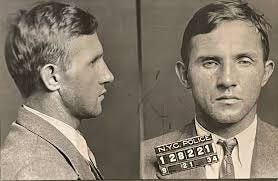
This Day in Legal History: Bruno Hauptmann Convicted
On February 13, 1935, a New Jersey jury convicted Bruno Hauptmann of kidnapping and murdering the infant son of famed aviator Charles Lindbergh. The crime had transfixed the nation for nearly three years and was widely labeled the “Crime of the Century.” The child was taken from the Lindbergh home in 1932, and despite a ransom payment, was later found dead. Public outrage was immediate and intense, with newspapers covering nearly every development in the investigation and trial.
Hauptmann’s prosecution relied heavily on circumstantial evidence, including ransom notes and expert testimony linking his handwriting to those notes. The government also introduced evidence tying marked ransom bills to Hauptmann’s possession. The trial raised early concerns about the reliability of forensic handwriting analysis and the influence of media attention on jury impartiality. Critics then and now have questioned whether the intense publicity compromised due process protections.
The case also reshaped federal criminal law. In response to the kidnapping, Congress enacted the Lindbergh Law, formally known as the Federal Kidnapping Act. The statute made it a federal offense to transport a kidnapping victim across state lines, expanding federal jurisdiction over what had traditionally been a state crime. That shift reflected a broader trend during the early twentieth century toward increased federal involvement in criminal enforcement.
Today, the Hauptmann conviction remains a staple in criminal law courses, not only for its tragic facts but also for its lasting procedural and constitutional implications.
Goldman Sachs’ chief legal officer, Kathy Ruemmler, resigned after newly released Justice Department documents detailed her past communications with Jeffrey Epstein. CEO David Solomon announced that he accepted her resignation, which will take effect on June 30. Ruemmler said the media attention surrounding her prior legal work had become a distraction. The disclosures showed she exchanged numerous emails with Epstein between 2014 and 2019 and received gifts from him, including luxury items. Some emails revealed that she advised Epstein on how to respond to press inquiries about his treatment by prosecutors.
The documents also noted that Epstein attempted to contact her by phone on the night of his 2019 arrest on sex trafficking charges. Ruemmler stated that she knew Epstein only in her capacity as a defense attorney and denied any knowledge of ongoing criminal conduct. Before joining Goldman, she led the white-collar defense practice at Latham & Watkins and previously served as White House counsel during the Obama administration.
The broader document release has drawn attention to Epstein’s connections within major financial institutions, including UBS and JPMorgan. Ruemmler’s departure marks one of the most prominent banking exits linked to the renewed scrutiny of Epstein’s network.
Top Goldman Sachs lawyer Ruemmler resigns after Epstein disclosures | Reuters
A federal judge in Minnesota ruled that U.S. Immigration and Customs Enforcement improperly interfered with detainees’ access to their attorneys during a recent enforcement operation. U.S. District Judge Nancy Brasel found that ICE’s practices during “Operation Metro Surge” effectively denied thousands of people meaningful legal access. The order requires ICE to stop quickly transferring detainees out of Minnesota and to permit attorney visits and confidential phone calls. The ruling will remain in effect for 14 days while the case proceeds.
The class action lawsuit was filed on January 27 on behalf of noncitizen detainees. According to the court, many individuals were moved out of state without notice, making it difficult or impossible for lawyers to locate them. In some instances, detainees were transferred so often that ICE itself lost track of their whereabouts. Judge Brasel concluded that while ICE did not formally deny the right to counsel, its actions in practice severely limited that right.
The court also cited evidence that detainees were given limited phone access, sometimes sharing a small number of phones among dozens of people, with calls occurring in nonprivate settings. One asylum seeker with a valid work permit was held for 18 days despite a court order requiring his earlier release and was transferred across multiple states without explanation. The judge rejected ICE’s claim that it lacked sufficient resources, noting that the agency had committed substantial personnel and funding to the enforcement effort.
ICE blocked detainees’ access to lawyers in Minnesota, judge finds | Reuters
President Donald Trump announced four new judicial nominations, including a White House attorney selected for a seat on the U.S. Court of International Trade. The nominee, Kara Westercamp, currently serves as associate counsel in the White House and previously worked at the Justice Department. If confirmed, she would join a nine-member court that handles disputes involving U.S. trade laws, including challenges to tariffs. Her nomination comes as numerous companies contest Trump’s sweeping global tariffs and seek refunds on duties already paid.
Retailers and manufacturers such as Costco, Goodyear, and Revlon have filed lawsuits arguing that the tariffs exceed presidential authority. Earlier rulings from the trade court and the U.S. Court of Appeals for the Federal Circuit blocked most of the tariffs, and the U.S. Supreme Court is now reviewing the matter. Trump has publicly criticized the earlier decisions.
In addition to Westercamp, Trump nominated Katie Lane to a federal district court in Montana, Sheria Clarke to a district court seat in South Carolina, and federal prosecutor Evan Rikhye to a 10-year term on the District Court of the Virgin Islands. All nominees must be confirmed by the Senate.
Trump nominates White House lawyer to court hearing tariff cases | Reuters
Former CNN anchor Don Lemon is scheduled to appear in federal court in Minnesota to enter a plea related to charges stemming from his coverage of a protest at a St. Paul church. The protest targeted President Donald Trump’s immigration enforcement surge in the state. Lemon, now an independent journalist, livestreamed the January 18 demonstration, which disrupted a worship service at Cities Church.
Federal prosecutors charged him with conspiring to violate civil rights and with obstructing access to a house of worship under a statute also used in cases involving abortion clinic protests. His attorney argues that the prosecution infringes on Lemon’s First Amendment rights and characterizes the case as an attack on press freedom. Trump publicly supported the charges, while Attorney General Pam Bondi stated that authorities would protect the right to worship without interference.
The protest occurred during broader demonstrations against federal immigration actions in Minnesota, where thousands had gathered to oppose the crackdown. Lemon was seen on video speaking with activists before and during the disruption and interviewing participants and congregants inside the church. Another journalist, Georgia Fort, faces similar charges and has denied wrongdoing, stating she was reporting rather than participating.
Journalist Don Lemon to enter plea in Minnesota ICE protest case | Reuters
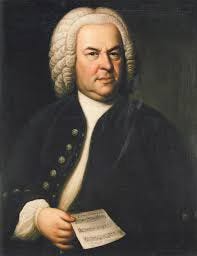
This week’s closing theme is by Johann Sebastian Bach.
Bach stands as one of the central figures of the Baroque era, revered for the structural clarity and spiritual depth of his music. Born in 1685 into a long line of musicians, Bach spent much of his career serving as a church organist and cantor in German cities such as Arnstadt, Weimar, and Leipzig. Though not widely celebrated outside musical circles during his lifetime, his reputation has since grown to near-mythic status. His compositions balance intellectual precision with emotional resonance, blending intricate counterpoint with lyrical expression.
This week’s closing theme is his Cello Suite No. 1 in G major, BWV 1007, likely composed around 1720 during his tenure in Köthen. The suite opens with one of the most recognizable preludes in all of classical music, built from flowing arpeggios that unfold with quiet inevitability. Written for unaccompanied cello, the piece demonstrates Bach’s ability to imply harmony and depth through a single melodic line. The suite follows the traditional Baroque dance structure, moving from Prelude through Allemande, Courante, Sarabande, Menuets, and Gigue.
For many listeners, the Prelude evokes clarity, order, and calm—qualities that make it a fitting close to the week. Its simplicity is deceptive; beneath the surface lies careful architecture and subtle harmonic movement. The work fell into relative obscurity until the twentieth century, when cellist Pablo Casals famously revived it and brought it to concert stages worldwide. Today, it remains a cornerstone of the cello repertoire and a touchstone of Baroque artistry. As a closing theme, it offers both reflection and renewal, ending not with flourish but with quiet confidence.
Without further ado, Johann Sebastian Bach’s Cello Suite No. 1 in G major, BWV 1007–enjoy!


