



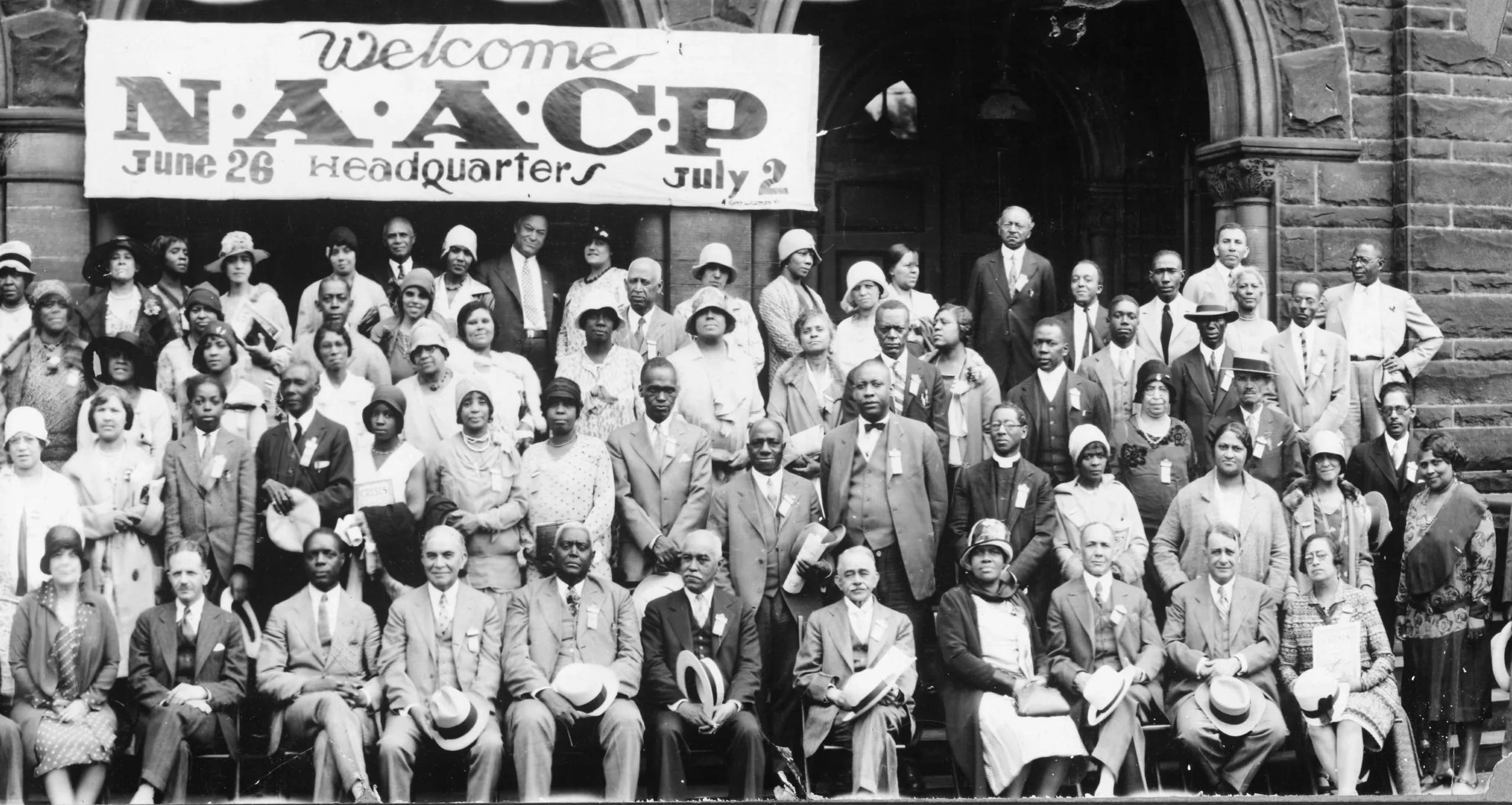
This Day in Legal History: NAACP Founded
On February 12, 1909, the National Association for the Advancement of Colored People (NAACP) was founded in New York City. Sparked by ongoing racial violence, including the 1908 Springfield Race Riot in Illinois, a group of Black and white activists came together to launch an interracial effort to combat racial injustice. The NAACP would become the most influential civil rights organization in the United States, pursuing its goals through strategic litigation, public education, and advocacy.
In its early years, the NAACP focused heavily on using the courts to challenge discriminatory laws and practices, particularly in education and voting. It played a pivotal role in Brown v. Board of Education (1954), the landmark Supreme Court case that declared racial segregation in public schools unconstitutional. Through its Legal Defense Fund—established in 1940 and headed for a time by Thurgood Marshall, who would later become the first Black U.S. Supreme Court Justice—the organization spearheaded a range of major civil rights cases.
Beyond litigation, the NAACP was instrumental in pushing for anti-lynching laws, though federal anti-lynching legislation would take over a century to pass. The group’s efforts laid the legal and political foundation for the Civil Rights Movement of the 1950s and 1960s. Its influence continues today as it monitors civil rights violations and advocates for racial justice nationwide.
Tom Goldstein, a prominent U.S. Supreme Court advocate and co-founder of SCOTUSblog, testified in his own defense during his federal criminal tax trial in Maryland. Goldstein, accused of failing to report millions in poker winnings and misrepresenting debts on mortgage applications, told jurors he never intended to violate the law. He admitted omitting gambling debts to keep them hidden from his wife, and claimed he relied on accountants and firm managers for financial reporting. The trial, overseen by Judge Lydia Griggsby, has drawn attention for its mix of high-stakes legal and poker worlds. Goldstein is alleged to have reported only $27 million of $50 million in poker winnings to the IRS in 2016. He also faces allegations of channeling improper payments through his former law firm and requesting a $500,000 payment from actor Tobey Maguire be sent to a third party to cover personal debts. Maguire, a witness in the trial, is not accused of any misconduct. The defense has called more than a dozen witnesses, including IRS agents, poker players, and law firm executives. Goldstein retired from Supreme Court advocacy in 2023 after arguing over 40 cases. The trial continues with prosecutors set to cross-examine him following his testimony.
Supreme Court lawyer Tom Goldstein takes stand at his criminal tax trial | Reuters
Attorney General Pam Bondi faced sharp criticism from lawmakers during a House Judiciary Committee hearing over the Justice Department’s handling of files related to Jeffrey Epstein. Representative Thomas Massie accused Bondi of deliberately concealing the names of powerful individuals connected to Epstein, including billionaire Leslie Wexner, whose name was initially redacted in an FBI document. Bondi countered that Wexner’s name had already been made public in other documents and was quickly unredacted once flagged. Lawmakers across the aisle expressed frustration over what they called excessive and unjustified redactions, despite a federal law passed in November mandating broad disclosure of the Epstein files.
Bondi defended the department’s efforts, highlighting the work of over 500 lawyers on a tight timeline, and insisted any release of victims’ identities was accidental. She repeatedly praised President Donald Trump during the hearing and criticized Democratic members, accusing them of political theatrics. Her confrontational style sparked further tension, especially when she refused to apologize to Epstein’s victims seated in the gallery, deflecting the request by referencing past administrations. The hearing reflects the ongoing controversy surrounding the Justice Department’s approach to transparency, its alignment with Trump-era politics, and the public’s demand for accountability in the Epstein investigation.
US lawmakers accuse Bondi of hiding names of Epstein associates | Reuters
The Law School Admission Council (LSAC) announced that beginning August 2026, the LSAT will no longer be available online, citing rising concerns over cheating. The move comes after a period of hybrid testing, introduced during the COVID-19 pandemic, which allowed examinees to choose between in-person and remote formats. While remote testing will still be permitted in limited cases involving medical or geographic hardships, the default will now be in-person testing at designated centers. LSAC emphasized that the shift is meant to enhance test integrity and deter misconduct, which has become a growing concern—particularly after the organization suspended online testing in China due to reports of systemic cheating.
Industry professionals, including LSAT prep company leaders, supported the decision, noting that online platforms made it easier for cheating rings to exploit the system through tactics like using cameras to capture test content or remotely accessing test takers’ computers. Some cheating services reportedly charged thousands of dollars to help candidates gain an unfair advantage. LSAC added that technical difficulties also played a role in the change, with most scoring delays stemming from remote testing issues. On the January 2026 exam, 61% of test takers opted for in-person testing, suggesting a trend back toward traditional methods.
US law school admissions test ends online option over cheating concerns | Reuters


