



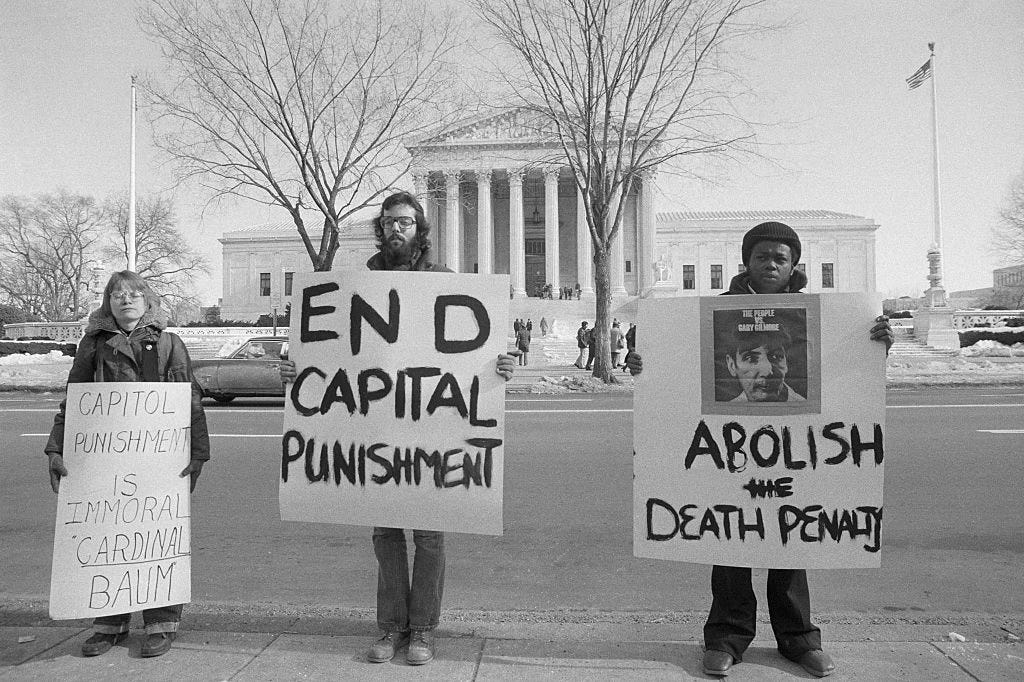
This Day in Legal History: Furman v. Georgia
On June 29, 1972, in a narrow 5-4 decision, the Supreme Court delivered what many thought was a death blow to capital punishment in America. In Furman v. Georgia, the Court held that the death penalty, as it was then being administered, violated the Eighth Amendment’s prohibition on cruel and unusual punishment because it was imposed arbitrarily and inconsistently.
The case involved William Henry Furman, a man convicted of murder in Georgia. Furman was sentenced to death. But the critical issue wasn’t whether Furman committed the crime—it was whether the death penalty itself was constitutional. The Supreme Court’s nine justices were deeply divided. Five justices voted to overturn the death penalty as then applied, but they disagreed on why. Some thought the death penalty was always unconstitutional. Others thought it could be acceptable if applied fairly, but the current system was arbitrary.
Here’s why the decision was so important: Under the death penalty laws at the time, juries had nearly unlimited discretion in deciding who lived and who died. Two people could commit the same crime, but one would receive a death sentence while the other received life in prison. There was no clear standard. Race played a role—Black defendants were disproportionately sentenced to death. Geographic location mattered—you were more likely to be executed in the South than elsewhere. Whether you could afford a good lawyer mattered. The Supreme Court found this arbitrariness violated the Eighth Amendment. The Court didn’t say states could never execute anyone, but it said the current system was too random and unpredictable.
The Eighth Amendment says the government can’t impose cruel and unusual punishment. If the death penalty is imposed so randomly that there’s no consistency—no clear rules about who lives and who dies—then it becomes essentially random. It’s like a lottery where the prize is death. That randomness itself violates the Constitution’s guarantee that punishment won’t be arbitrary.
The immediate effect was stunning: Furman invalidated every death penalty statute in the country. Roughly 600 death row inmates had their sentences commuted to life imprisonment. For four years, there were no executions in America.
But the story didn’t end there. States quickly rewrote their death penalty laws to address the Court’s concerns about arbitrariness. They created more detailed guidelines for when death was appropriate. They required separate penalty hearings where juries would hear aggravating and mitigating factors. By 1976, in a case called Gregg v. Georgia, the Supreme Court approved these new, more detailed death penalty statutes. Executions resumed in 1977.
What’s remarkable about Furman is that it shows how constitutional law can shift dramatically. A 5-4 decision blocked capital punishment across the nation. But when states rewrote their laws to address the constitutional concerns, the Court allowed executions to resume. The case demonstrates both the power of constitutional law and its limits. The Constitution banned arbitrary death sentences, but it didn’t ban capital punishment itself—states just had to impose it in a more systematic way.
Furman remains one of the most consequential Supreme Court decisions in American history. It shows that the Constitution evolves to address serious injustices—in this case, the arbitrary imposition of death. The case is a reminder that when the Supreme Court identifies a fundamental constitutional violation, it can force the entire nation to reckon with it. For four years, there was no capital punishment in America because the Court said the system violated the Constitution. When executions resumed, they were more regulated and systematic, at least nominally, because the Court had demanded consistency and reason in what had been an arbitrary process.
Luigi Mangione, the suspect charged in connection with the killing of a health insurance company executive, appeared in court for a hearing on significant legal matters related to his case. The high-profile nature of the case has drawn intense media attention and raised important questions about corporate accountability and public anger at insurance companies. Here’s what’s at stake: A health insurance CEO was killed in what many saw as a targeted attack motivated by anger at insurance company practices. Mangione was arrested and charged. The case has sparked national debate about the role of insurance companies in healthcare and whether the widespread frustration with how they deny coverage is justified.
The case raises questions about institutional responsibility. Insurance companies make profit-driven decisions about what medical treatments to cover and what to deny. When patients can’t get coverage for necessary treatment, people die. Families go bankrupt. The anger is real and widespread. The question for the legal system is: Does that anger justify killing?
The answer from the law is no—violence is not an acceptable response, even to unjust systems. Mangione’s hearing addresses procedural questions about bail, evidence, and the rights of the accused. Whatever the merits of anger at insurance companies, everyone—including those accused of crimes—deserves due process, the right to challenge evidence, and the presumption of innocence.
The case highlights the tension between systemic injustice and individual criminal responsibility. It’s raising national conversation about what we owe each other as a society when institutions harm people. It’s also a reminder that the legal system must protect both victims and the accused, even in cases that inspire strong public emotions. The case will likely result in a trial that examines both the facts of the killing and, implicitly, the role of insurance companies in healthcare.
Mangione faces hearing ahead of trial over US health insurance CEO’s killing | Reuters
Federal immigration officials have signaled that migrants with temporary legal status should either pursue permanent residency or prepare to leave the country. The policy shift is part of the Trump administration’s broader restrictive immigration agenda.
Many migrants in the United States have “temporary protected status” (TPS) or similar temporary visa categories. These are people who fled violence, natural disaster, or persecution in their home countries and were granted temporary permission to stay and work in America. They contribute to the economy, pay taxes, and have built lives here. Some have been in America for decades. But temporary status is not permanent. The Trump administration is now saying that those with temporary status should either apply for permanent residency or leave.
Imagine you’ve been told you could stay in a house temporarily. You’ve lived there for 10 or 20 years. You’ve built a home. Your children were born there. You have a job and community. Now someone is saying you must either buy the house or leave. For many migrants with temporary status, there’s no legal pathway to permanent residency. The Trump administration makes it hard to qualify for permanent status. Some people simply can’t meet the legal requirements. They’re faced with an impossible choice: apply for status they don’t qualify for, or leave the country where they’ve built their lives.
This policy will likely push many migrants to leave the United States, disrupting industries that depend on their labor and breaking up families. It reflects the Trump administration’s philosophy that immigration should be severely restricted. It also highlights a fundamental problem: the legal immigration system doesn’t create pathways for people who are already here, contributing to society, and building lives. The policy raises questions about what we owe people who have contributed to our communities, even if they don’t yet have permanent status.
Bail bond insurers have agreed to pay $69 million to settle a class action lawsuit accusing them of illegally fixing prices and coordinating to keep bail bond costs artificially high. The settlement represents a significant victory for consumers who have been overcharged for bail bonds.
When someone is arrested and held in jail, they can often post bail to be released while awaiting trial. If they can’t afford bail, they can buy a bail bond from a bail bond company. The bail bondsman posts the bail amount to the court, and the defendant pays a percentage of that as a fee. The problem: Bail bond companies were allegedly coordinating with each other to keep their fees uniformly high rather than competing.
In a free market, if one company charges too much, customers go to a competitor who charges less. But if all the companies secretly agree to charge the same high price, there’s no real competition. Customers have no choice—they have to pay whatever price is set. That’s price-fixing, and it’s illegal. The companies allegedly communicated to ensure all bail bond fees stayed high, eliminating genuine price competition. This hit poor people hardest—those who are arrested and can’t afford bail are often the people least able to afford high bail bond fees. The settlement requires the insurers to pay $69 million, which will go to class members who overpaid for bail bonds.
This case shows that even industries that seem far from consumer consciousness can be subject to antitrust law and consumer protection suits. Bail bond companies thought they could secretly coordinate on pricing. A class action exposed the scheme and forced compensation. The settlement reminds us that when companies illegally eliminate competition, consumers pay. The case also highlights how the bail system itself can burden poor people—they have to pay high fees just to get out of jail while awaiting trial, which itself violates fairness principles. The settlement provides some compensation, but it also raises bigger questions about whether the bail system itself needs reform.
Bail bond insurers to pay $69 million to settle price-fixing class action | Reuters


