


This Day in Legal History: Salmon P. Chase Dies
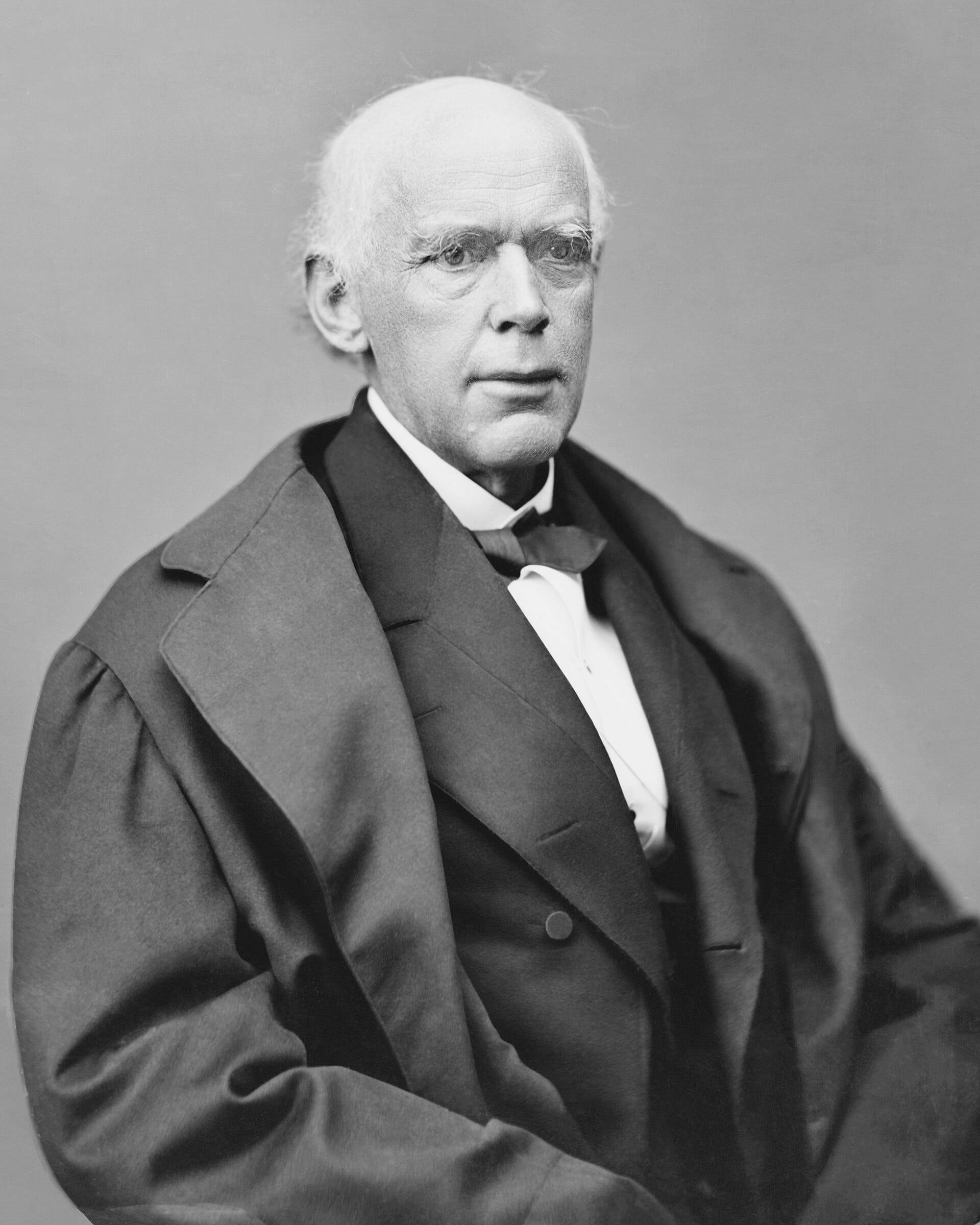
On May 7, 1873, Chief Justice Salmon P. Chase died, ending one of the most unusual legal and political careers in American history. Chase had been an antislavery lawyer, a U.S. senator, governor of Ohio, Abraham Lincoln’s secretary of the Treasury, and then Chief Justice of the United States. He was also one of the many talented and ambitious men around Lincoln who did not begin as an admirer of him. Before Lincoln became president, Chase had encountered him as a lawyer and reportedly did not think much of him, viewing him as a rough western attorney rather than a national figure. After Lincoln defeated him for the Republican nomination in 1860, Chase had reason to believe a summons to the White House might be an occasion for Lincoln to enjoy the victory. Instead, Lincoln offered him one of the most important jobs in the government: secretary of the Treasury.
It was a revealing moment in Lincoln’s political genius, because he was willing to place a rival who had underestimated him in a position of enormous responsibility during the Civil War. Chase helped finance the Union war effort and became closely associated with the creation of a national banking system and the issuance of paper currency. In 1864, Lincoln elevated him again by appointing him Chief Justice of the United States.
As Chief Justice, Chase presided over the 1868 impeachment trial of President Andrew Johnson, a major constitutional test of presidential power and congressional authority. Near the end of his life, Chase dissented in the Slaughter-House Cases, one of the first major Supreme Court interpretations of the Fourteenth Amendment. The Court’s majority read the Amendment’s Privileges or Immunities Clause narrowly, limiting a provision that many had hoped would become a strong source of federal protection for civil rights. Chase’s dissent placed him on the side of a broader understanding of Reconstruction’s constitutional promise. His death mattered not only because of the offices he held, but because it came at a moment when the Supreme Court was deciding whether the Civil War amendments would transform American law or be read down almost as soon as they were adopted.
Apple customers have asked a California federal judge to preliminarily approve a proposed $250 million settlement over claims that Apple overstated the artificial intelligence features available on the iPhone 16. The proposed class includes people who bought any iPhone 16 model or certain iPhone 15 models between June 10, 2024, and March 29, 2025. The customers allege Apple advertised enhanced Siri capabilities as part of its Apple Intelligence rollout even though those features were not yet available. Under the settlement, eligible class members who submit valid claims would receive $25 per device, with payments possibly rising to $95 per device depending on participation. Apple is also expected to provide additional Siri-related Apple Intelligence updates in the future at no extra cost.
The plaintiffs said settlement made sense because AI-related consumer claims are still legally novel and would carry risk if the case continued. Apple had argued that its marketing was not deceptive because it had already released many Apple Intelligence features and had disclosed that other features would arrive over time. The case began in March 2025 and later became part of a consolidated set of related lawsuits in the Northern District of California. The parties conducted discovery, consulted experts, and participated in three full-day mediation sessions before reaching the proposed deal. Plaintiffs’ lawyers plan to seek up to $70 million in fees, plus up to $600,000 in expenses. The settlement does not resolve separate securities or shareholder cases claiming Apple misled investors about the timing of the Siri rollout. Apple said it settled to remain focused on developing products and services, while maintaining that it has already introduced numerous Apple Intelligence tools.
Apple Reaches $250M Deal Over Claims It Overhyped IPhone AI - Law360
Bayer has agreed to acquire Perfuse Therapeutics, a San Francisco biopharma company, in a deal worth up to $2.45 billion. The transaction gives Bayer full rights to PER-001, a drug candidate in phase-two clinical development for glaucoma and diabetic retinopathy. Bayer will pay $300 million upfront, with the rest tied to development, regulatory, and sales milestones. Perfuse focuses on treatments that improve blood flow to the retina, with the goal of addressing conditions that can lead to blindness. Bayer said the acquisition strengthens its ophthalmology pipeline and supports its effort to develop new therapies for serious eye diseases.
The deal is being handled legally by Baker McKenzie for Bayer, with partners Alan Zoccolillo, Oren Livne, and Jieun Tak leading the team. Goodwin Procter is advising Perfuse. The transaction still needs antitrust clearance and approval from Perfuse shareholders. Bayer is being advised financially by BofA Securities, while Centerview Partners is advising Perfuse. Bayer and Perfuse said glaucoma could affect about 112 million people by 2040, while diabetic retinopathy could affect 160 million people by 2045.
Baker McKenzie-Led Bayer To Buy Perfuse For Up To $2.45B - Law360 UK
The California Supreme Court is considering whether drugmakers can be held legally responsible for stopping development of a potentially safer drug while continuing to sell an already-approved medication. The case involves Gilead Sciences and roughly 24,000 HIV patients who took drugs containing tenofovir disoproxil fumarate, or TDF. TDF-based drugs received FDA approval in 2001, but they were associated with possible kidney and bone side effects. Gilead later began developing a related drug, tenofovir alafenamide fumarate, or TAF, which patients say had fewer side effects. The company stopped developing TAF in 2004, arguing that it was not different enough from TDF to justify further investment.
The patients claim Gilead delayed TAF for business reasons, including to protect TDF sales and time TAF’s release around the expiration of TDF patents. Gilead argues that allowing the negligence claims to proceed would punish companies for researching possible improvements and could discourage innovation. The company says the lower court rulings effectively create a “duty to innovate,” even when the drug already on the market is not alleged to be defective. The patients respond that the case is not about forcing endless research, but about whether Gilead unreasonably delayed a safer alternative for profit. A ruling for the patients could expand product-liability exposure for pharmaceutical companies, while a ruling for Gilead could limit claims based on decisions not to commercialize drugs still in development.
California’s highest court to consider whether drugmakers have ‘duty to innovate’ | Reuters


