


This Day in Legal History: Shelby County v. Holder
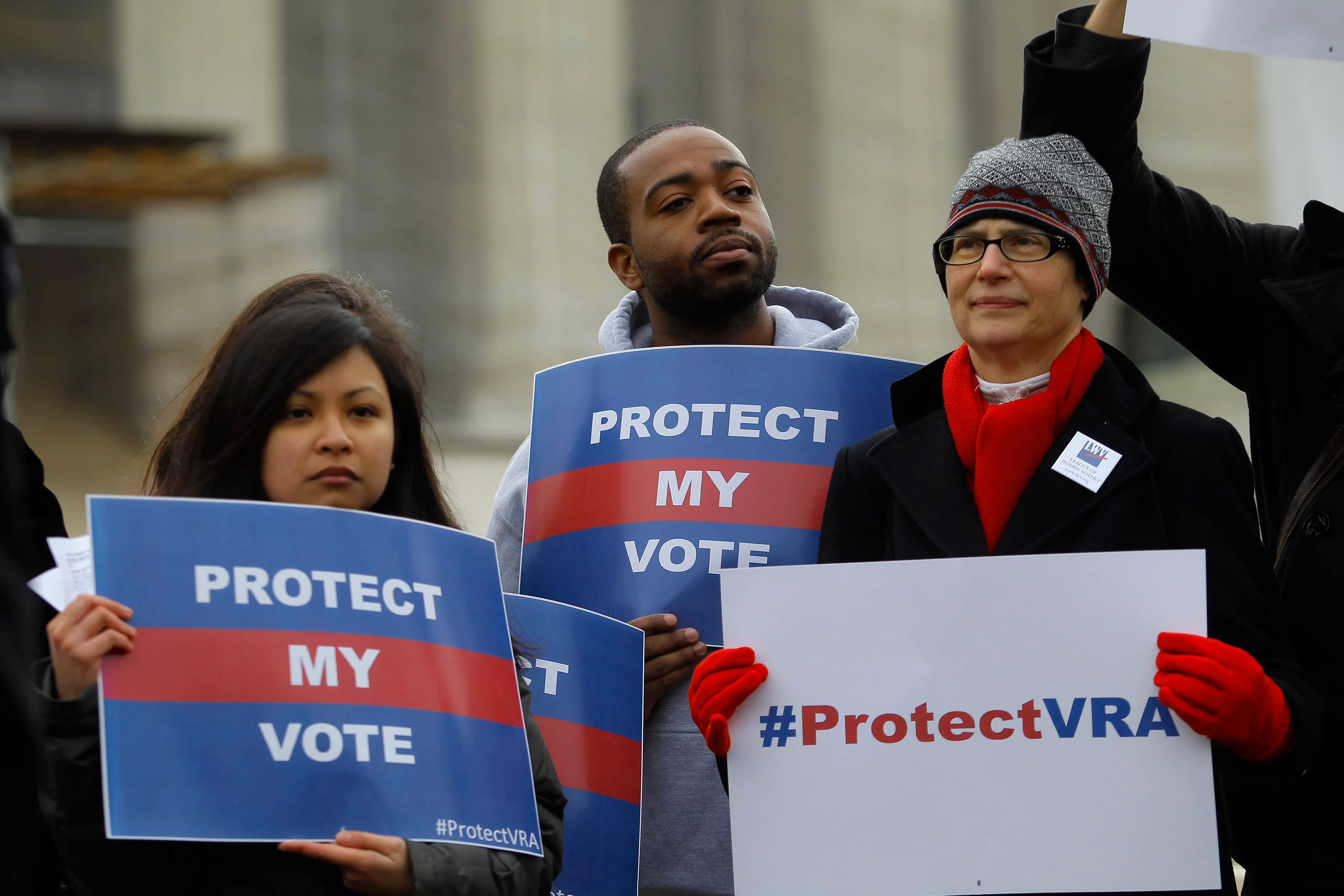
On this day in legal history, June 25, 2013, the U.S. Supreme Court decided Shelby County v. Holder, a major case on the future of the Voting Rights Act of 1965. In a 5–4 decision, the Court struck down Section 4(b) of the Act, which contained the formula used to decide which states and local governments were subject to federal oversight before changing their voting laws. That oversight system, known as preclearance, had required covered jurisdictions to get approval from the federal government before making changes to election rules. The purpose of preclearance was to stop discriminatory voting practices before they could affect an election. Chief Justice John Roberts wrote the majority opinion, concluding that the coverage formula was based on outdated data and no longer reflected current conditions.
The Court did not strike down preclearance itself, but without a valid coverage formula, the preclearance system was largely left without practical effect. Justice Ruth Bader Ginsburg dissented, joined by Justices Stephen Breyer, Sonia Sotomayor, and Elena Kagan. Ginsburg argued that Congress had created a strong record showing that voting discrimination still existed and that the law remained necessary. Her dissent included the now-famous warning that throwing out preclearance because it had worked was like “throwing away your umbrella in a rainstorm because you are not getting wet.” The decision had immediate consequences because several states that had previously been covered by the formula moved forward with voting-law changes soon after the ruling. Supporters of the decision viewed it as a limit on outdated federal control over state election systems. Critics saw it as a major weakening of one of the most effective civil-rights laws in American history. The case remains central to modern debates over voting access, election administration, federalism, and Congress’s power to enforce the Fifteenth Amendment.
A federal judge has rejected the Trump administration’s attempt to force New Jersey cities to comply with federal immigration enforcement demands. The ruling is a major victory for sanctuary cities and immigrants’ rights advocates. Here’s the context: Sanctuary cities are municipalities that limit their cooperation with federal immigration authorities. These cities typically instruct their police departments not to ask people about immigration status during routine stops, and they decline to detain people solely based on federal immigration requests (called “detainer requests”) unless there’s a warrant signed by a judge.
The Trump administration argued that sanctuary city policies undermine immigration enforcement and violate federal law. The administration sued, claiming cities cannot refuse to cooperate with ICE (Immigration and Customs Enforcement). New Jersey cities argued they have the right to set their own police practices and that cooperating with federal immigration enforcement diverts local police resources from public safety priorities. They also pointed out that when police are seen as working with immigration authorities, immigrant communities become afraid to report crimes or cooperate with law enforcement, which makes the entire community less safe.
Local police have limited resources. A city police officer has to decide whether to use their time investigating a robbery or helping federal immigration agents deport someone. Local communities have a right to prioritize local public safety. Moreover, if immigrant families fear that any contact with police will result in deportation, they won’t report crimes, won’t testify as witnesses, and crime will increase. The federal judge agreed with New Jersey. The court found that cities have the authority to set their own police practices and cannot be forced to participate in federal immigration enforcement, particularly when federal authorities can get judicial warrants if they believe someone should be detained.
The ruling protects sanctuary city policies This decision affirms that local communities can set their own law enforcement priorities and aren’t required to become extensions of federal immigration enforcement. It recognizes that immigrants are part of communities and that community safety depends on immigrants trusting local police. The ruling will likely inspire other sanctuary jurisdictions to defend their policies against federal challenges. It represents a significant pushback against the Trump administration’s aggressive immigration enforcement agenda.
Judge tosses Trump administration’s challenge to New Jersey cities’ ‘sanctuary’ policies | Reuters
New Jersey’s Supreme Court has ruled that police departments cannot keep their use of facial recognition technology entirely secret. The decision represents a significant victory for transparency in law enforcement. Here’s what happened: Police departments have increasingly used facial recognition software to identify suspects by comparing surveillance video or photos to databases of mugshots and driver’s license photos. The technology can help solve crimes, but it also raises serious concerns about accuracy, bias, and privacy. Civil liberties groups have argued that if police use facial recognition to investigate people, the public and defendants have a right to know about it.
Transparency is especially important because facial recognition technology has known accuracy problems, particularly when identifying people of color. If a police department relies on facial recognition to identify a suspect, and that technology is biased or inaccurate, the defendant needs to know that to challenge the evidence in court. New Jersey police departments had been claiming that their use of facial recognition was a “trade secret” or “law enforcement technique” that they could keep secret. The New Jersey Supreme Court said no.
If the government uses technology to investigate you, you have a constitutional right to know about it and to challenge it. You can’t mount a proper defense if you don’t know what evidence was used to identify you or how reliable that evidence is.
The court found that transparency about police use of facial recognition is essential to the defendant’s right to a fair trial and to public accountability. Facial recognition technology is too important and too prone to error for police to keep its use secret. This ruling sets a precedent that police departments cannot hide behind “trade secrets” to avoid disclosing their investigative methods. It opens the door to litigation challenging facial recognition evidence on grounds of accuracy and bias. It also signals that courts recognize the dangers of artificial intelligence and surveillance technology and will require transparency and accountability around their use.
New Jersey court limits secrecy around police use of facial recognition tools | Reuters
A federal judge has ordered the Trump administration to provide a detailed explanation for covering a mural at the Kennedy Center that depicts civil rights imagery and historical figures. The ruling centers on questions of censorship, government power, and artistic freedom.
The Kennedy Center, a performing arts venue in Washington, D.C., displays a mural that includes imagery related to the civil rights movement and depicts various historical and cultural figures. The Trump administration decided to cover the mural with tarps, presumably because it objected to the political or social messaging of the artwork. Civil liberties groups and artists sued, arguing that covering the mural violated the First Amendment by suppressing speech and political expression. The Trump administration claimed it had legitimate reasons for covering the mural, though it didn’t initially specify what those reasons were. The federal judge said the government cannot simply cover up art without explaining why.
The First Amendment protects people’s right to speak and express themselves, including through art. When the government covers up art or speech, it’s engaging in “prior restraint”—stopping speech before it happens. Courts are extremely skeptical of prior restraint because the whole point of the First Amendment is to prevent the government from censoring expression it dislikes. The government has to have a very good reason to suppress speech, and it has to be transparent about its reasons. The Kennedy Center mural at issue appears to have been covered by the administration for political reasons—it objected to the message. That’s exactly the kind of censorship the First Amendment is designed to prevent. The judge’s order requires the administration to explain its reasoning, which will allow the court to evaluate whether the government’s stated reasons are legitimate or whether this is simply political censorship.
This ruling protects artistic expression and prevents the government from secretly censoring art it dislikes. It affirms that the Kennedy Center’s mural is protected speech, not just decoration. It also sends a message that when the government restricts speech or expression, it must be transparent and justify its actions in court. The case reflects broader concerns about executive power and the limits of what a president can do to suppress expression, art, or speech that the administration objects to.
US judge orders Trump administration to explain tarp obscuring Kennedy Center facade | Reuters


