


This Day in Legal History: Tenth Circuit Act
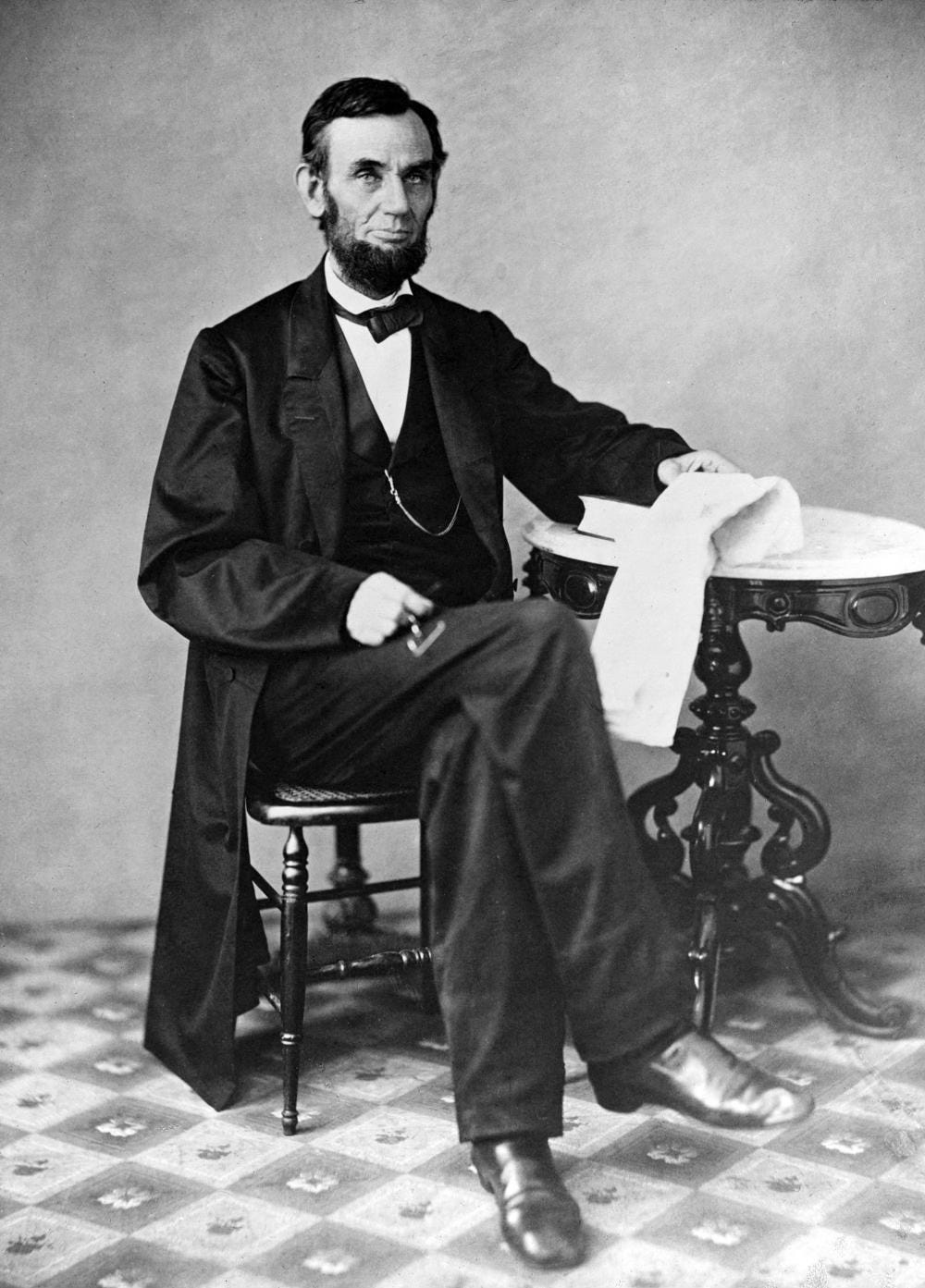
On March 3, 1863, Congress passed the Judiciary Act of 1863, quietly reshaping the structure of the United States Supreme Court in the middle of the Civil War. The Act increased the number of Supreme Court justices from nine to ten. This expansion created an additional seat that President Abraham Lincoln could fill at a critical moment in the nation’s history. Lincoln soon appointed Justice Stephen J. Field to occupy the new position.
The timing of the law was not accidental. The country was deeply divided, and major constitutional questions about executive power, wartime authority, and civil liberties were moving through the courts. By enlarging the Court, Congress ensured that Lincoln would have greater influence over the judiciary’s direction. Although altering the size of the Court was constitutional, it carried clear political implications.
The Constitution does not fix the number of Supreme Court justices. Instead, Congress has authority to determine the Court’s size through legislation. This structural flexibility has allowed lawmakers to adjust the Court in response to political and practical concerns. The Judiciary Act of 1863 stands as one example of how institutional design can intersect with national crisis.
The legal element worth highlighting is Congress’s constitutional power to set the size of the Supreme Court. Article III establishes the Court but leaves its structure largely to Congress. This separation of powers detail is significant because it shows that the judiciary’s composition is not self-defining. I chose this element because it explains how a simple statute, passed during wartime, could alter the balance of influence within the highest court in the country without amending the Constitution.
The U.S. Supreme Court heard arguments over whether a federal law prohibiting illegal drug users from possessing firearms violates the Second Amendment. The case arose after federal prosecutors charged Ali Hemani, a Texas resident who admitted to regular marijuana use, with unlawful gun possession under the Gun Control Act. A lower court dismissed the charge, and the 5th U.S. Circuit Court of Appeals upheld that decision, concluding there was no historical basis for disarming a sober person who was not under the influence at the time of possession.
The Justice Department, under President Donald Trump, appealed to the Supreme Court. The administration argued that the restriction is comparable to 19th-century laws that allowed authorities to disarm habitual drunkards. Hemani, supported by the American Civil Liberties Union, countered that regular marijuana users are not historically analogous to those groups and that the statute is too vague because it does not clearly define who qualifies as an “unlawful user.”
The dispute comes as the Court continues to apply the history-focused test it announced in New York State Rifle & Pistol Association v. Bruen, which requires modern gun regulations to align with the nation’s historical tradition of firearm regulation. The case also echoes the 2024 conviction of Hunter Biden under the same statute, though he was later pardoned. With a 6–3 conservative majority, the Court has recently taken an expansive view of gun rights and is weighing multiple challenges to firearm regulations.
US Supreme Court scrutinizes gun ownership ban for illegal drug users | Reuters
A recent policy shift by the U.S. Securities and Exchange Commission has given public companies greater control over which shareholder proposals appear on annual meeting ballots. In November, the agency stopped its long-standing practice of having staff formally review and approve companies’ decisions to exclude certain proposals. Instead, corporate executives now have more discretion to determine what goes into proxy statements.
Investor advocates say the change has created confusion and weakened shareholder rights, especially in disputes involving environmental, social, and governance issues. The new approach has already led to lawsuits against companies including PepsiCo, AT&T, and Axon Enterprise. In several instances, companies initially declined to include shareholder proposals but reversed course after being sued. For example, PepsiCo agreed to allow a vote on an animal-welfare proposal shortly after litigation was filed. AT&T similarly settled a lawsuit brought by New York City pension funds by permitting a vote on workforce diversity disclosures.
Other disputes remain pending, including a case against Axon over a proposal related to political contributions. Activists argue that without clearer guidance from regulators, shareholders must turn to the courts to protect their ability to file resolutions. Despite concerns that the rule change would dramatically increase exclusions, early data suggests companies have blocked proposals at roughly the same rate as in prior years.
Trump’s SEC gave companies more power over investors. Lawsuits pushed them back | Reuters
The U.S. Supreme Court declined to hear an appeal from computer scientist Stephen Thaler, leaving intact a lower court ruling that works created solely by artificial intelligence are not eligible for copyright protection. The decision lets stand a ruling from the U.S. Court of Appeals for the D.C. Circuit that agreed with the U.S. Copyright Office that only human authors can register copyrighted works.
Thaler sought protection for a two-dimensional image titled “A Recent Entrance to Paradise,” which was generated by his AI system known as the Creativity Machine. He argued that the Copyright Act does not explicitly require human authorship and that the agency improperly read that limitation into the statute. The D.C. Circuit rejected that claim, reasoning that multiple provisions of the law assume an author is a human being, particularly sections dealing with lifespan and inheritance rights.
Thaler also contended that, as the system’s owner and programmer, he should qualify for copyright under work-for-hire principles or property law concepts. The government responded that a valid work-for-hire arrangement requires a written agreement and cannot apply to a nonhuman creator. This dispute echoes Thaler’s earlier, unsuccessful effort to secure patent rights for an AI-generated invention, which the Supreme Court also declined to review in 2023.
Justices Reject Appeal Over Copyright For AI-Created Art - Law360


