


This Day in Legal History: The National Defense Act of 1916
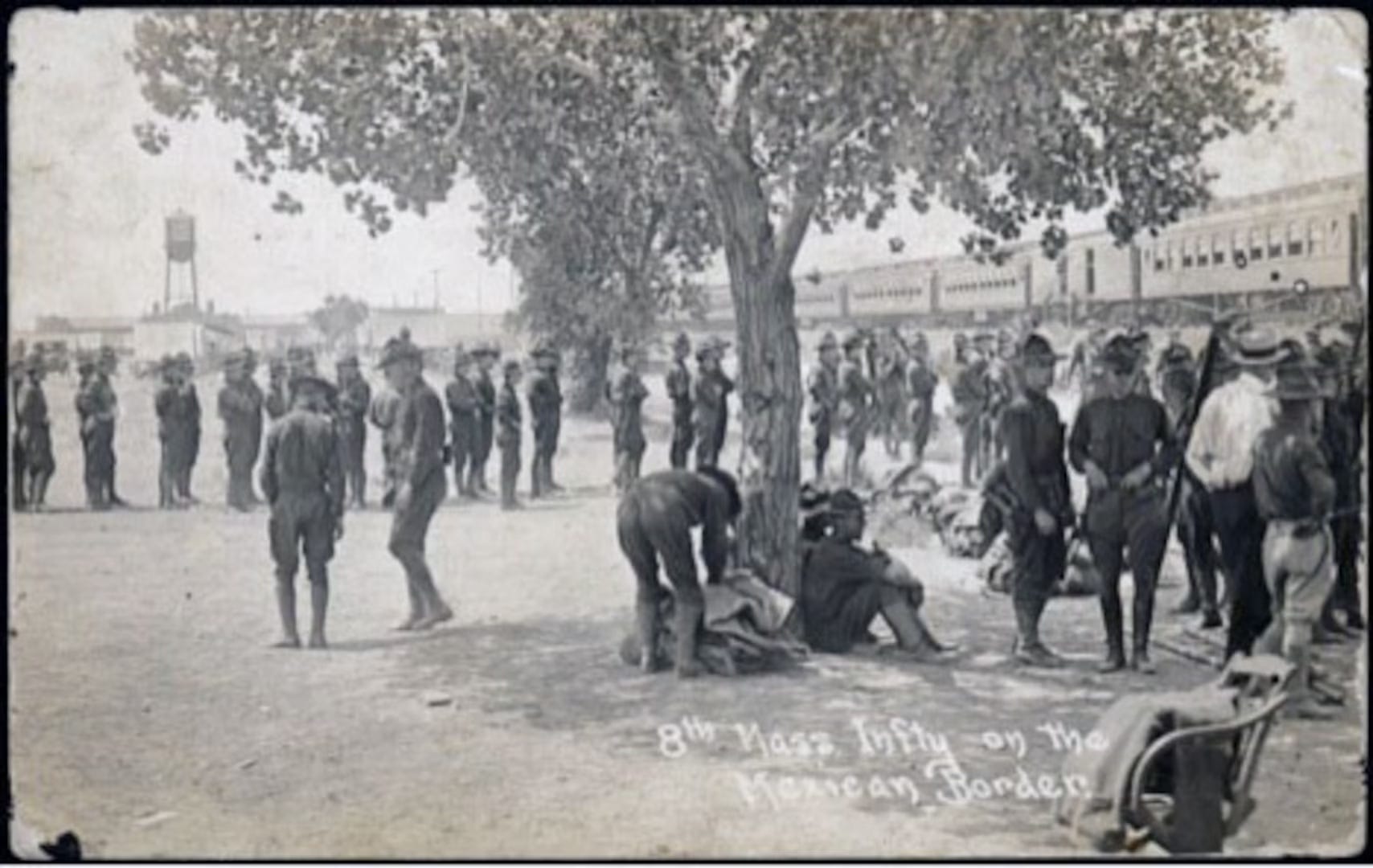
On this day in 1916, President Woodrow Wilson signed the National Defense Act, the law that quietly built the legal scaffolding for how the United States deploys soldiers, both abroad and at home, for the next century-plus. The Act roughly tripled the size of the regular Army, formally created the National Guard as a federalized reserve force out of the patchwork of state militias that had existed since the founding, and established the Reserve Officers’ Training Corps at colleges and universities.
The legal hook is the dual-status structure that the Act created and that we still use today: the National Guard belongs simultaneously to its state and to the federal government, normally takes orders from the governor, but can be “federalized” by the President under specific statutory authorities and pulled out of state command for federal missions. That structure has driven a long line of constitutional fights about the limits of presidential authority to call up the Guard, about whether and when the Insurrection Act applies, and about how the Posse Comitatus Act constrains the use of federal troops for domestic law enforcement. June 3 is not a day most people associate with American military law, but the 1916 statute is doing quiet work behind every modern headline about troops at a border, troops in a city, or troops in a hurricane.
The Eleventh Circuit on Tuesday handed down a ruling that strips hip-hop group 2 Live Crew of the copyrights it thought it had successfully clawed back to five of its albums, including “As Nasty as They Wanna Be,” because one member’s bankruptcy from the 1990s swept his future termination rights into the bankruptcy estate. Federal copyright law has a wonderfully democratic provision in Section 203: an author who signed away a copyright can, 35 years later, send a termination notice and take it back, regardless of what the original contract said.
The catch the Eleventh Circuit identified is Section 541 of the Bankruptcy Code, which scoops up almost everything you own into the bankruptcy estate when you file — including, the court said, the right to send that termination notice years later, even though the right cannot be sold or contracted away in any other context. The practical consequence for 2 Live Crew is that member Mark Ross, who performed as Brother Marquis, had unwittingly transferred his future termination interests to his bankruptcy trustee when he filed Chapter 7 years earlier, so when the group’s heirs and surviving members later tried to take the copyrights back from Lil’ Joe Records in 2020, they were one vote short of the majority the statute requires.
The case, Lil’ Joe Records v. Christopher Won Jr. et al., No. 24-13978, is described in the opinion as “a question of first impression at the intersection of copyright and bankruptcy” — which is lawyer-speak for “we just made up the rule, and now it’s the rule.” Expect every copyright-termination case where any author has ever filed for bankruptcy to cite this decision for the next decade.
11th Circ. Reverses 2 Live Crew’s Copyright Clawback Win | Law360
President Trump on Tuesday quietly signed a finalized version of the AI cybersecurity executive order that he had abruptly scrapped during a planned signing ceremony on May 21, and the final version is notably narrower than the one that was on the table a month ago.
The new order asks Treasury, the Department of Homeland Security’s Cybersecurity and Infrastructure Security Agency, and other federal agencies to design a voluntary framework under which developers of so-called frontier AI models — the largest and most general-purpose systems — would share their models with the federal government for up to 30 days before public release so the government can scan for security vulnerabilities. The legal posture is worth pausing on: this is a voluntary framework, not a regulation, which means it lives in the same constitutional space as a chamber-of-commerce best-practices document rather than as a binding rule subject to APA notice and comment.
That structure is partly a workaround for the fact that there is no federal statute giving any agency authority to mandate pre-release safety testing of AI models, and partly a response to industry pressure: Trump explained on May 21 that he scrapped the earlier 90-day version because he thought it could be “a blocker” to U.S. leadership in AI. Whether developers actually opt in is the open question, and the order is structured so that participation will likely depend on a mix of national-security pressure, federal procurement leverage, and quiet diplomacy with the major labs. Expect the first real fight to be over what counts as a “frontier” model, and who decides.
Finalized Trump Order Seeks Early Cyber Tests Of AI Models | Law360
The U.S. Senate on Tuesday confirmed Katie Lane to be a federal district judge in Montana, making her the first judicial nominee of Trump’s second term to be confirmed despite a “not qualified” rating from the American Bar Association’s Standing Committee on the Federal Judiciary. The ABA’s role here is informal but historically important: since 1953 the Standing Committee has rated federal judicial nominees as “well qualified,” “qualified,” or “not qualified” based on professional competence, integrity, and judicial temperament, and the rating has carried real weight with senators of both parties — until it didn’t.
The Trump administration formally cut ties with the ABA review process during the first term, on the theory that the ABA’s ratings reflected an ideological bias against conservative nominees, and the second administration has been even more open about ignoring “not qualified” ratings as a matter of policy. The legal stakes of this are modest in any individual case — a “not qualified” judge serves the same lifetime appointment with the same constitutional power as a “well qualified” one — but cumulatively the practice changes the relationship between the bar and the bench in a way that is hard to undo, and it nudges the federal judiciary in a direction that depends almost entirely on the political branches’ definitions of professional fitness.
Lane, who is now confirmed, will join the District of Montana, a small but busy bench. Watch this space: there are several more nominees in the pipeline with similar ratings.
US Senate confirms Trump judicial nominee deemed ‘not qualified’ by ABA | Reuters


