


This Day in Legal History: Seventeenth Amendment Ratified
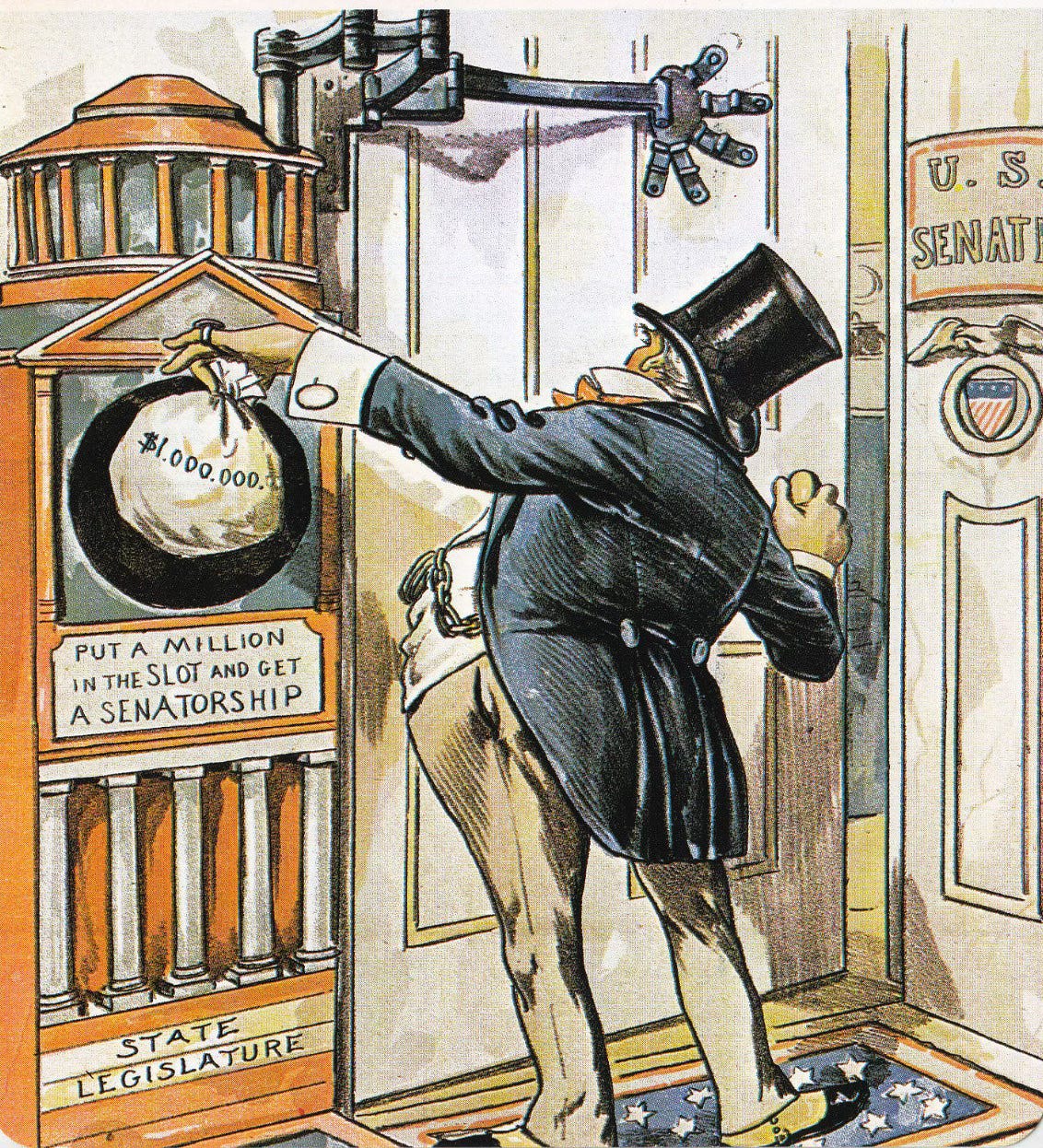
On April 8, 1913, the Seventeenth Amendment to the United States Constitution became part of the Constitution after receiving the necessary number of state ratifications. This amendment fundamentally changed the method of selecting U.S. senators, shifting the power from state legislatures directly to voters. Prior to its adoption, senators were chosen by state lawmakers, a process that had increasingly drawn criticism for corruption and political deadlock. Reformers argued that legislative selection allowed special interests to exert undue influence over Senate seats. The amendment emerged during the Progressive Era, a period marked by widespread efforts to make government more democratic and transparent. By mandating direct elections, it aimed to increase accountability and restore public trust in the federal government. The change also reduced the frequency of vacancies caused by legislative gridlock in the states. Supporters viewed the amendment as a necessary correction to a system that had strayed from democratic principles. Critics, however, warned that it weakened the role of states within the federal structure. The ratification process itself reflected strong public pressure for reform across many states. Over time, the amendment reshaped the political dynamics of the Senate, making senators more responsive to public opinion. It also aligned the Senate more closely with the House of Representatives in terms of democratic legitimacy. Today, the Seventeenth Amendment remains a cornerstone of how Americans participate in federal elections, illustrating the enduring impact of Progressive Era reforms.
Acting Attorney General Todd Blanche said that Donald Trump has both the right and responsibility to influence federal investigations, including those involving people Trump views as adversaries. Speaking publicly for the first time since taking the role, Blanche rejected claims that the Justice Department was improperly targeting Trump’s opponents. He argued that a president is expected to guide national priorities, even when that includes investigations tied to personal or political conflicts.
The Justice Department has recently pursued multiple investigations involving individuals connected to past inquiries into Trump, as well as political opponents and donors. Some of these efforts have faced resistance in court, with judges and grand juries limiting or dismissing certain cases. Blanche pointed to past prosecutions against Trump as justification, saying the president is seeking accountability for what he views as misuse of the legal system.
Blanche’s appointment followed Trump’s firing of former Attorney General Pam Bondi, reportedly due to frustration over the pace and results of investigations. Blanche did not say whether he wants to remain in the role permanently, emphasizing that the decision rests with Trump. He also indicated he would step aside if asked, expressing loyalty to the president.
Acting DOJ chief Blanche says Trump has ‘right’ to influence investigations | Reuters
Yale Law School lost its long-held No. 1 position in the latest U.S. News & World Report law school rankings, marking the first time in 36 years it has not topped the list. Stanford Law School now holds the sole No. 1 spot, while Yale is tied for second with University of Chicago Law School. A slight drop in Yale’s employment rate for graduates appears to have contributed to the shift, though other metrics like bar passage and LSAT scores remained stable.
The rankings also saw broader changes among the traditionally top 14 law schools, known as the “T-14.” University of California, Berkeley School of Law and Georgetown University Law Center both fell out of that group, while Cornell Law School and Vanderbilt University Law School moved up in the rankings. Other schools, including University of Pennsylvania Carey Law School and University of Virginia School of Law, saw smaller gains, while Harvard Law School remained steady.
These fluctuations reflect changes in the ranking methodology introduced in recent years after several top schools, including Yale and Berkeley, criticized the system. The updated approach relies more heavily on data reported to the American Bar Association, making small differences in employment and bar passage rates more influential.
Yale loses longtime No. 1 spot on latest US law school ranking | Reuters
AI startups are increasingly targeting law students as part of a broader effort to capture the legal services market. Companies like Harvey AI and Legora are offering free access and training at top law schools, hoping students will continue using their tools once they enter law firms and corporate legal roles. This strategy comes as the legal AI sector expands rapidly, fueled by advances in generative AI since the rise of ChatGPT.
These startups compete with established providers like LexisNexis and Westlaw, which have long dominated legal research and are now integrating AI into their platforms. While legacy companies rely on proprietary legal databases, newer entrants build tools on large language models and focus on tasks like drafting, research, and litigation preparation. Some partnerships have even emerged between startups and traditional providers to combine strengths.
Law students are already using these tools for exam preparation, memo writing, and simulating legal arguments. Schools and companies also view this exposure as a way to teach both the benefits and risks of AI, including issues like inaccurate or “hallucinated” outputs. The broader goal is to create familiarity early, making future lawyers more likely to adopt these tools in practice.
Other legal tech companies, including Clio and Spellbook, are pursuing similar partnerships, expanding access across hundreds of law schools. As competition grows, early access and training are becoming key battlegrounds for shaping the next generation of legal professionals.
AI startups court law students in fight for lawyer market | Reuters


