


We’ve launched Minimum Competence CLE, and our first course is now available completely free. Researching Federal Tax Issues After Loper Bright looks at how the Supreme Court’s decision ending Chevron deference changes the way lawyers should research and evaluate Treasury regulations, IRS guidance, and other federal tax authorities.
Take the course and earn CLE credit at cle.minimumcomp.com.
This Day in Legal History: The Salem Witch Trials
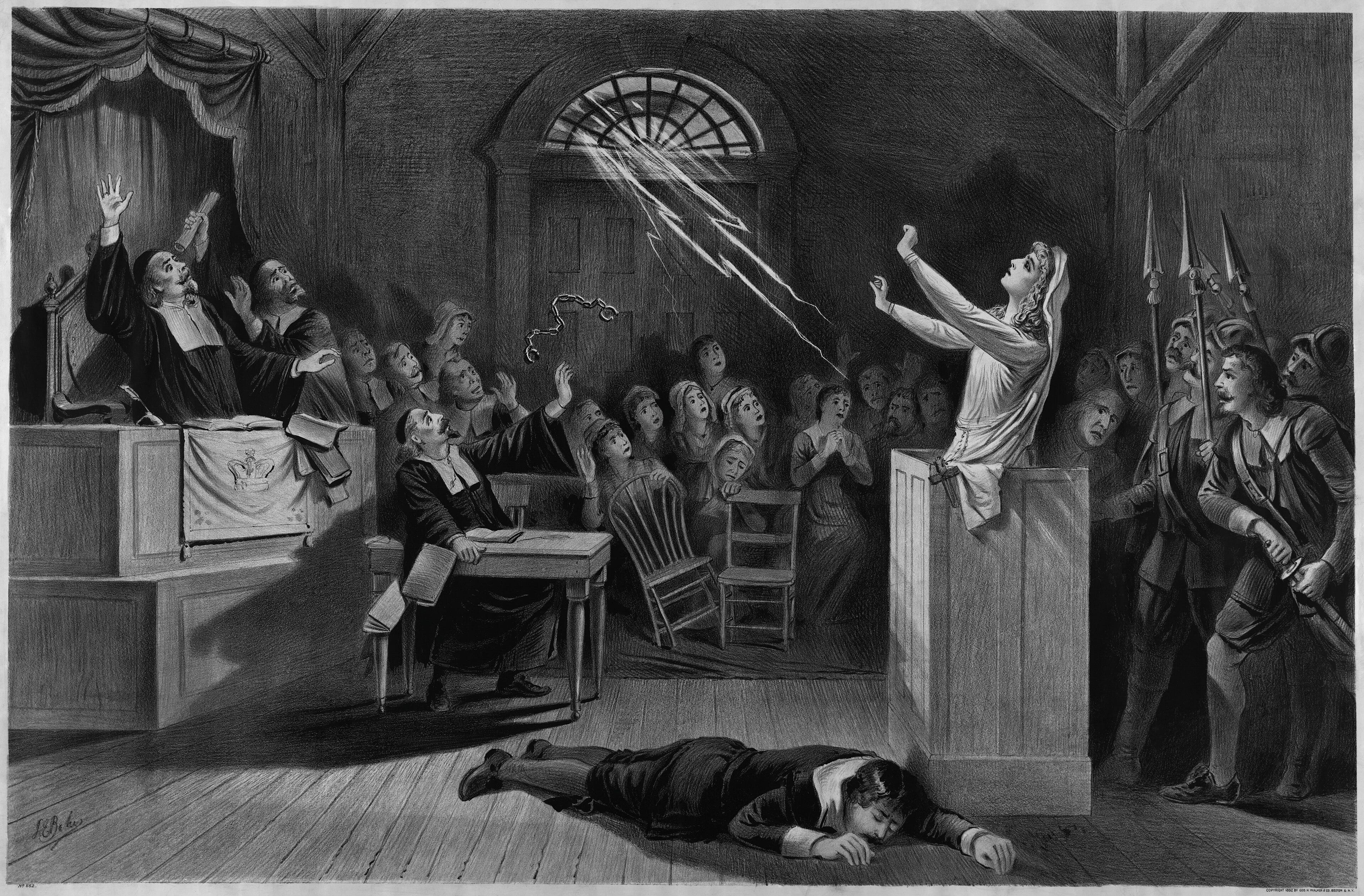
On August 19, 1692, five people—George Burroughs, John Proctor, John Willard, Martha Carrier, and George Jacobs Sr.—were hanged at Salem, Massachusetts, convicted of witchcraft. It was one of the darkest days in a period that has become the enduring American shorthand for a legal system gone catastrophically wrong.
What makes the Salem trials so instructive for lawyers is that they weren’t lawless in form—they had judges, juries, indictments, and testimony. They failed on substance, and specifically on evidence. The courts admitted so-called “spectral evidence”: testimony from accusers that the defendant’s ghostly apparition had tormented them, something no one else could see or disprove. It was, by its nature, impossible to rebut—the perfect engine for convicting the innocent. The case of George Burroughs, a Harvard-educated former minister, captures the horror of it. At the gallows, Burroughs recited the Lord’s Prayer flawlessly—something a witch, according to popular belief, should have been incapable of doing. The crowd was shaken; it looked like proof of innocence. He was hanged anyway. When the evidence and the conclusion pointed in opposite directions, the conclusion won.
The significance of August 19, 1692 is that it became a permanent cautionary tale baked into American law. Within months, prominent voices—including the minister Increase Mather, who gave us today’s opening quote about the danger of condemning the innocent—turned against the use of spectral evidence, and the trials collapsed. In the centuries since, the reforms we associate with due process—rules of evidence, the presumption of innocence, the requirement of proof that can actually be tested and challenged—are in many ways a long answer to Salem. It’s a fitting backdrop for a day when two of our stories turn on evidence: what an insider witness reveals under oath, and what a litigant is allowed to keep hidden. Salem is the reminder of what happens when a legal system stops caring whether its evidence is real.
In the landmark trial where 29 states accuse Meta of designing its platforms to addict and harm children, jurors heard from a powerful first witness: Arturo Bejar, a former Facebook engineering director turned whistleblower. Bejar worked at the company for years, and he told the Oakland jury that internal culture put growth ahead of kids’ safety—that “move fast and break things” was the mantra, that Meta took a “don’t ask, don’t tell” approach to whether children under 13 were on the platform, and that the company used the softer euphemism “problematic use” instead of “addiction” in a way that, he testified, undercounted the real harm. His central accusation is that Meta’s leadership knew, from its own internal research, what its products were doing to young users—and chose not to act. There’s a revealing legal sub-story here, too. Meta tried hard to keep Bejar off the stand, arguing he’d failed to preserve evidence because he deleted some Signal messages with former colleagues. Judge Yvonne Gonzalez Rogers rejected that as a long-shot bid to eliminate a key witness. Meta, for its part, flatly denies the claims, insisting it never set out to hook children and has worked to make its platforms safer. The significance is that this is the evidentiary heart of the case: not abstract allegations about algorithms, but an insider describing, under oath, what he says the company knew and how it talked about it internally. It’s the same pattern that broke open the tobacco cases—a witness from inside translating the company’s own euphemisms back into plain English for a jury. Whether jurors believe him will shape one of the most consequential product cases in years.
Former Meta engineer resumes testimony in landmark trial over social media’s harm to young users | Reuters
The Globe and Mail · LPM / NPR
A federal judge in Texas has declared the Biden-era “ghost gun” rule unconstitutional—a striking move, because the Supreme Court upheld that very rule just last year. Some background: ghost guns are firearms assembled from parts or kits that lack serial numbers, making them largely untraceable, and in 2022 the ATF issued a rule bringing those parts and kits under federal firearms regulation. Judge Reed O’Connor in Fort Worth had originally struck the rule down as exceeding the agency’s statutory authority—but in March 2025, the Supreme Court reversed him, holding the rule was a permissible reading of the Gun Control Act. Here’s the maneuver worth understanding: the Supreme Court decided a statutory question—whether the agency had the power to issue the rule. It did not decide the constitutional questions. So O’Connor has now ruled again, this time on entirely different grounds, holding that the rule violates the Second Amendment right to keep and bear arms and is unconstitutionally vague under the Fifth Amendment’s due process clause. In effect, when the statutory door closed, the challengers walked through the constitutional one, and the same judge let them in—blocking the rule as to certain products for Defense Distributed and members of the Second Amendment Foundation. Gun-control advocates called the decision “egregiously wrong” and predicted an appeal. But there’s a genuine wrinkle: the Justice Department that would normally defend a Biden-era rule is now the Trump administration’s DOJ, which is far more sympathetic to gun-rights arguments—so whether the government vigorously appeals its own rule’s defeat is an open question. The significance is a vivid lesson in how litigation adapts: a Supreme Court win on statutory grounds does not necessarily end a fight if constitutional theories remain, and a determined judge can find a new path to the same result.
Biden-era ‘ghost guns’ restrictions are unconstitutional, US judge rules | Reuters
US News · Maryland Daily Record
The Trump administration has invoked presidential privilege to keep secret the identities of the people who crafted its executive orders targeting major law firms. The context: last year the American Bar Association sued the White House and Justice Department over what it calls a “law firm intimidation policy”—a series of executive orders aimed at punishing firms for representing clients, causes, or positions the president dislikes, and, the ABA argues, coercing lawyers into dropping those clients. In discovery, the ABA wants to know who was behind the orders and whether officials specifically intended to discourage firms from taking on cases against the government. The administration’s response is what’s notable. It has formally invoked the presidential communications privilege—the same doctrine at the heart of the Nixon tapes case—but stretched it in an aggressive direction: the DOJ argues the privilege shields not just the substance of confidential advice, but the very identities of the people who gave it, whether or not they’re executive-branch employees, and whether or not they’re even lawyers. In other words, the government is claiming it can keep secret who wrote the orders. Here’s the tension. The presidential communications privilege is real and important—presidents need candid advice—but it’s qualified, not absolute; the Supreme Court in United States v. Nixon made clear it can yield to a sufficient showing of need. Extending it to conceal the mere identity of outside advisers, people who may not work for the government at all, is a notably broad claim. The significance is a double irony worth sitting with: these are executive orders designed to punish lawyers for their advocacy, and now the government is using one of the law’s most powerful secrecy doctrines to hide who dreamed them up. Whether a court accepts that will say a lot about how far executive privilege can be stretched to shield the process behind a controversial policy. Trump invokes presidential privilege in lawsuit over law firm orders | Reuters
Above the Law · Law & Crime
And finally, in a piece I wrote for Forbes this week, I take up a question the president has apparently been chewing on: can the federal government stop New York’s new pied-à-terre tax—the surcharge on second homes I’ve written about before? My short answer is that there’s a federal solution, but it almost certainly isn’t the one Trump wants, because he has almost nothing he can do on his own.
Start with the executive branch. The president cannot simply nullify a state tax by executive order—that’s not a power he has. The Justice Department could jump into the existing litigation or file its own federal challenge, but neither goes anywhere useful. The big obstacle is the Tax Injunction Act, a federal statute that keeps federal district courts out of the business of blocking state tax collection whenever taxpayers have an adequate remedy in their own state courts—which, here, they do. And when the DOJ once tried to get around that law by suing on behalf of homeowners over an allegedly discriminatory New York property-tax system, a federal court said no, you can’t evade the Tax Injunction Act that way. So the executive route is basically a dead end; the administration can litigate, apply pressure, and post on Truth Social, but it can’t make the tax disappear.
Congress, though, has a real—if difficult—path, and this is where it gets genuinely interesting as a matter of federalism. Congress has more power over state taxation than the president does. It has limited state taxes before: a federal railroad law, for instance, bars certain discriminatory property taxes on railroads and even gives federal courts jurisdiction to enforce it despite the Tax Injunction Act. And in a case called Arizona Public Service v. Snead, the Supreme Court upheld a federal statute enacted specifically to preempt a New Mexico tax that Congress found discriminated against interstate commerce. So using its affirmative Commerce Clause power, Congress can prohibit state taxes it decides burden interstate commerce. But there are two catches I walk through. First, anti-commandeering: Congress can’t order New York to repeal anything—it would have to regulate all states directly, invalidating a defined category of tax. Second, and harder, New York drafted this tax cleverly to dodge the obvious constitutional attack: it taxes based on use—whether a home is your primary residence—not based on whether you’re an in-stater or an out-of-stater. A New Jerseyan’s Manhattan apartment can be exempt if it’s their primary home; a New Yorker’s second home gets taxed. That use-not-residency design makes the usual discrimination claim much harder, and it means Congress would have to build a long, strained logical chain connecting a residence-neutral property tax to interstate commerce, then tailor a preemption statute to it and defend the whole contraption in court. So, yes, a federal fix is theoretically possible—but it runs entirely through Congress, and it’s a heavy lift. Which is a lawyer’s way of saying there’s probably not much the administration can actually do. My bet is that Trump just stops posting about it.


