


This Day in Legal History: Jacobson v. Massachusetts
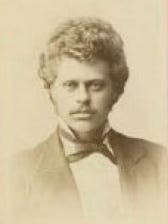
On this day in legal history, the Supreme Court issued its decision in Jacobson v. Massachusetts (1905), a case that defined the balance between individual liberty and public health. The dispute arose during a smallpox outbreak when Massachusetts authorized local governments to require vaccinations. Henning Jacobson refused the vaccine, arguing that the mandate violated his personal liberty under the Constitution. The case presented a fundamental question: how far can the state go in protecting the health of its citizens?
In a 7–2 decision, the Court upheld the compulsory vaccination law. The justices reasoned that individual freedoms are not absolute. Writing for the majority, the Court explained that the Constitution permits reasonable regulations to protect public health and safety. This authority stems from the state’s “police power,” a broad power to enact laws for the welfare of the community. The Court emphasized that liberty does not include the right to act in a way that harms others. During an epidemic, the government may impose measures necessary to prevent disease from spreading.
The decision established an enduring precedent for public health regulation. It has been cited in later cases involving quarantine laws, vaccine mandates, and emergency health orders. More than a century later, Jacobson remains central to debates about the limits of government authority in times of crisis.
A federal judge in California sharply reduced a jury pool in a class action securities trial against Elon Musk after many potential jurors said they could not be impartial. Out of 92 candidates, 38 were dismissed after admitting they could not fairly judge the case, prompting Musk’s attorney to argue that strong personal hostility toward his client was affecting the process. The lawsuit, brought by former Twitter investors, alleges that Musk made misleading statements in 2022 to depress the company’s stock price while negotiating its purchase. Musk denies the allegations.
Judge Charles R. Breyer reminded jurors that their verdict must be based only on evidence presented at trial, not personal opinions about Musk. Several prospective jurors expressed strong views, both positive and negative, and some were removed for cause. One man who said he believed Musk should be in prison but could be fair in a civil case was not selected. Others who openly supported Musk or dismissed class actions as frivolous were also excluded. By the end of the day, a nine-member jury was seated.
The case centers on claims that Musk’s tweets about the deal being “on hold” and about the percentage of fake accounts misled investors. The judge previously ruled that investors plausibly alleged securities law violations and certified a class of affected shareholders. He also denied early summary judgment motions, allowing the case to proceed to trial. The upcoming trial will determine whether Musk’s public statements violated federal securities laws during the 2022 acquisition process.
‘Hate’ For Musk Quickly Narrows Jury Pool In Twitter Deal Trial - Law360
Jeffrey Epstein’s estate has agreed to pay up to $35 million to settle a class action lawsuit alleging that two of his longtime advisers helped facilitate his sex trafficking scheme. The proposed agreement was disclosed in a federal court filing in Manhattan and must still be approved by a judge. The lawsuit, filed in 2024, targeted Darren Indyke, Epstein’s former personal lawyer, and Richard Kahn, his longtime accountant, who serve as co-executors of the estate.
Attorneys for the victims claimed the two men assisted Epstein by managing a network of corporations and financial accounts that concealed his activities and enabled payments to victims and recruiters. As part of the settlement, neither Indyke nor Kahn admitted wrongdoing. Their attorney stated they were prepared to contest the claims at trial but chose to settle to bring closure and resolve remaining potential claims against the estate.
The estate has already distributed substantial sums to victims. A compensation program previously paid out $121 million, and an additional $49 million has been resolved through other settlements. According to defense counsel, the new agreement will offer a confidential path to compensation for individuals who have not yet settled claims.
Epstein died in a New York jail in 2019, and his death was ruled a suicide.
Epstein estate agrees to $35 million settlement in victim class action | Reuters
The Trump administration announced plans to scale back federal limits on mercury and other hazardous air pollutants emitted by coal-fired power plants. Officials said easing these standards would help utilities manage costs and maintain reliable baseload electricity as power demand rises, particularly from artificial intelligence data centers. The move targets updates made during the Biden administration to the Mercury and Air Toxics Standards (MATS), which built on regulations first adopted in 2012.
The Biden-era revisions would have significantly reduced allowable mercury emissions and cut releases of toxic metals such as arsenic, nickel, and lead. Supporters of those rules argued they would generate hundreds of millions of dollars in public health savings by lowering exposure to harmful pollutants. The Supreme Court previously declined to pause the updated standards while legal challenges proceeded.
Environmental and public health advocates warn that weakening the rule could increase health risks, especially for children and other vulnerable populations, since mercury exposure can impair neurological development. The EPA, however, stated that the original 2012 rule already provides sufficient public health protection and that the newer requirements impose costs exceeding their benefits.
The rollback aligns with broader administration efforts to support coal power, including declaring an energy emergency, granting temporary exemptions to dozens of coal plants, and revisiting prior climate-related regulatory findings. Coal plants currently produce less than one-fifth of U.S. electricity but remain significant sources of hazardous air pollution.
Trump EPA to weaken rule limiting harmful mercury, air toxics from coal plants | Reuters
A federal judge in California ruled that PepsiCo and its Frito-Lay division can block a proposed class action brought by convenience store owners alleging unfair pricing practices. The stores claimed the company favored large national retailers by offering them better wholesale prices, in violation of the Robinson-Patman Act, which prohibits certain forms of price discrimination. The lawsuit sought to represent thousands of independently owned California stores that said they lost significant sales as a result of the alleged practices.
U.S. District Judge Mónica Ramírez Almadani determined that the plaintiffs failed to show that all proposed class members suffered the same type of injury, a key requirement for class certification under federal law. She explained that price discrimination claims typically require detailed, transaction-specific evidence, making broad class treatment difficult. The court agreed with the defendants’ argument that resolving the claims would require individualized inquiries into each store’s circumstances.
Although the judge rejected the class action request, she did not dismiss the underlying lawsuit. Instead, she allowed the plaintiffs to revise and refile their class allegations. Attorneys for the convenience stores said they plan to amend the complaint to provide additional detail about how Frito-Lay allegedly disadvantaged smaller retailers.
PepsiCo, Frito-Lay win US court order barring class action in snack pricing lawsuit | Reuters
The U.S. Supreme Court ruled 6–3 that the International Emergency Economic Powers Act (IEEPA) does not authorize President Donald Trump to impose broad tariffs under a declared national emergency. In a majority opinion by Chief Justice John Roberts, the Court emphasized that the Constitution assigns the power to levy taxes and duties exclusively to Congress, not the executive branch. The case arose after President Trump declared national emergencies related to drug trafficking and trade deficits and then imposed sweeping tariffs on imports from numerous countries, including Canada, Mexico, and China.
Small businesses and several states challenged the tariffs, arguing that IEEPA permits the president to “regulate” importation but does not explicitly authorize the imposition of duties. Lower courts agreed, and the Federal Circuit largely affirmed those rulings before the cases reached the Supreme Court. The majority concluded that the statutory term “regulate . . . importation” cannot be read to include the power to impose taxes, especially given Congress’s consistent practice of clearly and specifically granting tariff authority in other statutes. The Court also relied on the “major questions” doctrine, reasoning that such sweeping economic authority requires clear congressional authorization, which IEEPA does not provide.
The justices rejected arguments that emergency powers or foreign affairs concerns justified a broader interpretation. They noted that no prior president had used IEEPA to impose tariffs in its nearly 50-year history. As a result, the Court affirmed the Federal Circuit’s decision invalidating the tariffs and directed dismissal of a related case for lack of jurisdiction.
Justices Strike Down Trump’s Emergency Tariffs
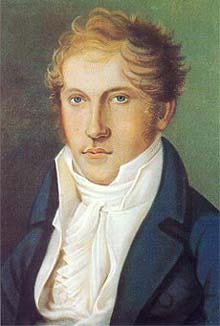
This week’s closing theme is by Louis Spohr.
This week’s closing theme features music by Spohr, a composer who stood at the crossroads between the Classical and early Romantic eras. Born in 1784, Spohr was a celebrated violinist, conductor, and teacher whose reputation in his lifetime rivaled many of his contemporaries. Though his name is less familiar today, he played an important role in shaping early nineteenth-century orchestral and chamber music. His style combines Classical clarity with the expressive warmth that would define the Romantic movement.
Spohr wrote four clarinet concertos, each showcasing the instrument’s growing technical and expressive range. The Clarinet Concerto in F minor reflects both virtuosity and lyricism, qualities that made the clarinet increasingly popular in concert halls of the time. The first movement, Allegro assai, opens with dramatic orchestral energy before introducing the soloist in sweeping, agile lines. The music balances precision with expressive phrasing, demanding both technical control and emotional depth from the performer.
Throughout the movement, Spohr allows the clarinet to sing as much as it dazzles. Rapid passages are paired with moments of lyrical calm, highlighting the instrument’s wide tonal palette. The dialogue between soloist and orchestra feels conversational rather than combative, giving the concerto an elegant cohesion. As our closing theme, this Allegro assai offers drive, color, and a glimpse into a composer once central to Europe’s musical life.
Without further ado, Louis Spohr’s Clarinet Concerto in F minor, the first movement, the Allegro assai – enjoy!


