


This Day in Legal History: Edison Receives Patent on Phonograph
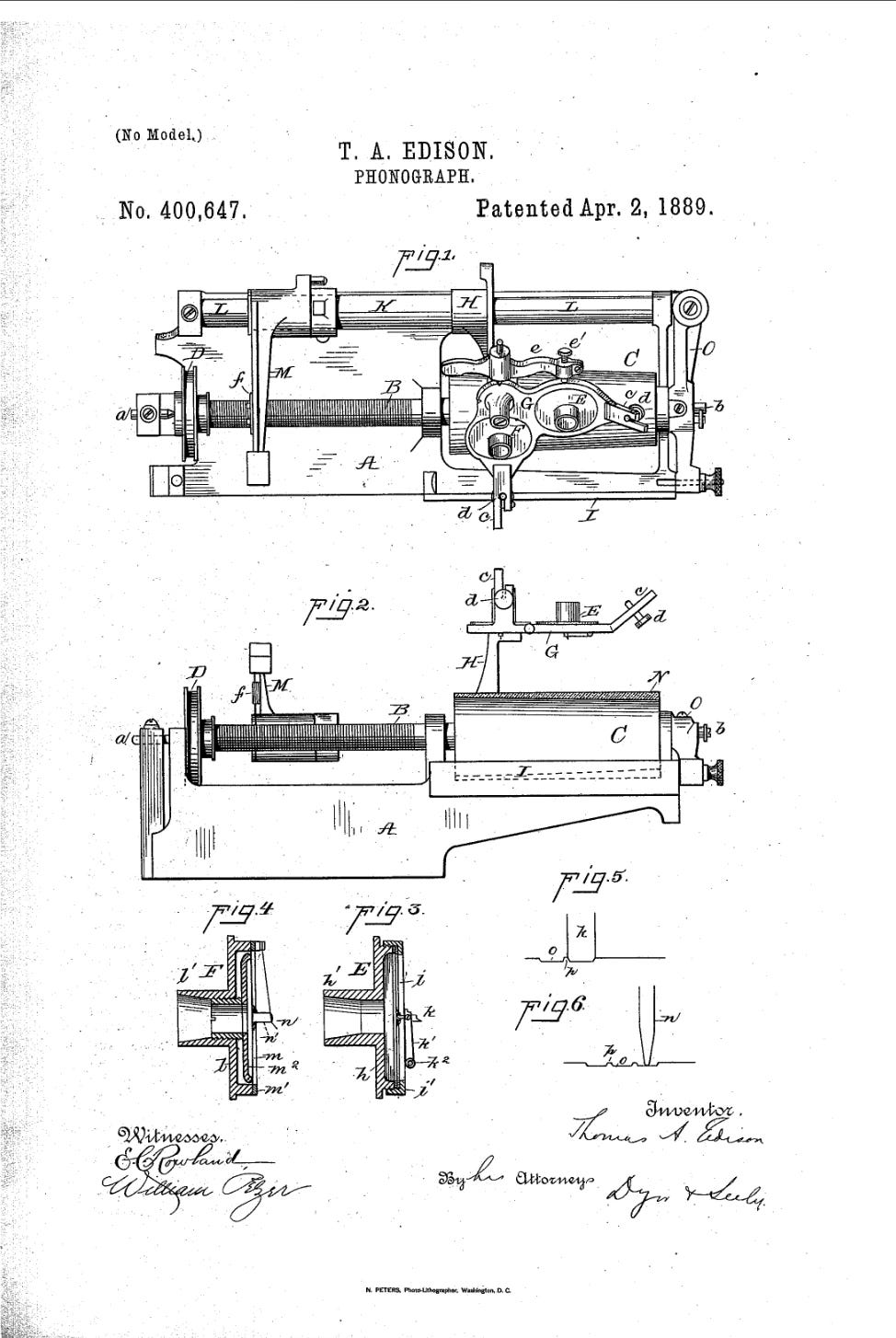
On February 19, 1878, Thomas Edison received a patent for one of his most transformative inventions: the phonograph. The device could record and reproduce sound, a breakthrough that stunned the public and reshaped the relationship between technology and creativity. Until that point, copyright law primarily protected written works such as books, maps, and sheet music. The phonograph introduced an entirely new category of expression—recorded sound—that did not fit neatly into existing statutes. Lawmakers and courts were soon confronted with a difficult question: who owns a performance once it is captured on a machine?
Early copyright frameworks did not clearly account for performers’ rights in recorded works. As the recording industry grew, pressure mounted to recognize both composers and performers as legal stakeholders. Congress responded incrementally, expanding federal copyright protections to cover sound recordings in the twentieth century. These changes reflected a broader shift toward adapting intellectual property law to technological innovation. Courts also played a role by interpreting statutes in ways that acknowledged the economic realities of recorded music. The phonograph’s legacy thus extends far beyond its mechanical design. It forced the legal system to confront how creative labor should be valued in an age of reproduction. In doing so, Edison’s invention helped lay the foundation for modern intellectual property law governing sound recording and broadcasting.
A coalition of environmental and public health organizations has filed suit against the Trump administration over its decision to revoke the scientific “endangerment finding” that underpins federal climate regulations. The case was brought in the U.S. Court of Appeals for the District of Columbia Circuit and also challenges the Environmental Protection Agency’s move to repeal vehicle tailpipe emissions limits. The administration recently announced it would eliminate the 17-year-old finding and end greenhouse gas standards for model years 2012 through 2027.
The endangerment finding, first adopted in 2009, concluded that greenhouse gases threaten public health and welfare, triggering regulatory authority under the Clean Air Act. Its repeal would remove requirements for measuring and complying with federal vehicle emissions standards, though immediate effects on stationary sources like power plants remain uncertain. The administration characterized the rollback as a major cost-saving measure, estimating $1.3 trillion in taxpayer savings.
By contrast, the Biden administration had previously argued the vehicle standards would produce net consumer benefits, including lower fuel and maintenance costs averaging thousands of dollars over a vehicle’s lifetime. The lawsuit marks one of the most significant legal challenges yet to President Trump’s broader effort to scale back climate policy, promote fossil fuel development, withdraw from the Paris Agreement, and dismantle clean energy incentives. Transportation and power generation each account for roughly a quarter of U.S. greenhouse gas emissions, underscoring the stakes of the regulatory reversal.
Environmental groups challenge Trump decision to revoke basis of US climate regulations | Reuters
Meta CEO Mark Zuckerberg is scheduled to testify in a Los Angeles jury trial examining whether Instagram harms young users’ mental health. The case centers on allegations that Meta designed its platform to keep children engaged despite knowing about potential psychological risks. A California woman who began using Instagram and YouTube as a child claims the platforms contributed to her depression and suicidal thoughts. She is seeking damages, arguing the companies prioritized profit over user well-being.
Meta and Google deny the accusations and point to safety features they have implemented. Meta has also cited research suggesting that evidence does not conclusively show social media directly changes children’s mental health. Defense attorneys argue the plaintiff’s struggles stem from personal and family issues rather than her social media use.
The lawsuit is part of a broader wave of litigation in the United States, where families, schools, and states have filed thousands of similar claims against major tech companies. Internationally, governments such as Australia have imposed age-based restrictions, and other countries are considering similar measures. The trial could test the tech industry’s longstanding legal protections against liability for user harm. If the plaintiff prevails, the verdict may weaken those defenses and open the door to additional claims. Zuckerberg is expected to face questions about internal company research concerning Instagram’s effects on teens.
Meta’s Zuckerberg faces questioning at youth addiction trial | Reuters
A federal judge in San Francisco has ordered a lawyer representing passengers in sexual assault litigation against Uber to pay sanctions for violating a protective order. The ruling requires attorney Bret Stanley to pay $30,000 in legal fees to Uber after he disclosed confidential company information obtained during discovery. The case is part of consolidated litigation accusing Uber of failing to implement adequate safety measures and background checks for drivers, claims the company denies.
U.S. Magistrate Judge Lisa Cisneros found that Stanley improperly shared the names of internal Uber policies in unrelated lawsuits and with other plaintiffs’ attorneys. Uber argued that he used the confidential material as a roadmap to pursue evidence in other cases. The judge concluded that Stanley acted unreasonably by unilaterally deciding to disclose protected information. However, she rejected Uber’s request for more than $168,000 in fees, finding that the company had not demonstrated significant harm from the disclosures.
Stanley defended his actions, stating he intended to streamline discovery in related cases and accused Uber of delaying document production nationwide. The judge also indicated Stanley will owe additional fees tied to a separate sanctions request, after finding he searched case documents to assist another lawsuit. The decision comes shortly after a federal jury awarded $8.5 million to a woman who alleged she was sexually assaulted by an Uber driver.
Uber wins sanctions against lawyer for sexual assault plaintiffs | Reuters


