



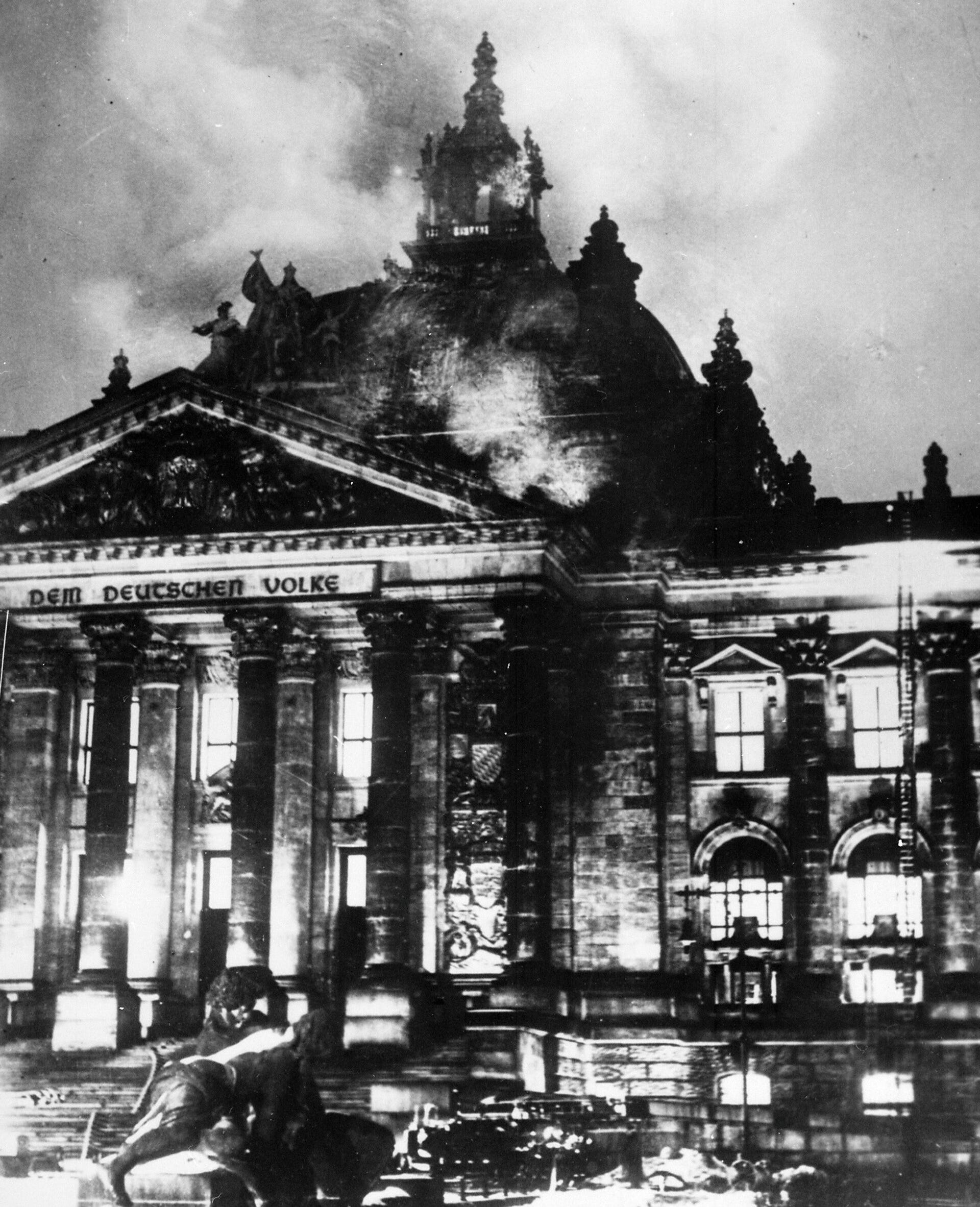
This Day in Legal History: Reichstag Fire Decree
On February 27, 1933, the German parliament building, the Reichstag, was set ablaze in Berlin, an event that would alter the course of constitutional government in Germany. The fire broke out just weeks after Adolf Hitler had been appointed Chancellor. Dutch communist Marinus van der Lubbe was arrested at the scene, and Nazi officials quickly blamed a broader communist conspiracy. The next day, President Paul von Hindenburg signed the Reichstag Fire Decree at Hitler’s urging.
The decree suspended key civil liberties guaranteed under the Weimar Constitution, including freedom of speech, freedom of the press, the right of assembly, and protections against unlawful searches and detention. It also allowed the central government to override state authorities. In practical terms, the measure authorized indefinite detention without trial. Police power expanded dramatically, and political opponents were arrested in large numbers.
Although framed as a temporary emergency response, the decree had no meaningful expiration. It became the legal foundation for dismantling democratic institutions in Germany. Courts largely failed to check the expanding authority of the executive branch. The event demonstrates how emergency powers, once normalized, can erode constitutional safeguards from within. The Reichstag Fire and its legal aftermath remain a lasting example of how constitutional systems can collapse through formally lawful measures rather than open revolution.
Former President Bill Clinton is scheduled to give private testimony to the House Oversight Committee regarding his past association with Jeffrey Epstein. The closed-door session follows testimony from Hillary Clinton, who said she does not recall meeting Epstein and denied having information about his crimes. Bill Clinton previously flew on Epstein’s plane multiple times after leaving office, and recently released Justice Department documents include photos of him with unidentified women. He has denied any misconduct and has expressed regret over his past association.
Committee Chairman James Comer stated that neither Clinton is accused of wrongdoing but said they must address questions about Epstein’s possible connections to their charitable foundation. The Clintons agreed to testify near their home in New York after lawmakers threatened contempt proceedings. Some Democrats supported compelling their testimony, while others criticized the inquiry as politically motivated.
Democrats argue that Republicans are using the investigation to shield Donald Trump from scrutiny. They have called for Trump to be subpoenaed, noting that his name appears frequently in Epstein-related records and that he had social ties with Epstein before Epstein’s 2008 conviction. Democrats also claim the Justice Department is withholding records involving allegations against Trump. The department has said it is reviewing the materials and has emphasized that released files contain unverified claims. Authorities have not charged Trump with any crimes related to Epstein. Epstein died in jail in 2019 while awaiting trial on federal sex-trafficking charges, and his death was ruled a suicide.
Bill Clinton to give private testimony to Congress about Epstein | Reuters
A federal judge has allowed construction of President Donald Trump’s planned $400 million White House ballroom to continue, at least for now. U.S. District Judge Richard Leon denied a request from the National Trust for Historic Preservation to temporarily halt the project while its lawsuit moves forward. The group had sought a preliminary injunction to stop work, arguing that the administration failed to comply with federal laws, including obtaining congressional approval and conducting proper environmental review.
Leon ruled that the preservationists had not met the legal standard required for such an emergency order. However, he indicated they may revise their complaint to better challenge the president’s claimed statutory authority to proceed without Congress. The lawsuit contends that demolishing the historic East Wing and beginning construction violated federal restrictions on altering federal property in Washington, D.C. It also argues that the National Park Service should have completed a more detailed environmental impact statement before work began.
The Trump administration maintains that the renovation fits within longstanding presidential authority over White House changes and serves public functions. Trump praised the ruling publicly and said the ballroom would symbolize national strength. The National Trust expressed disappointment but said it plans to amend its legal claims.
The East Wing, originally built in 1902 and expanded in 1942, was demolished in October. The ballroom is part of broader renovations Trump has made since returning to office in 2025. Although construction is underway, no firm completion date has been announced.
Trump’s White House ballroom can move ahead for now, judge rules | Reuters
Prediction-market company Kalshi has hired prominent Supreme Court advocate Neal Katyal to represent it in a series of disputes with state regulators. Katyal, a former acting U.S. solicitor general, appeared this week in a lawsuit Kalshi filed against Utah officials and is also handling similar cases in several other states. The company argues that its event-based trading contracts fall under the authority of the federal Commodity Futures Trading Commission, not state gambling regulators.
States contend that platforms like Kalshi are effectively operating unlicensed sports-betting businesses. Other prediction-market operators, including Polymarket and Coinbase, are also fighting regulatory battles and have assembled experienced legal teams. The industry has grown rapidly, with tens of billions of dollars in trading volume last year, increasing scrutiny from state authorities.
Kalshi bets on Neal Katyal in prediction market cases | Reuters
Netflix has withdrawn its bid to acquire Warner Bros. Discovery after WBD’s board determined that a competing offer from Paramount Skydance was superior. Netflix’s co-CEOs said their proposed merger would have delivered value and likely cleared regulatory review, but matching Paramount’s higher price no longer made financial sense. They described the deal as desirable at the right valuation, but not essential at any cost.
Paramount’s leadership welcomed WBD’s decision, saying its proposal offers greater value and a clearer path to closing. To finalize the Paramount deal, a short match period must expire, Netflix’s existing merger agreement must be terminated, and a definitive agreement between Paramount and WBD must be signed.
Paramount recently raised its offer to $31 per share in cash, along with a quarterly ticking fee if the deal is not completed by a specified date. The proposal also includes a $7 billion regulatory termination fee if the transaction fails because of regulatory issues, as well as reimbursement of the $2.8 billion breakup fee WBD would owe Netflix upon ending their agreement. With Netflix stepping aside, Paramount is now positioned to complete the acquisition.
Netflix Drops WBD Bid, Paving Way For Paramount Deal - Law360
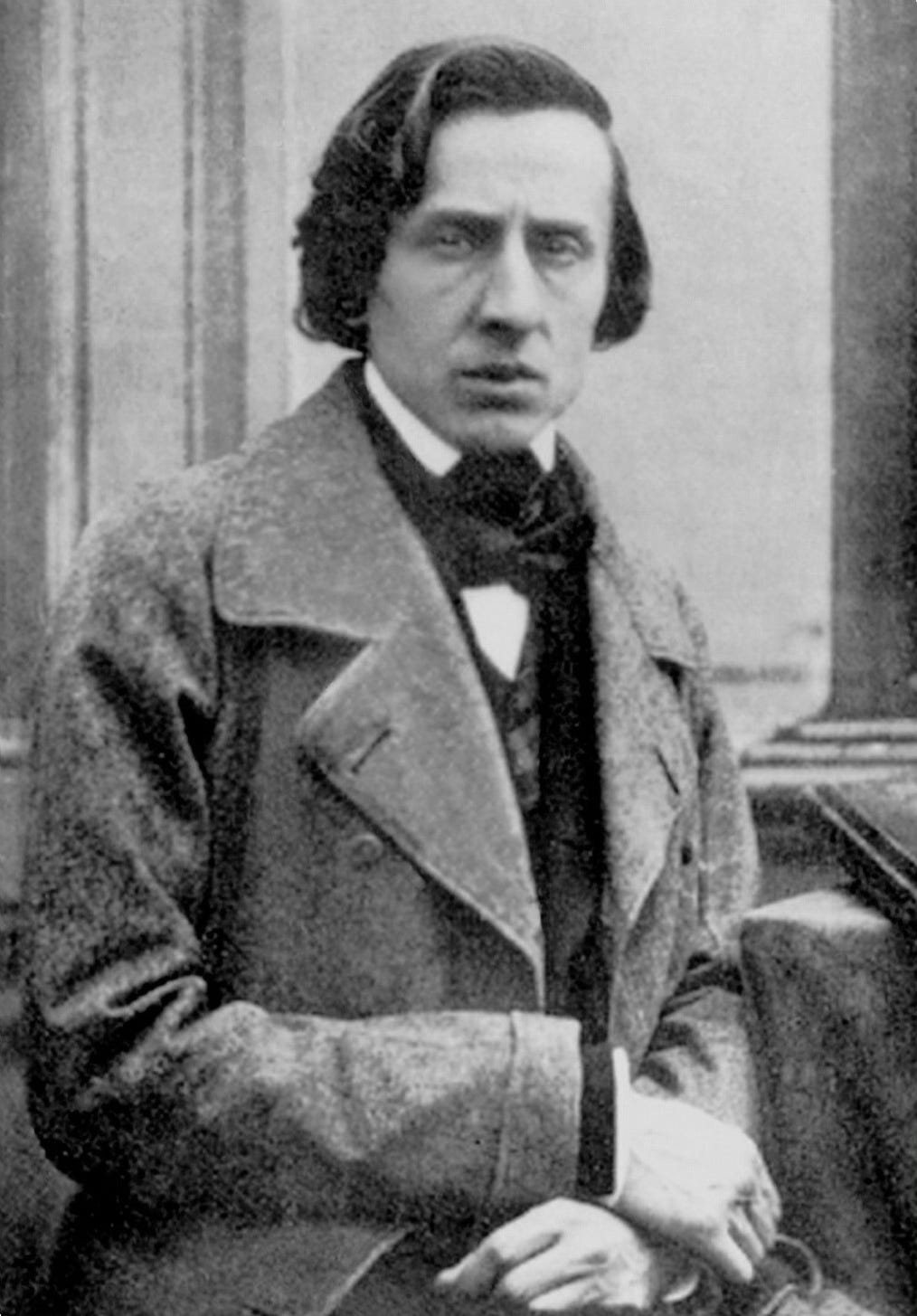
This week’s closing theme is by Frédéric Chopin.
This week’s closing theme takes us to Chopin and his Piano Concerto No. 2 in F minor, a work that helped launch his international career. Although numbered second, it was actually the first of his two piano concertos to be written, composed in 1829 when he was just twenty. The concerto reflects Chopin’s deep roots in the Polish Romantic tradition, while also revealing the poetic lyricism that would define his later solo piano works. Its sweeping first movement balances youthful brilliance with emotional intensity. The second movement, marked Larghetto, is intimate and expressive, often described as a musical love letter. The finale brings rhythmic energy and subtle references to Polish dance forms.
The piece gained wider recognition when Chopin performed it during his Paris debut on February 27, 1832. That appearance introduced him to the influential musical circles of Paris and marked a turning point in his career. The concerto showcased not only his technical skill, but also his distinctive touch and refined musical voice. While later critics sometimes focused on the orchestration, the piano writing remains among the most elegant of the Romantic era. The work captures a young composer standing at the threshold of fame, blending vulnerability with confidence. As our closing theme this week, it reflects both artistic ambition and a historic February 27 connection that helped shape Chopin’s legacy.
Without further ado, Frédéric Chopin’s Piano Concerto No. 2 in F minor, enjoy!


