


This Day in Legal History: The Scottsboro Case
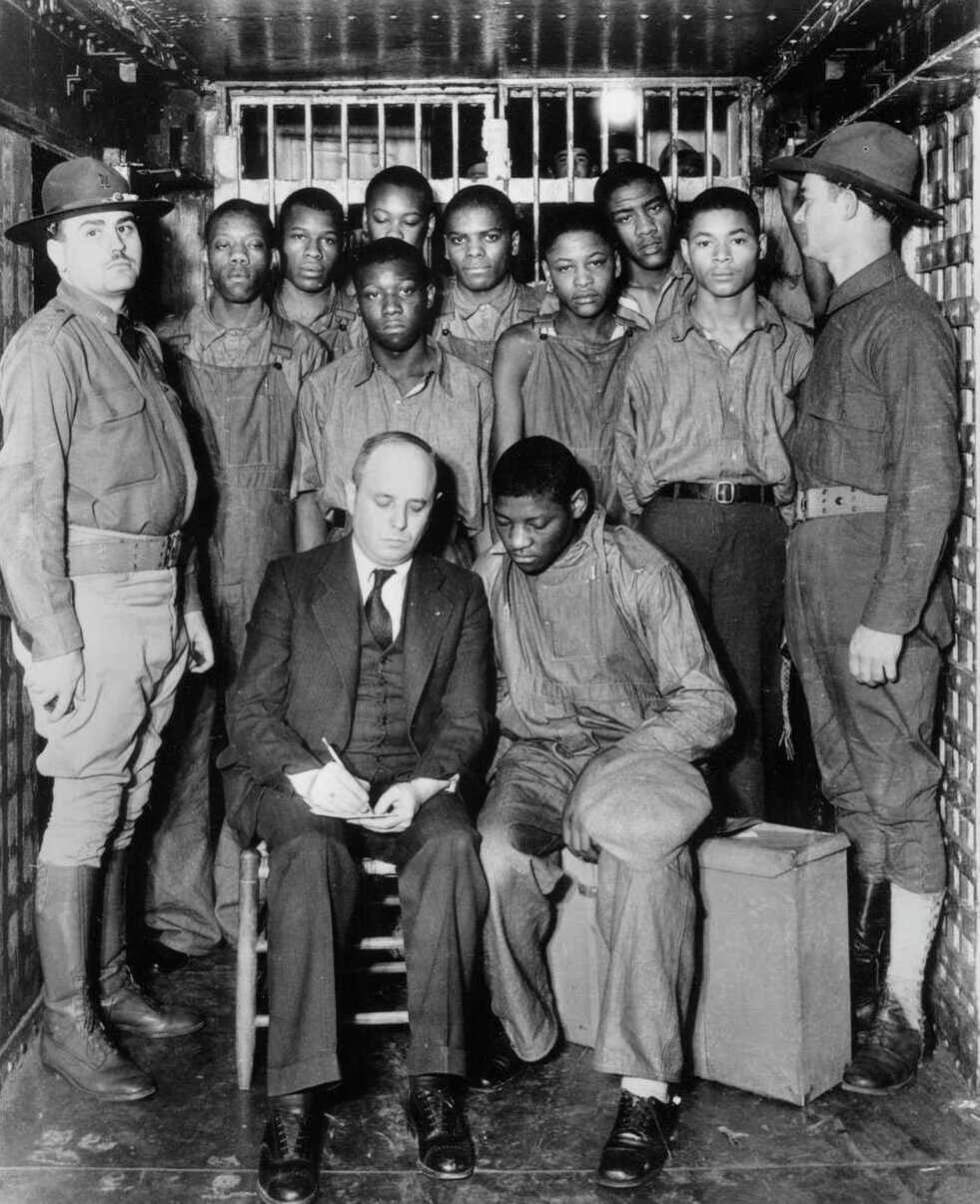
On July 24, 1937, the state of Alabama dropped all charges against four of the nine young Black men known to history as the Scottsboro Boys—a small, belated measure of relief in one of the most notorious miscarriages of justice in American legal history, and a case that helped reshape constitutional criminal procedure. The nine, ranging in age from approximately 13 to 20, had been arrested after riding a freight train through Alabama in 1931 and falsely accused of raping two white women. Within two weeks, in a series of rushed trials before all-white juries, eight of them had been convicted and sentenced to death; the trial of the youngest, Roy Wright, ended in a mistrial when the jury could not agree on whether to impose death or life imprisonment.
The extraordinary speed and unfairness of those proceedings produced two landmark Supreme Court decisions that still shape the rights of criminal defendants. In Powell v. Alabama in 1932, the Court held that the defendants had been denied due process because they had not received the timely and meaningful assistance of counsel needed to prepare their defense. The Court’s holding was formally limited to capital cases involving indigent defendants incapable of adequately defending themselves, but it became a foundational step toward the broader right to appointed counsel later recognized in Gideon v. Wainwright. Then, in Norris v. Alabama in 1935, the Court overturned Clarence Norris’s conviction because Alabama had systematically excluded qualified Black citizens from its jury rolls. Building on earlier equal-protection precedents, the Court made clear that a state could not accomplish through discriminatory administration what the Constitution prohibited it from doing expressly.
The Scottsboro cases dragged on for years through retrials, reconvictions despite one accuser’s recantation, appeals, and slow, partial releases. On July 24, 1937, Alabama dropped all charges against Willie Roberson, Olen Montgomery, Eugene Williams, and Roy Wright. Prosecutors expressly concluded that Roberson and Montgomery were not guilty; Williams and Wright were released principally because of their youth and the six years they had already spent imprisoned. The state continued prosecuting or imprisoning the remaining defendants.
The significance of the Scottsboro saga is twofold: it exposed nationally how the Jim Crow justice system operated against Black defendants, and it forced the Supreme Court to give practical constitutional force to protections—meaningful representation by counsel and freedom from racially discriminatory jury selection—that we now consider basic. It is a reminder that some of the most important rights in American law were secured through the suffering of people who were themselves never fully given justice.
Thomas Goldstein, one of the most prominent Supreme Court advocates of his generation and a co-founder of the widely read SCOTUSblog, is being sentenced today after a jury convicted him of tax evasion and mortgage fraud. Goldstein argued dozens of cases before the Supreme Court and built a celebrated appellate practice—but prosecutors showed the jury a hidden second life as an ultra-high-stakes poker player, in games running into the tens of millions of dollars. The jury found him guilty on 12 of 16 counts, including tax evasion, assisting in the preparation of false returns, willfully failing to pay taxes on time, and lying to mortgage lenders. The conduct is a case study in exactly the kind of sophisticated evasion I wrote about in Forbes this week: prosecutors said Goldstein concealed millions in poker winnings and losses, diverted his law firm’s legal fees into personal accounts to cover gambling debts, and directed people to pay his creditors so the money never showed up as his income. That’s not a wage earner whose taxes are withheld automatically—it’s precisely the complex, hard-to-trace arrangement that takes real investigative resources to unwind. The Justice Department has asked for eight years in prison. The significance is a pointed reminder that the tax laws reach even the elite of the legal profession—and that when the government does devote the resources to untangle a sophisticated scheme, the accountability can be severe. A man who spent his career at the pinnacle of the legal system now faces the system’s full weight.
Star US Supreme Court lawyer Goldstein to be sentenced for tax crimes | Reuters
The Justice Department has dropped its subpoenas of New York Times journalists over their reporting on the Qatari-donated Air Force One—a striking retreat that came after a federal judge tore into nearly every aspect of the government’s approach. We’ve been following this one: the subpoenas were issued July 10, days after the Times published its stories, seeking grand jury testimony and phone records to unmask the reporters’ sources. At Thursday’s hearing, U.S. District Judge Arun Subramanian pressed the government hard. He criticized prosecutors for hastily issuing subpoenas that the DOJ’s own lawyers admitted were riddled with “inadvertent errors,” and he chided them for asking another judge to gag phone companies from telling the journalists their records had been subpoenaed—days after the department had already publicly confirmed the subpoenas existed. Faced with that skepticism, the government agreed to withdraw them. A Times lawyer called it “a great day for the First Amendment and a great day for the rule of law.” The significance is worth stating precisely. This wasn’t a sweeping constitutional ruling establishing a reporter’s privilege—the DOJ retreated before the judge had to decide the hard First Amendment question. But it’s a concrete example of judicial scrutiny working as a check: when a court forced the government to justify subpoenas aimed at the press, the case collapsed under its own sloppiness and overreach. After a month of friction between the administration and the media, the press got a clear win.
US judge to weigh New York Times subpoenas over Trump plane reporting | Reuters
And finally, the pause on Paramount Skydance’s roughly $110 billion acquisition of Warner Bros. Discovery has been extended—a federal judge has now frozen the deal through August 17. When we covered this earlier in the week, U.S. District Judge Araceli Martínez-Olguín had issued a short 14-day restraining order at the request of a dozen state attorneys general; now that freeze runs deeper into August, buying the court time to weigh the states’ request to block the merger outright. The states’ antitrust theory has sharpened. They argue the combination would lessen competition in three specific markets: wide-release theatrical film distribution, top-grossing theatrical distribution, and basic cable licensing—harming movie theaters, cable distributors, and ultimately audiences. Remember the framework: antitrust law lets courts halt mergers that would concentrate too much market power, and a pause like this preserves the status quo so the deal can’t close before a judge decides whether it’s lawful. The significance is that time is itself a weapon in merger fights. Every week a deal sits frozen adds cost, uncertainty, and risk for the companies, and it gives regulators and challengers leverage. Here it’s state attorneys general—not federal antitrust enforcers—driving the challenge, and they’ve now kept one of the largest media mergers in history on ice for the better part of a month, with the decisive rulings still to come.
Paramount-Warner Bros. deal paused through August 17, judge rules | Reuters


