


This Day in Legal History: Wounded Knee
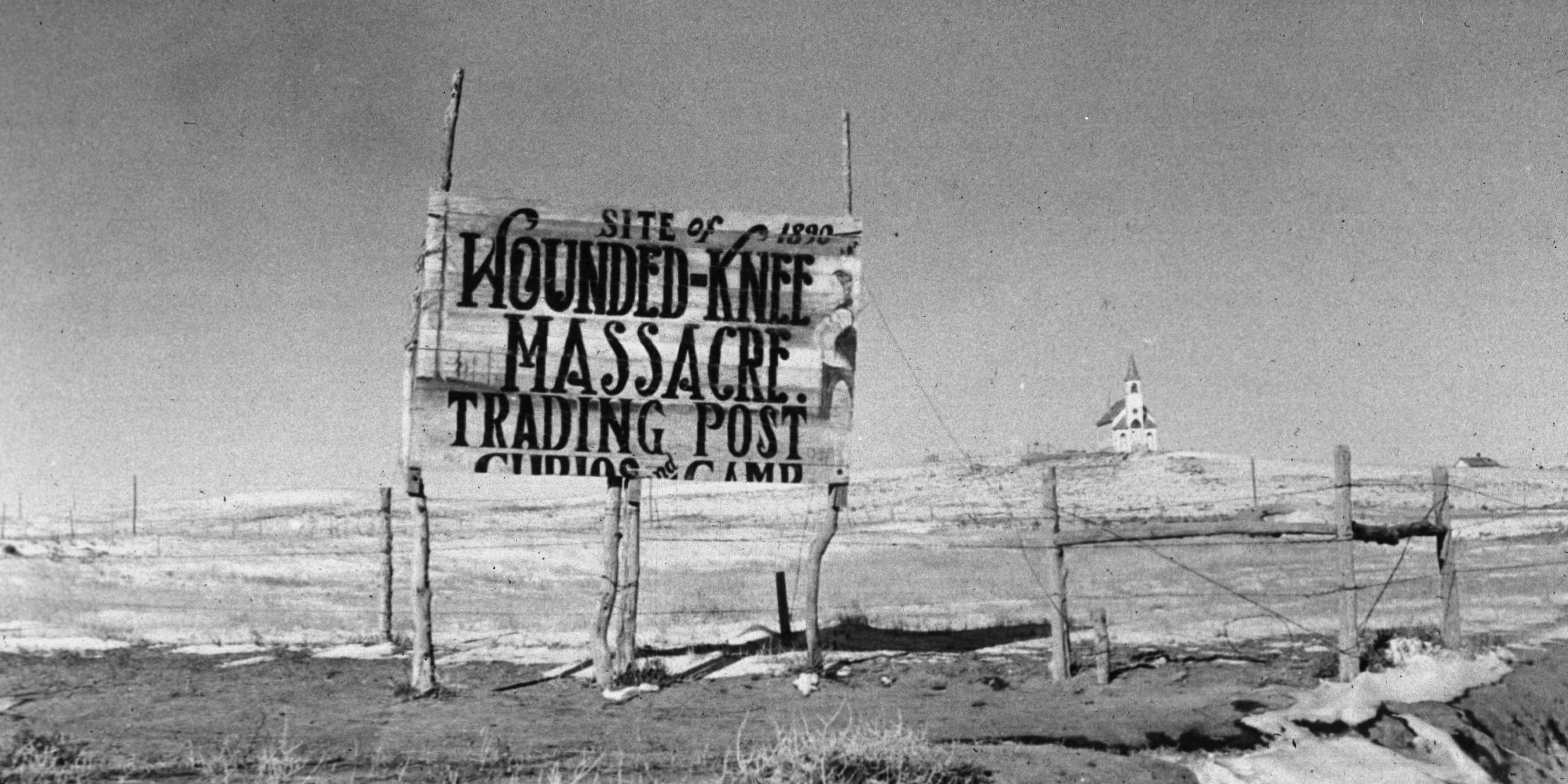
On December 29, 1890, the U.S. Army’s 7th Cavalry Regiment surrounded a Lakota Sioux encampment near Wounded Knee Creek on the Pine Ridge Reservation in South Dakota. The soldiers had orders to disarm the Lakota, who had recently fled the Standing Rock Reservation following the killing of Sitting Bull. Tensions were high, and as troops attempted to confiscate weapons, a shot was fired—its origin remains unclear. What followed was a brutal onslaught in which U.S. forces opened fire on largely unarmed Lakota men, women, and children. Estimates suggest that between 250 and 300 Lakota were killed, many while fleeing or after surrendering.
The Wounded Knee Massacre was the final major confrontation between Native Americans and the U.S. military during the so-called Indian Wars. It marked the culmination of decades of broken treaties and violent enforcement of federal Indian policy. Despite the civilian toll, 20 soldiers were later awarded the Medal of Honor, a decision that has since drawn sustained criticism and calls for revocation. The legal status of the massacre—framed at the time as a military engagement—has increasingly been re-evaluated through the lens of human rights law and treaty violations.
The Lakota were supposed to be protected under treaties like the Fort Laramie Treaty of 1868, which guaranteed their land and autonomy. However, the discovery of gold in the Black Hills and growing U.S. expansionism led to the steady erosion of those promises. Wounded Knee became a symbol of that betrayal and the failure of the U.S. government to uphold its legal obligations. In 1990, on the massacre’s centennial, Congress passed a resolution expressing “deep regret” but stopped short of issuing a formal apology. The massacre remains a central moment in the legal and political history of Native American rights in the United States.
California announced it had dropped its lawsuit against the federal government over the Trump administration’s decision to cancel over $4 billion in high-speed rail funding. The California High-Speed Rail Authority said the move reflected a lack of trust in the federal government as a reliable partner. Despite the loss of funds, the agency stated it would continue the project using mostly state resources, noting that only 18% of total expenditures have come from federal dollars. A judge had recently declined to dismiss the case, but California chose to end the legal fight regardless.
The U.S. Department of Transportation supported the funding withdrawal, citing a Federal Railroad Administration report that found the rail project riddled with missed deadlines, budget issues, and unrealistic ridership forecasts. Governor Gavin Newsom previously criticized the cuts as politically motivated and driven by Trump’s hostility toward California. The high-speed rail project, initially expected to cost $33 billion and be completed by 2020, is now projected to cost up to $128 billion with a completion target of 2033. So far, over 50 major structures and nearly 80 miles of guideway have been built.
The state plans to attract private investors by mid-2026 and emphasized that construction will continue. Recent legislation provides $1 billion in annual state funding through 2045. Earlier in 2025, the federal government also rescinded $175 million for related projects. Despite legal and financial setbacks, the state remains committed to building the rail line connecting Los Angeles and San Francisco.
California drops lawsuit over Trump decision to pull $4 billion in high-speed rail funds | Reuters
Longtime Motel 6 spokesman Tom Bodett settled a lawsuit against the motel chain after accusing it of using his name and voice without consent. Bodett, who became synonymous with the brand through his signature line, “we’ll leave the light on for you,” alleged the company continued using his likeness even after their professional relationship ended. The dispute arose when Motel 6’s new parent company, OYO, allegedly failed to make a $1.2 million contractual payment due in January, prompting Bodett to terminate their agreement.
Despite the split, Bodett claimed his voice and name remained on Motel 6’s reservation phone system, violating federal trademark law and the terms of their contract. The company denied any wrongdoing, arguing Bodett himself breached the agreement, which they said nullified their payment obligation. The lawsuit, filed in June, was resolved in Manhattan federal court, though the settlement terms remain confidential.
Bodett, now 70, is a well-known author and voice actor, with credits including NPR and Ken Burns documentaries. He had been the face and voice of Motel 6 since 1986 and was responsible for creating the brand’s iconic tagline. The lawsuit came after Motel 6 was acquired by India-based OYO, part of Prism (formerly Oravel Stays), in a $525 million deal from Blackstone in December 2024.
Longtime Motel 6 spokesman Tom Bodett settles lawsuit against chain | Reuters
FBI Director Kash Patel announced a surge in federal investigative resources to Minnesota to probe alleged fraud involving public funds. While the FBI has offered few specifics, Patel’s comments followed the circulation of a viral video showing allegedly inactive daycare centers in the state receiving government subsidies. Republican officials, including U.S. Rep. Tom Emmer and Vice President JD Vance, quickly amplified the video online, calling for action and linking the issue to broader concerns about state oversight.
Critics, however, argue that the investigation is politically and racially charged. The Trump administration has repeatedly pointed to Minnesota’s Somali American community as the center of alleged fraud, even as immigrant-rights groups warn that the pattern of enforcement suggests targeted profiling rather than impartial justice. The FBI has not clarified whether the focus on Somali defendants is supported by broader data or if the agency is treating these cases as representative of a larger trend.
Governor Tim Walz’s office has not yet commented, though tensions have grown between federal and state officials over the framing and scope of the investigations. Many of those charged in recent fraud cases are of Somali descent, according to federal sources cited by CBS News, but the disproportionate attention has led to accusations that the government is conflating individual criminal acts with an entire immigrant community.
The lack of transparency about evidence and investigatory methods has fueled concerns that the DOJ under Trump may be using criminal enforcement as a political tool. Given President Trump’s repeated attacks on Minnesota’s Somali population, observers view this surge not as neutral law enforcement, but as part of a broader strategy to vilify immigrants and score political points.
FBI investigating Minnesota fraud scheme, director says | Reuters
New York Governor Kathy Hochul announced a new state law requiring social media platforms to display mental health warning labels on features such as infinite scroll, auto-play, and algorithm-driven feeds. The law targets platform elements deemed “addictive” and likely to encourage compulsive use among young users. It reflects growing concerns over the impact of social media on youth mental health and follows recent actions in other jurisdictions, including Australia’s ban on social media for children under 16.
Under the law, platforms that operate partly or entirely in New York must comply, even if users access the services while physically outside the state. Enforcement authority rests with the New York Attorney General, who may bring civil suits and seek penalties of up to $5,000 per violation. Hochul likened the labels to those found on tobacco products or plastic packaging, positioning them as a public health measure designed to inform and protect.
Major companies like Meta, TikTok, Snap, and Alphabet have not yet responded publicly to the law. The move aligns with ongoing legal efforts across the U.S., including lawsuits by school districts against social media companies and recommendations from the U.S. Surgeon General for stronger safety measures and clearer warnings. Critics may question the efficacy or enforceability of such warnings, especially in a fragmented digital landscape, but New York’s law signals a growing willingness by states to directly regulate platform design in the name of mental health.
New York to require social media platforms to display mental health warnings | Reuters


