


This Day in Legal History: Order 9066
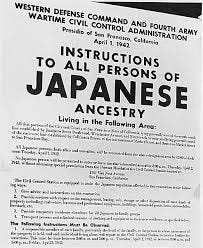
On this day in legal history, enforcement of Executive Order 9066 began in earnest following its signing by Franklin D. Roosevelt earlier in February 1942. The order authorized the military to designate exclusion zones and remove individuals deemed security risks from certain areas of the country. In practice, it led to the forced relocation and incarceration of more than 110,000 Japanese Americans, most of whom were U.S. citizens. Families were removed from their homes, businesses were lost, and entire communities were dismantled. The government justified the policy as a matter of national security during World War II. Critics argued it was rooted in racial prejudice rather than military necessity.
The constitutionality of the policy reached the Supreme Court in Korematsu v. United States. Fred Korematsu, a U.S. citizen, had refused to comply with the exclusion order and was convicted. In a 6–3 decision, the Court upheld his conviction, accepting the government’s claim that the exclusion was justified by wartime necessity. The majority deferred heavily to the executive branch, emphasizing the perceived threat on the West Coast. In dissent, several justices warned that the decision validated racial discrimination under the guise of military urgency.
Decades later, the ruling came to be widely regarded as a grave error. In 1988, Congress passed the Civil Liberties Act, formally apologizing and providing reparations to surviving internees. In 2018, the Supreme Court explicitly stated that Korematsu was wrongly decided, rejecting its reasoning even though it was not formally overturned in the technical sense. The episode remains a cautionary example of how constitutional protections can erode in times of crisis.
The U.S. Supreme Court is set to hear two cases concerning the scope of the Helms-Burton Act, a 1996 law that allows American companies to sue over property confiscated by Cuba after the 1959 revolution. One case involves ExxonMobil’s effort to recover more than $1 billion for oil and gas assets seized by Cuba in 1960. Exxon sued a Cuban state-owned company in 2019, alleging it continues to profit from the confiscated property. A lower court ruled that the Cuban entities could claim foreign sovereign immunity, which generally protects foreign governments from being sued in U.S. courts. Exxon has asked the Supreme Court to reverse that decision.
The second case involves four cruise operators—Carnival, Royal Caribbean, Norwegian Cruise Line, and MSC Cruises—accused of unlawfully benefiting from docks in Havana that were originally built and operated by a U.S. company before being seized by Cuba. The docks were used between 2016 and 2019, after travel restrictions were eased under President Obama. A trial judge initially ruled against the cruise lines and awarded more than $100 million in damages, but an appeals court later dismissed the case, finding that the original concession had expired before the cruise lines used the property. The Supreme Court’s decisions could clarify how broadly Congress intended the Helms-Burton Act to apply and whether claimants face significant legal barriers when seeking compensation.
US Supreme Court to hear Exxon bid for compensation from Cuba | Reuters
U.S. Customs and Border Protection announced that it will stop collecting tariffs imposed under the International Emergency Economic Powers Act (IEEPA) beginning just after midnight on Tuesday. The decision comes several days after the U.S. Supreme Court ruled that those tariffs were unlawful. The agency said it would deactivate the tariff codes tied to President Donald Trump’s IEEPA-related orders but did not explain why collections continued for days after the ruling. It also did not address whether importers who paid the duties would receive refunds.
The suspension of the IEEPA tariffs coincides with the implementation of a new 15% global tariff introduced under a different statutory authority. Customs clarified that the halt applies only to the IEEPA-based tariffs and does not affect other trade measures, including those enacted under Section 232 for national security reasons or Section 301 for unfair trade practices. Economists have estimated that the now-invalidated IEEPA tariffs generated more than $175 billion in revenue and were bringing in over $500 million per day. As a result, the ruling potentially exposes the government to significant refund claims from importers.
US to stop collecting tariffs deemed illegal by Supreme Court on Tuesday | Reuters
JPMorgan Chase informed President Donald Trump and his hospitality company in February 2021 that it was closing their bank accounts, according to newly released documents tied to Trump’s $5 billion lawsuit against the bank and its CEO, Jamie Dimon. The letters were sent about a month after the January 6, 2021, attack on the U.S. Capitol. At the time, several businesses and organizations distanced themselves from Trump, including law firms and the PGA of America.
In its February 19, 2021 letters, JPMorgan did not provide a detailed explanation for ending the relationship. The bank stated generally that it may determine a client’s interests are no longer served by continuing with J.P. Morgan Private Bank. JPMorgan has previously argued that Trump’s lawsuit lacks merit. Trump’s legal team, however, claims the letters amount to an admission that the bank intentionally “de-banked” him and his businesses, allegedly causing major financial harm.
Trump contends that JPMorgan violated its own policies and unfairly targeted him for political reasons. The newly disclosed letters were submitted as part of the bank’s effort to transfer the case from federal court in Miami to New York, where JPMorgan argues the dispute is more closely connected.
JPMorgan says it closed Trump’s bank accounts a month after Jan. 6 attack | Reuters
A federal judge in Florida declined to overturn a $243 million jury verdict against Tesla stemming from a fatal 2019 crash involving the company’s Autopilot system. The court found that the evidence presented at trial sufficiently supported the jury’s conclusion that Autopilot played a role in the collision, which killed 22-year-old Naibel Benavides Leon in Key Largo. The jury determined that both the driver and Tesla shared responsibility for the crash.
Jurors originally awarded $59 million to Benavides’ parents and $70 million to her boyfriend, Dillon Angulo, who was injured in the incident. After accounting for comparative fault, the compensatory damages were reduced to about $42.6 million, with the driver found 67% responsible and Tesla 33% responsible. The jury also imposed $200 million in punitive damages against the company.
Tesla asked the court to set aside the verdict or grant a new trial, arguing that the damages were excessive and that its conduct did not meet Florida’s legal threshold for punitive damages. The company also contended that state law limits punitive damages to three times the compensatory award. The judge rejected these arguments, stating that Tesla was largely repeating points already considered and dismissed during trial.
At trial, plaintiffs argued that Autopilot was defective because it could be activated on roads it was not designed for and did not adequately ensure driver attention. They also claimed Tesla overstated the system’s capabilities. The driver admitted he had looked away from the road moments before the crash.


