



This Day in Legal History: Jones Act
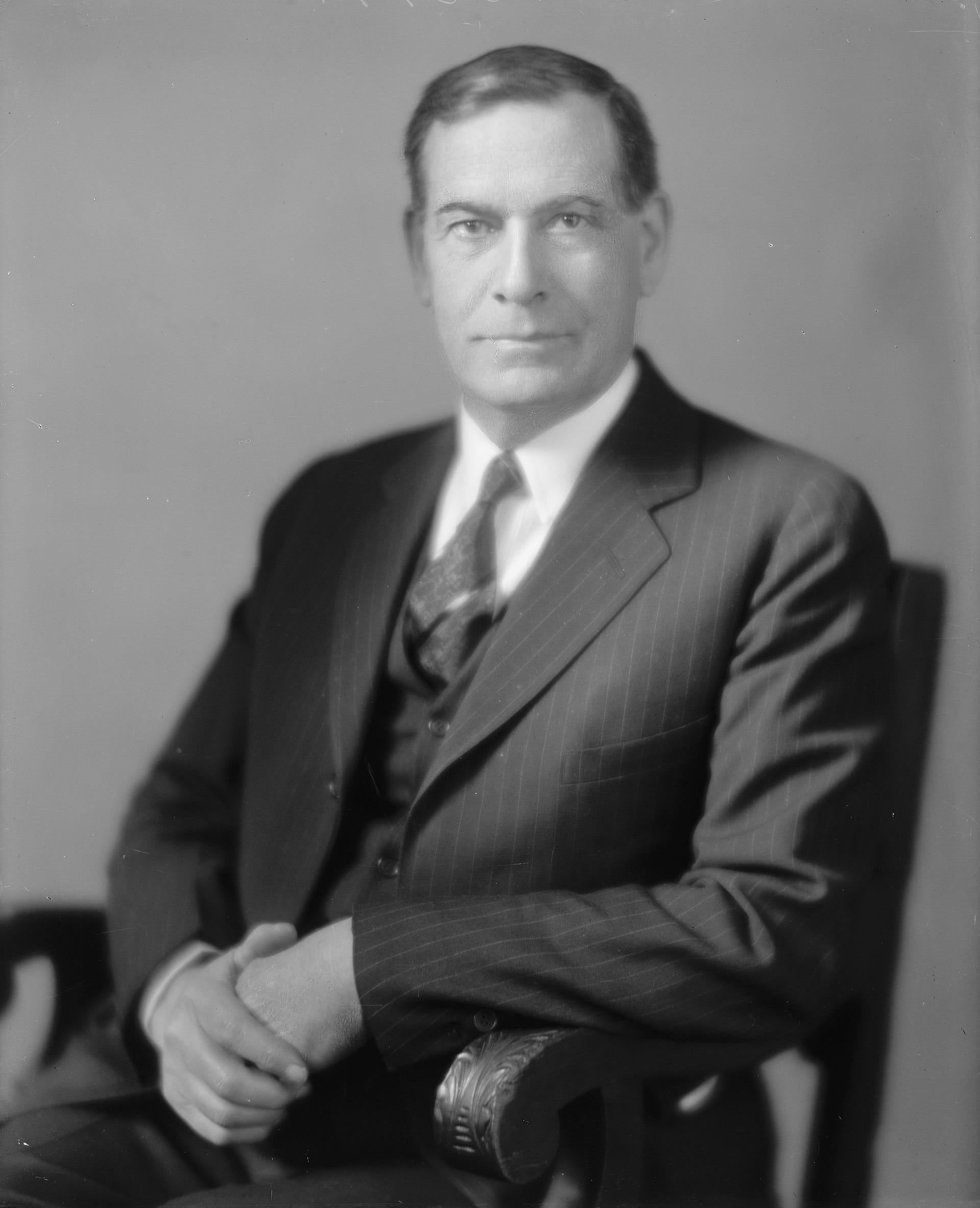
On March 2, 1920, Congress passed the Merchant Marine Act of 1920, better known as the Jones Act. Enacted in the aftermath of World War I, the statute reflected a national effort to strengthen the United States’ merchant marine fleet. Lawmakers believed that a robust domestic shipping industry was essential to both economic growth and national defense. The Act required that goods transported between U.S. ports be carried on vessels that are built in the United States, owned by U.S. citizens, and crewed primarily by Americans. Senator Wesley L. Jones sponsored the measure, arguing that reliance on foreign ships posed strategic risks.
The law reshaped American maritime commerce for decades. By limiting coastwise trade to qualifying vessels, Congress sought to ensure a steady demand for American shipyards and maritime labor. Supporters have long maintained that the Act protects domestic jobs and guarantees a ready fleet in times of war or national emergency. Critics, however, argue that the restrictions reduce competition and raise shipping costs. Those higher costs are often felt most sharply in non-contiguous states and territories such as Puerto Rico and Hawaii, which depend heavily on maritime transport.
Over time, the Jones Act has generated extensive litigation and recurring legislative proposals for reform or repeal. Courts have been called upon to interpret its scope, exemptions, and application to modern shipping practices. More than a century after its passage, the statute remains a focal point in debates over free trade, federal power, and national security.
President Donald Trump ordered federal agencies to stop using artificial intelligence products from Anthropic after the company declined to support certain military applications. The dispute arose when Anthropic said it would not provide its technology for mass domestic surveillance or fully autonomous weapons systems. Trump accused the company of trying to impose its own political views on the Department of Defense and claimed its stance threatened national security. Shortly after the president’s directive, Defense Secretary Pete Hegseth announced that military contractors and partners could no longer conduct business with Anthropic. The Defense Department said it would phase out the company’s technology within six months while transitioning to another provider.
Anthropic CEO Dario Amodei had stated that while AI can support lawful foreign intelligence efforts, mass surveillance of Americans raises serious civil liberties concerns. He also argued that fully autonomous weapons lack the reliability and oversight needed to ensure responsible use. According to Anthropic, the Defense Department required contractors to agree to “any lawful use” of AI systems, including applications the company views as risky. The government also threatened to label Anthropic a national security “supply chain risk,” a designation the company says is usually reserved for foreign adversaries. Anthropic maintains that such a move would be legally questionable and has pledged to challenge it in court. The company further argues that any formal designation would likely apply only to government contract work, not to all commercial activity.
Trump Tells Federal Agencies To Drop ‘Woke’ Anthropic Tech - Law360
Trump admin blacklists Anthropic; AI firm refuses Pentagon demands
OpenAI has completed a massive $110 billion funding round that values the company at $730 billion. The investment was led by Amazon with a $50 billion contribution, while Nvidia and SoftBank each committed $30 billion. The deal was advised by Wachtell Lipton Rosen & Katz on behalf of OpenAI.
As part of the transaction, OpenAI also entered into a strategic cloud partnership with Amazon and secured access to Nvidia’s next-generation graphics processing units to expand its AI capabilities. The company said additional investors may join the round as it continues. OpenAI highlighted that more than 9 million paying business customers use ChatGPT, alongside roughly 900 million weekly active users.
The funding reflects the accelerating competition among major technology companies to build AI infrastructure, including cloud systems, chips, and data centers. Amazon has already announced plans to invest about $200 billion in AI-related capital spending next year. Across the tech sector, companies such as Meta Platforms and Alphabet Inc. are also committing hundreds of billions of dollars to AI development. OpenAI described the moment as an infrastructure race, emphasizing that scaling capacity quickly will determine leadership in the industry.
Wachtell Lipton Steers OpenAI On $110B Amazon-Led Funding - Law360
A Los Angeles trial judge warned members of the press that she may impose a gag order in the high-profile social media bellwether case involving claims that major platforms harmed a young user’s mental health. Carolyn B. Kuhl said a news report appeared to reference juror conversations overheard in a courthouse hallway, which she viewed as a violation of her directive to keep distance from jurors. She emphasized that preserving the integrity of the proceedings is critical and stated she would hold a hearing on a gag order if necessary.
The case, pending in Los Angeles County Superior Court, is the first bellwether trial among more than 1,000 consolidated lawsuits. The plaintiff, identified as Kaley G.M., alleges that platforms such as Meta Platforms Inc.’s Instagram and Google LLC’s YouTube used addictive design features that contributed to her mental health struggles. The judge has repeatedly instructed jurors not to discuss the case or consume media coverage, and she has taken steps to physically separate them from reporters and the public. She also restricted any physical descriptions of the plaintiff because her claims relate to harm suffered as a minor.
Tensions over courtroom conduct have surfaced before. The judge previously warned attendees about unauthorized recordings and removed a plaintiffs’ attorney from a leadership role for filming inside the courthouse. Meanwhile, the trial has included testimony from the plaintiff and expert witnesses who argue that social media addiction is real and harmful. The defendants maintain that other factors, including family dynamics, contributed to her condition. With additional trials planned, the outcome of this bellwether proceeding could influence settlement discussions and expose the companies to significant financial liability.
Social Media Trial Judge Threatens Media With Gag Order - Law360
Improper juror access in social media case, judge warns media
A juror in the recent trial of Thomas Goldstein said the defendant’s own testimony was a turning point in the case that led to his conviction on multiple tax and mortgage fraud charges. The juror described Goldstein’s time on the stand as polished but theatrical, suggesting it felt more like a performance than a candid explanation. Goldstein had argued that errors in his tax filings stemmed from bookkeeping mistakes and reliance on outside accountants, and he claimed he overstated certain gambling winnings. Prosecutors, however, alleged that he intentionally failed to report millions in income, improperly deducted personal expenses, and misrepresented debts on mortgage applications.
The jury convicted him on 12 of 16 counts, including tax evasion and mortgage fraud, while acquitting him on several charges tied to later tax years. He has been ordered to remain under home confinement pending sentencing. According to the juror, the government’s extensive documentary evidence — including bank records, emails, and text messages — ultimately carried significant weight. Testimony about Goldstein’s spending habits and lifestyle was also presented, though the juror said personal matters such as alleged affairs were not decisive.
The defense emphasized accounting errors and challenged the venue for certain mortgage counts. Still, the juror said responsibility rested with Goldstein because he signed the tax returns. Prosecutors have praised the verdict, while the defense has not publicly commented. The case was tried in the U.S. District Court for the District of Maryland.


