


This Day in Legal History: Plessy v. Ferguson
On June 7, 1896, the Supreme Court upheld the constitutionality of racial segregation in the United States. In Plessy v. Ferguson, the Court ruled 7-1 that states could require separate facilities for Black and white people as long as those facilities were “separate but equal.” Homer Plessy, a man of mixed race, had violated a Louisiana law by sitting in a “whites only” railroad car. When arrested, he challenged the law as unconstitutional. Justice Henry Billings Brown wrote for the majority that the Fourteenth Amendment guaranteed political and legal equality but not social equality, and that the law was reasonable. Justice John Marshall Harlan issued a lone dissent, famously writing: “Our constitution is color-blind, and neither knows nor tolerates classes among its citizens.”
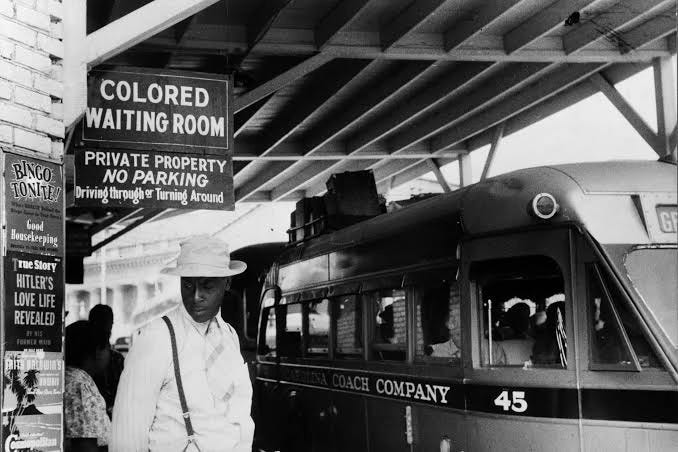
This doctrine of “separate but equal” stood for nearly 60 years, providing legal cover for Jim Crow laws and racial apartheid across the South. Schools were drastically unequal in funding and resources. Hotels, restaurants, bathrooms, and water fountains were segregated by race. The doctrine was finally overturned in Brown v. Board of Education in 1954, which acknowledged that “separate educational facilities are inherently unequal” and violated the Fourteenth Amendment. Plessy v. Ferguson represents one of the most consequential wrong turns in Supreme Court history. What made it so damaging was not just the ruling, but the Court’s apparent good faith in the “separate but equal” framework—a comfort with the idea that segregation could be constitutional if resources were distributed evenly, a comfort the Court itself never actually required states to achieve. The case shows how courts can legitimize injustice through neutral-sounding language and deference to legislatures.
A federal appeals court ruled this week that California schools cannot keep secret a student’s gender identity transition from their parents. Think of it this way: California had passed a law giving schools discretion to withhold from parents information about changes to a student’s gender expression or identity, reasoning that this protected students from potentially harmful family reactions. But the court found this violated parents’ constitutional rights to direct the upbringing and education of their children. The Supreme Court has long recognized that parents have a fundamental right to make decisions concerning the care, custody, and control of their children. This includes decisions about their education and health.
California’s policy attempted to create an exception to parental notification by allowing schools to conceal information about gender identity changes from parents without parental knowledge or consent. The court said California went too far. The judges acknowledged that student safety is a legitimate concern, but concluded that blanket policies allowing schools to hide information from parents violate the constitutional rights that parents have.
This case sits at the intersection of three important values: parental rights, student privacy, and student safety. On one side, parents argue they need information to support their children’s development and health. On the other, supporters of the California policy argued that some students face rejection or harm from parents if they learn about gender transitions, and that schools need confidentiality to protect vulnerable youth. The court sided with parental notification rights, but left open the question of whether schools can still withhold information in specific cases where there’s evidence of abuse or danger. The ruling doesn’t mean schools must immediately report every aspect of a student’s identity; rather, it means they generally cannot have a blanket policy of concealing gender-related information from parents.
California Gender Transition Parental Notification Case
The Supreme Court is set to hear arguments in Trump v. Barbara, a case with potentially enormous implications for citizenship law in America. Here’s what’s at stake: On his first day of his second term, President Trump signed an executive order attempting to deny birthright citizenship to children born in the U.S. if their parents entered the country illegally or are living and working in the U.S. on temporary visas. This directly challenges the Fourteenth Amendment, which provides that “all persons born or naturalized in the United States and subject to the jurisdiction thereof, are citizens.”
For over 150 years, the United States has interpreted the Fourteenth Amendment to mean that virtually anyone born on U.S. soil becomes a U.S. citizen at birth, regardless of their parents’ immigration status. Trump’s order says the clause “subject to the jurisdiction thereof” excludes children of illegal aliens and temporary visa holders. The administration argues that these children are not fully “subject to the jurisdiction” of the United States in the way the amendment requires. Legal scholars and immigration advocates counter that “subject to the jurisdiction thereof” simply means not immune from U.S. law—which applies to everyone in the country, citizen and non-citizen alike.
This case could affect millions of people. The U.S. currently grants automatic citizenship to roughly 250,000 to 375,000 children born to undocumented immigrants each year. If Trump v. Barbara succeeds, those children would not automatically be citizens. The case will require the Supreme Court to interpret the Fourteenth Amendment—one of the most fundamental provisions in the Constitution. The Court hasn’t definitively ruled on the citizenship status of children born to undocumented immigrants in modern times. The outcome will reshape American immigration law and the path to citizenship for generations to come.
Litigation Tracker: Legal Challenges to Trump Administration Actions
A Senate Judiciary Committee advanced two bipartisan bills that would expand camera access in the U.S. Supreme Court and other federal courtrooms. The bills, the Cameras in the Courtroom Act and the Sunshine in the Courtroom Act, now move to the full Senate for possible consideration. Supporters say the measures would make the judiciary more transparent by allowing the public to see important proceedings without having to attend in person. Senator Chuck Grassley, who chairs the committee and co-sponsored both bills, argued that Americans should be able to observe cases that affect the whole country, especially at the Supreme Court. Senator Amy Klobuchar also supported the effort, comparing courtroom access to the public’s ability to watch Congress on C-SPAN.
The federal judiciary opposes the proposals and warned that cameras could create problems for jury trials, witness safety, courtroom security, and the administration of justice. The Supreme Court has traditionally barred video coverage, although it began offering live audio of oral arguments during the COVID-19 pandemic. The Cameras in the Courtroom Act would require televised coverage of public Supreme Court proceedings unless a majority of justices found that cameras would violate due process. The Sunshine in the Courtroom Act would give federal judges broader discretion to allow photography, recording, broadcasting, or televising of court proceedings. That bill also includes safeguards for jurors and witnesses, limits coverage of private conversations, and would expire after three years unless Congress renews it.
US Senate panel advances bills allowing cameras in US Supreme Court, lower courts | Reuters


