

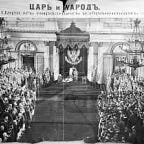

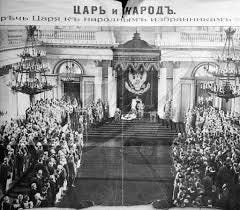
This Day in Legal History: Fundamental Laws of 1906
On December 30, 1905, Tsar Nicholas II signed the “Fundamental Laws of 1906,” marking a pivotal moment in the Russian Empire’s struggle between autocracy and constitutionalism. This act came in response to the Revolution of 1905, a period of mass unrest fueled by political repression, economic hardship, and a humiliating defeat in the Russo-Japanese War. The October Manifesto, issued two months earlier, had promised the establishment of a legislative Duma and the expansion of civil liberties. However, the Fundamental Laws, signed in December, revealed the Tsar’s intention to retain ultimate authority despite these concessions.
The document laid out a framework for governance, establishing a bicameral legislature with the Duma as its lower house, but Article 4 made clear that “the All-Russian Emperor possesses the supreme autocratic power.” This meant that, legally, any legislative progress remained subordinate to the Tsar’s will. The laws also granted the Tsar control over the military, foreign policy, and the ability to dissolve the Duma at his discretion.
While the Fundamental Laws introduced formal legal structures and acknowledged the existence of limited civil rights, they were largely symbolic gestures rather than meaningful reforms. Instead of curbing autocratic rule, the laws codified it, cloaking absolute monarchy in the appearance of legality. This duality deepened public dissatisfaction and political fragmentation.
Rather than stabilizing the empire, the signing of the Fundamental Laws sowed further distrust in the regime and highlighted the Tsar’s unwillingness to relinquish power. These contradictions contributed to the failure of the Duma system and fueled revolutionary momentum that would ultimately culminate in the revolutions of 1917.
The Trump administration reached an agreement to review certain NIH grant applications that had been stalled or rejected amid a broader legal challenge over cuts to diversity-related research funding. The agreement followed a federal court ruling in Boston that found the NIH acted unlawfully when it canceled grants based on their perceived ties to diversity, equity, and inclusion (DEI) initiatives. Though the Supreme Court later paused part of that ruling and shifted some aspects of the litigation to a court specializing in monetary claims, the review process for future NIH funding remained in legal limbo.
Under the new agreement, the NIH will re-evaluate previously frozen or withdrawn grant applications, though it is not required to fund any specific proposals. Plaintiffs in the case, including researchers and several Democratic-led states, argued that the impacted studies—focusing on topics like HIV prevention, LGBTQ health, Alzheimer’s, and sexual violence—serve vital public health needs.
One of the plaintiffs, University of New Mexico postdoctoral researcher Nikki Maphis, said the agreement allows important scientific work to resume after what she described as an “arbitrary and destructive freeze.” The underlying NIH policy change, which cut funding for projects deemed to reflect ideological rather than scientific priorities, remains contested. A prior ruling blocking the policy is still under appeal by the Department of Health and Human Services.
Trump administration agrees to review stalled NIH research grants after lawsuit | Reuters
The Trump administration’s aggressive defunding of the Consumer Financial Protection Bureau (CFPB) has pushed the agency to the brink of collapse, jeopardizing one of the few federal institutions explicitly designed to protect everyday Americans from financial harm. Created in the aftermath of the 2008 financial crisis, the CFPB has long served as a crucial recourse for people facing predatory lending, credit reporting errors, identity theft, and financial discrimination. The agency has helped return more than $21 billion to consumers since its founding. And yet, under President Trump’s second term, it’s being systematically dismantled—through funding cuts, legal challenges, and staffing reductions—with the administration openly declaring its intent to shut the agency down.
In the absence of the CFPB, those wronged by financial institutions—like Bianca Jones, who battled a credit reporting error that nearly cost her a home, or Morgan Smith, who turned to the agency after being targeted by identity theft—may find themselves with nowhere to turn. The administration claims the CFPB promotes a political agenda, but the result is fewer protections for those already vulnerable. Rules around medical debt, overdraft fees, credit card terms, and mortgage lending have been gutted. Investigations have been shelved. Enforcement is evaporating.
Critics argue that other regulators can fill the gap, but the CFPB was created because no one else was doing the job. Without it, financial institutions are more likely to abuse their power with impunity.
You should ask yourself: who benefits when a consumer watchdog is taken offline? Because it certainly isn’t the teachers, the single parents, the sick, or the struggling borrowers trying to make sense of a system stacked against them. It’s the companies who’d rather not answer for what they do in the dark.
Trump’s funding cuts put America’s consumer watchdog on the brink of collapse | Reuters
A federal appeals court ruled that it cannot hear Amazon’s constitutional challenge to the structure of the National Labor Relations Board (NLRB), deepening a circuit split on the issue and increasing the likelihood of U.S. Supreme Court review. The 9th Circuit Court of Appeals found that Amazon’s case stemmed from a labor dispute and was therefore barred by the Norris-LaGuardia Act, which prohibits courts from intervening in active labor disputes. Amazon had filed the lawsuit to halt an NLRB case claiming it was a joint employer of unionized drivers working for a subcontractor and therefore obligated to bargain with their union.
Amazon’s broader claim—that the NLRB’s structure is unconstitutional because its board members and judges are protected from at-will removal—has gained traction elsewhere. The 5th Circuit, in a recent case involving Elon Musk’s SpaceX, ruled that such protections are unlawful and allowed a similar challenge to proceed. But the 9th Circuit firmly disagreed, emphasizing that courts should not interfere with labor board proceedings, regardless of the constitutional claims involved.
This ruling aligns with a 3rd Circuit decision and stands in direct conflict with the 5th Circuit, setting the stage for a high-stakes resolution by the Supreme Court. Importantly, the 9th Circuit’s ruling doesn’t completely shut the door on such challenges—employers can still raise constitutional objections in NLRB proceedings and appeal after the fact. But for now, Amazon and other companies must make their case through the channels Congress established for resolving labor disputes.
US court says it can’t hear Amazon’s NLRB challenge, deepening circuit split | Reuters
A Utah judge has granted the release of most of the transcript and audio from a closed hearing in the high-profile case involving the fatal shooting of conservative activist Charlie Kirk. The hearing, held in October, addressed courtroom safety measures for the accused, Tyler Robinson, who is charged with aggravated murder and other serious offenses. Prosecutors allege Robinson fired a single fatal shot from a rooftop during a university event where Kirk was speaking, and they intend to seek the death penalty.
Judge Tony Graf ruled that only about one page of the 80-page transcript would remain redacted, primarily for safety and security reasons. He also clarified that media organizations do not need special legal status to cover the proceedings, rejecting a request that would have guaranteed them advance notice of any future attempts to close hearings.
Graf has already decided that Robinson can appear in civilian clothing but must remain physically restrained in court. However, media outlets are prohibited from photographing or filming his restraints, as defense attorneys argued such images could bias potential jurors. A hearing set for February will address whether cameras will be allowed in the courtroom at all.
Kirk’s death, which occurred during a campus debate, triggered widespread condemnation of political violence from across the ideological spectrum.
Judge grants release of redacted transcript of Charlie Kirk case hearing | Reuters
As 2025 winds down, my Bloomberg column this week is a year-end piece reflecting not just on what was written, but on which ideas still resonate because the problems they address remain unresolved. The lasting relevance of several pieces underscores how little has shifted in tax and policy debates. A July column urging states to break free from federal tax volatility feels even more urgent now, as states still cling to unstable baselines. Early in the year, hopes that efficiency rhetoric (read: DOGE) might close the tax gap faded, with political discomfort around auditing the wealthy preventing any meaningful change. April’s look at the step-up in basis revealed how death, not borrowing, remains the biggest capital gains loophole—and one Congress left untouched in the 2025 tax law. A May column on IRS immigration enforcement gains new resonance as the crackdown deepens, pushing some immigrant workers further from voluntary compliance. And October’s piece on Pung v. Isabella County remains live, with the Supreme Court set to decide whether fairness in tax foreclosures means market value or simply what the government collects.
Each of these columns anticipated weather patterns we’re now standing in—proof less of foresight and more of inertia. If 2026 brings more engagement, even without clear solutions, there’s hope that next year’s retrospective won’t feel like a reprint with new dates.
Read the 5 Most Relevant Technically Speaking Columns of 2025


