


This Day in Legal History: Gregory v. Chicago
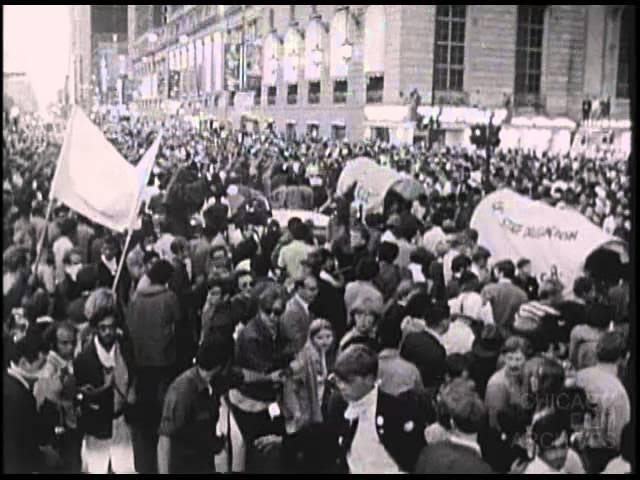
On this day in legal history, December 10, 1968, the U.S. Supreme Court heard oral arguments in Gregory v. City of Chicago, a case involving the arrest of civil rights demonstrators under a local disorderly conduct ordinance. The demonstrators, led by comedian and activist Dick Gregory, had peacefully marched from Chicago’s City Hall to the home of Mayor Richard J. Daley to protest school segregation. Though the march itself remained nonviolent, an unruly crowd of onlookers gathered, prompting police to demand that the demonstrators disperse. When they refused, Gregory and others were arrested and later convicted of disorderly conduct.
The key legal issue before the Court was whether the demonstrators’ First Amendment rights had been violated when they were punished for the hostile reactions of bystanders. In a per curiam opinion issued the following year, the Court reversed the convictions, holding that the peaceful demonstrators could not be held criminally liable for the disruptive behavior of others. Justice Black, concurring, emphasized that the First Amendment protects peaceful expression even in the face of public opposition or discomfort.
The case is a critical reaffirmation of the “heckler’s veto” doctrine — the principle that the government cannot suppress speech simply because it provokes a hostile reaction. It underscored the constitutional duty to protect unpopular or provocative speech, especially in the context of civil rights protests. The Court’s decision also reinforced the due process requirement that criminal statutes must be applied in a way that is not arbitrary or overbroad.
Gregory v. City of Chicago remains a foundational case in First Amendment jurisprudence and protest law, balancing public order concerns against the fundamental rights of assembly and expression.
The Trump administration’s proposed repeal of the Endangered Species Act (ESA) definition of “harm” could significantly weaken protections for imperiled species in federally managed forests, particularly in the Pacific Northwest. The change would limit the ESA’s scope to cover only direct physical injury to species, excluding habitat destruction from regulation. Environmental groups argue this could devastate species like the northern spotted owl and marbled murrelet, both of which depend on old-growth forests increasingly targeted for logging under recent federal mandates. Legal experts warn that without habitat protections, ESA enforcement becomes largely ineffective, as species cannot survive without suitable environments. The rollback is expected to reduce permitting requirements for developers and extractive industries, a move welcomed by business groups but opposed by conservationists.
The U.S. Fish and Wildlife Service initially defined “harm” in 1981 to include habitat degradation, but now argues that interpretation overextends the ESA’s intent. Logging has already surged in owl and murrelet habitats, especially in Oregon, with timber sales up 20% in 2025. Population declines among spotted owls—down 70% since 1990—are linked to habitat loss and competition from invasive barred owls. Critics of the repeal emphasize that previous conservation plans, like the 1994 Northwest Forest Plan, successfully slowed species decline by curbing old-growth logging. Industry groups argue the ESA has been “weaponized” to block necessary forest management and wildfire prevention. Meanwhile, lawsuits are brewing on both sides: environmentalists are expected to challenge the rollback, while timber interests seek to overturn broader habitat protections.
Trump’s Changes to What Harms Species Adds Risk in Logging Areas
The U.S. Supreme Court is preparing to hear a case involving Joseph Clifton Smith, an Alabama death row inmate whose death sentence was overturned after a federal court found him intellectually disabled. The dispute centers on how courts should interpret multiple IQ scores and other evidence when determining whether someone meets the legal criteria for intellectual disability. This analysis is critical because, in 2002’s Atkins v. Virginia, the Supreme Court held that executing individuals with intellectual disabilities violates the Eighth Amendment’s ban on cruel and unusual punishment.
Smith, now 55, was sentenced to death for the 1997 killing of Durk Van Dam during a robbery. His IQ scores have ranged from 72 to 78, but the lower court applied the standard margin of error, concluding his true score could fall below 70. The court also found substantial, lifelong deficits in adaptive functioning, including challenges in social skills, independent living, and academics. These findings led the 11th U.S. Circuit Court of Appeals to uphold the decision to set aside his death sentence.
Alabama officials argue the courts erred by evaluating Smith’s IQ scores collectively rather than individually. The Supreme Court previously asked the 11th Circuit to clarify its reasoning, and the court responded that it used a holistic approach, incorporating expert testimony and broader evidence of disability. Now back before the Supreme Court, the case could refine or reshape how courts nationwide assess intellectual disability in capital cases. A ruling is expected by June.
US Supreme Court to weigh death row inmate’s intellectual disability ruling | Reuters
Jack Smith, the former special counsel who led federal prosecutions against Donald Trump, is launching a new law firm alongside three other high-profile former prosecutors: Tim Heaphy, David Harbach, and Thomas Windom. All four attorneys have extensive backgrounds in public service and were involved in major investigations into Trump’s efforts to overturn the 2020 election and mishandling of classified documents. The new firm, expected to begin operations in January, will offer full-service legal work, including litigation and investigations, with a mission rooted in integrity and zealous advocacy.
Heaphy, who previously served as the lead investigator for the House committee probing the January 6th Capitol attack, is leaving his position at Willkie Farr & Gallagher to help found the firm. That firm had drawn criticism for its dealings with Trump but has defended its actions. The Justice Department and members of the new firm declined to comment on the launch.
Smith had dropped the Trump prosecutions following Trump’s 2024 election win, citing the DOJ’s policy against prosecuting sitting presidents. Trump’s administration has since condemned those cases, firing multiple DOJ and FBI officials and claiming political bias. Smith maintains the investigations were legitimate and nonpartisan. He is expected to testify behind closed doors before the GOP-led House Judiciary Committee next week.
Trump prosecutor Jack Smith to launch firm with ex-Justice Department lawyers | Reuters
The U.S. Justice Department has announced new federal charges against Victoria Eduardovna Dubranova, a Ukrainian national accused of aiding Russian-aligned cyberattack groups targeting critical infrastructure. The latest indictment, filed in Los Angeles, links Dubranova to the group NoName057(16), which prosecutors say has carried out hundreds of cyberattacks globally, many aimed at essential services like food and water systems. These alleged actions are said to pose serious national security risks.
Dubranova had already been extradited to the U.S. earlier in 2025 to face charges related to another Russian-backed hacking group known as CyberArmyofRussia_Reborn (CARR). She now faces conspiracy charges in both cases and has pleaded not guilty. Trials are scheduled for February 2026 (NoName) and April 2026 (CARR). Prosecutors allege both groups receive financial backing from the Russian government, though the Russian embassy has not commented on the case.
The Justice Department emphasized that it will continue to pursue cyber threats tied to state-sponsored or proxy actors. The U.S. State Department is offering up to $10 million for information on NoName operatives and up to $2 million for tips on CARR affiliates.
Justice Department unveils new charges in alleged Russia-backed cyberattacks | Reuters


