



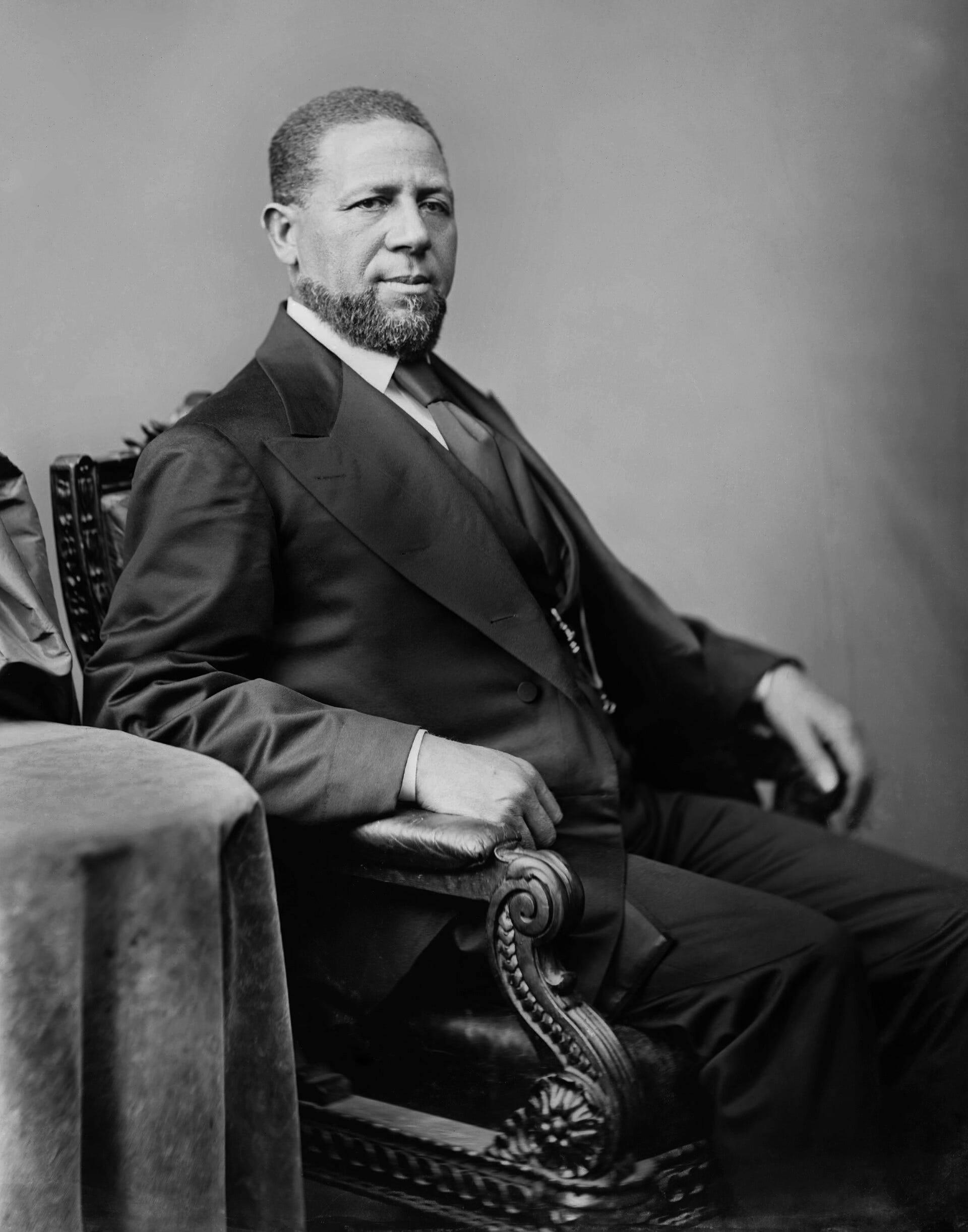
This Day in Legal History: Hiram Rhodes Revels
On February 25, 1870, Hiram Rhodes Revels was sworn in as the first African American to serve in the United States Senate. His election came during the turbulent Reconstruction era that followed the Civil War, a period defined by constitutional change and political uncertainty. Revels represented Mississippi, a former Confederate state that had only recently been readmitted to the Union. In a moment heavy with symbolism, he filled the Senate seat once held by Jefferson Davis, the former president of the Confederacy. The contrast between the two men reflected the profound transformation taking place in American law and government.
Revels’ swearing-in came after the ratification of the 13th, 14th, and 15th Amendments, which abolished slavery, guaranteed equal protection, and protected voting rights regardless of race. His presence in the Senate gave tangible meaning to those constitutional promises. Yet his path to office was not without challenge. Some senators argued that he did not meet the Constitution’s nine-year citizenship requirement, claiming that the Supreme Court’s decision in Dred Scott v. Sandford had denied Black Americans citizenship before the Civil War. Supporters countered that the 14th Amendment had settled the question of citizenship, making Revels eligible to serve. The Senate ultimately voted to seat him, affirming the legal force of the Reconstruction Amendments.
Revels served only a brief term, but his impact was lasting. His election marked a rare window in American history when federal power was actively used to expand civil and political rights in the South. Although Reconstruction would eventually give way to decades of segregation and disenfranchisement, February 25, 1870 stands as a reminder of a constitutional moment when the nation attempted to redefine equality under the law.
The U.S. Securities and Exchange Commission released its first major update to its enforcement manual in eight years, outlining a new vision focused on fairness and transparency. SEC Chairman Paul Atkins described the revisions as overdue and said the agency will now review the manual annually. The updated 115-page guide provides clearer direction on how enforcement investigations will proceed and what options are available to individuals and companies under scrutiny.
One key change involves the Wells process, which notifies potential defendants that SEC staff intend to recommend enforcement action. Under the revised policy, recipients of a Wells notice will have four weeks to submit a written response. After filing that response, they may request a meeting with senior leadership in the Division of Enforcement to argue against pursuing charges or to present their perspective on the case.
Atkins has previously indicated that reforming the Wells process is a priority, emphasizing the need for accurate and carefully considered enforcement actions. Enforcement Division Director Meg Ryan also noted that a persuasive Wells response can influence whether commissioners ultimately approve a case. The manual further reinstates the ability of settling parties to request waivers from automatic industry bars that can follow enforcement actions. In addition, it introduces clearer guidance on how cooperation may reduce penalties and explains how the SEC may coordinate with criminal authorities. Overall, the agency says the revisions aim to clarify how it enforces federal securities laws and strengthen public confidence in the process.
SEC Lays Out New Enforcement Vision In Revised Guidelines - Law360
Paramount Skydance has submitted a revised proposal to acquire Warner Bros. Discovery, as a bidding battle with Netflix continues. The new offer follows the expiration of a seven-day waiver period under WBD’s existing merger agreement with Netflix. For Paramount’s deal to move forward, WBD’s board must first determine that the revised bid qualifies as a “Company Superior Proposal” under the Netflix agreement. After that, a four-business-day match period would need to pass, the Netflix agreement would have to be terminated, and a new definitive agreement would need to be signed with Paramount.
While the board reviews the updated proposal, Paramount said it will keep its tender offer in place and continue urging shareholders to reject what it calls the less favorable Netflix transaction. The rivalry between the bidders has spilled into public statements, with Paramount criticizing the structure of the Netflix deal as potentially reducing shareholder value. Netflix has pushed back, accusing Paramount of mischaracterizing regulatory issues and focusing on appearances rather than results.
WBD confirmed it received the revised bid but reiterated that its current merger agreement with Netflix remains active and that the board still recommends the Netflix deal. Specific terms of Paramount’s updated offer were not disclosed, though it recently added financial safeguards, regulatory commitments, and an offer to cover the breakup fee if WBD exits the Netflix agreement. Netflix’s agreement to acquire WBD’s studio and streaming operations is valued at about $82.7 billion, while Paramount’s competing proposal to purchase the entire company is valued at roughly $108.4 billion.
Paramount Revises WBD Offer As Netflix Bid War Goes On - Law360
A federal judge has temporarily barred prosecutors from freely searching devices seized from a Washington Post reporter during a national security leak investigation. The FBI searched reporter Hannah Natanson’s home in January and took electronic devices as part of a probe into the alleged disclosure of government secrets. Natanson, who has reported on President Donald Trump’s efforts to dismiss large numbers of federal employees, has not been charged with any crime.
U.S. Magistrate Judge William Porter ruled that the government may not conduct an unrestricted review of the seized materials. Instead, he said the court will oversee the examination of the devices to ensure that journalistic protections are respected while still allowing investigators to seek relevant evidence. Porter rejected the Justice Department’s request to let prosecutors carry out a broad, unsupervised search.
Justice Department attorneys had argued that reviewing the materials was essential to a criminal investigation involving national security concerns. They proposed using a separate FBI “filter team” to screen the data and remove irrelevant content before investigators accessed it. The judge’s order reflects an effort to balance press freedom with the government’s authority to pursue evidence in sensitive cases.
US judge blocks search of Washington Post reporter’s devices | Reuters
A California woman is set to testify in Los Angeles that her early use of Instagram and YouTube harmed her mental health, in a closely watched trial against Meta and Google. The plaintiff, identified as Kaley G.M., says she began using YouTube at age six and Instagram at nine, and later struggled with depression and body dysmorphia. Her attorneys argue the companies deliberately designed their platforms to attract and retain young users despite being aware of potential psychological risks.
The case is part of a broader international push to address the impact of social media on children, with some countries already imposing restrictions. Earlier phases of the trial focused on what the companies knew about the effects of their platforms on young users and how they targeted that demographic. Now the proceedings are turning to Kaley’s personal experiences and whether the platforms substantially contributed to her mental health challenges.
To succeed, her legal team must prove that the design or operation of the platforms was a significant factor in causing or worsening her condition. Meta has pointed to her history of family instability and alleged abuse as alternative explanations for her struggles. Her lawyer, however, referenced internal company research suggesting that teens facing difficult circumstances were more likely to use Instagram compulsively.
The lawsuit also challenges features such as autoplay videos, endless scrolling, “like” buttons, and beauty filters, which the plaintiff claims encouraged prolonged use and distorted self-image. YouTube’s defense argues that she did not fully use available safety tools and presented data indicating her recent average viewing time was relatively limited.
Woman suing Meta, YouTube over social media addiction takes the stand at trial | Reuters


