


We’ve launched Minimum Competence CLE, and our first course is now available completely free. Researching Federal Tax Issues After Loper Brightlooks at how the Supreme Court’s decision ending Chevron deference changes the way lawyers should research and evaluate Treasury regulations, IRS guidance, and other federal tax authorities.
Take the course and earn CLE credit at cle.minimumcomp.com.
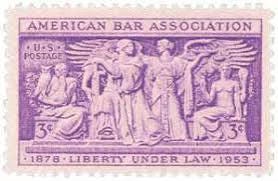
This Day in Legal History: The American Bar Association Is Founded
On August 21, 1878, seventy-five lawyers from twenty-one states gathered in Saratoga Springs, New York, and founded the American Bar Association. The stated mission had all the ambition—and word count—you would expect from a nineteenth-century professional organization: “the advancement of the science of jurisprudence, the promotion of the administration of justice, and a uniformity of legislation throughout the country.”
James Overton Broadhead, a Missouri lawyer, became the ABA’s first president. And the idea apparently had some appeal. Within a year, the organization had grown from its original 75 members to nearly 300.
It is worth remembering just how different the legal profession looked at the time. There were few meaningful licensing standards, legal education varied enormously from one place to another, and there was nothing resembling a national voice for lawyers. “The bar,” such as it was, was largely a collection of state and local institutions operating under their own rules and traditions.
The ABA helped change that.
Over the next century, it became one of the principal forces behind the professionalization of American law. It developed model ethics standards, eventually producing what became the Model Rules of Professional Conduct that form the basis for lawyer regulation in most states. It became enormously influential in law-school accreditation. And for decades, its assessments of federal judicial nominees carried substantial weight in Washington.
In other words, the ABA became something close to an institutional center of gravity for a profession that, by design, does not really have one. Whether that has always been a good thing is a separate question—and there is certainly no shortage of lawyers willing to debate it.
But the date is particularly interesting this year because the ABA is once again squarely in the headlines.
Just this week, we covered the organization’s lawsuit challenging the administration’s executive orders targeting major law firms. The ABA’s argument, at bottom, is that the government is attempting to use its power to punish lawyers and firms for representing clients or causes the administration dislikes—and, in doing so, pressure the broader legal profession into falling in line.
There is a rather striking symmetry to it.
An organization founded nearly 150 years ago in part to promote “the administration of justice” now finds itself in court arguing that the independence of the lawyers responsible for administering that system is itself under threat.
One can agree or disagree with the ABA’s politics—and plenty of people do. But the principle underlying its founding is harder to dismiss. A legal profession capable of governing itself, enforcing its own standards, and, when necessary, telling political power “no” is not merely a professional convenience. It is part of the architecture of the rule of law.
Of course, independence is only valuable if lawyers actually use it. Which brings us neatly back to today’s opening quote from Charles Hamilton Houston: what lawyers choose to do with the power and independence their profession gives them matters enormously.
Nearly 150 years after those 75 lawyers met in Saratoga Springs, that question has hardly become less relevant.
Another key test case in the massive social-media litigation has evaporated: a New Jersey teenager has voluntarily dropped her lawsuit against Meta, Google, and Snap, just weeks before it was set for trial in October. The 15-year-old, identified in court records only by her initials, had alleged that the companies’ platforms fueled addiction, depression, and self-harm. Notably, her lawyer said she received no payment to walk away—she simply wanted, in the attorney’s words, to “resume her life.” TikTok had earlier settled her claims separately. If you’ve been following along, this should sound familiar: back in July, we covered a different teen plaintiff, in a bellwether case against Meta, dropping his claims days before trial. Now it’s happened again. Here’s why it matters strategically. These are “bellwether” cases—representative individual lawsuits, plucked from a pool of thousands, tried first so both sides can gauge how juries will react and calibrate settlement value. When a marquee bellwether disappears right before trial, it removes a data point everyone was watching. And the reason this one vanished is worth sitting with: not a secret settlement, but a teenager deciding she didn’t want to spend her life as the face of a landmark lawsuit, subjected to discovery into her mental health and cross-examination about her worst moments. The significance is a quiet illustration of a real tension in mass litigation—the individual plaintiffs who anchor these cases are often young and vulnerable, and the litigation itself exacts a toll that can lead them to walk away. Meanwhile, the states’ cases, like the 29-state trial underway in California, march on without that problem, because a state attorney general doesn’t have a childhood to protect.
US teen drops lawsuit against Meta, Google, Snap ahead of trial | Reuters
Benzinga · WJLA
The Justice Department is seeking to question the FBI officials who carried out the 2022 search of Mar-a-Lago—a striking move that turns the machinery of investigation around to point at the investigators. According to sources, the requests are coming from a team working under Joe diGenova, a Trump ally now overseeing a Florida-based probe, and the investigation is reportedly built on the theory that Trump was the victim of a criminal conspiracy against his rights. Let’s recall the facts, because they matter. The 2022 search was authorized by a federal judge and turned up more than 100 classified documents at Mar-a-Lago, including highly sensitive national-security records. That led to charges against Trump and two associates for retaining classified material and obstruction. The case never reached a jury on the merits—it was dismissed after a judge concluded the special counsel, Jack Smith, had been unlawfully appointed, and the DOJ dropped its appeal after Trump won the 2024 election. So here’s the inversion: agents who executed a lawful, court-approved search warrant, and found exactly the classified documents the warrant anticipated, are now themselves the subjects of scrutiny, under a theory that pursuing Trump was itself a crime against him. The significance is about the independence of law enforcement and the chilling effect of retribution. When agents who followed a valid warrant can be investigated years later for having done so—by a team led by a political ally of the person they investigated—it sends a message to every FBI agent and prosecutor about the personal risk of investigating the powerful. It’s the same thread we pulled on yesterday with the Comey prosecution: the concern that federal law-enforcement power is being turned to punish the president’s perceived enemies rather than to pursue crime.
DOJ seeks to question FBI officials tied to search of Trump Mar-a-Lago estate, sources say | Reuters
Washington Post · Yahoo News
And finally, a fight is heating up that will help define who owns the raw material of the AI era: your voice. In federal court in Illinois, a group of journalists, podcasters, voice actors, and audiobook narrators are suing a who’s-who of tech—Apple, Amazon, Meta, Microsoft, Nvidia, Samsung, Alphabet, Adobe, and the AI voice company ElevenLabs—alleging the companies harvested their “voiceprints” from publicly available audio recordings and used them to train commercial AI voice models without consent. This week, the two sides squared off over the companies’ motions to dismiss. The legal engine here is a powerful Illinois statute called BIPA, the Biometric Information Privacy Act—the same law that produced a $650 million settlement from Facebook over face-tagging. BIPA treats biometric identifiers, including voiceprints, as something a company can’t collect or use without informed consent, and it comes with statutory damages and a private right of action, which makes it a serious threat. The core dispute is about harm. The tech companies argue the plaintiffs can’t point to any concrete injury—no cloned voice showed up in a product they can identify—so there’s nothing to sue over. The plaintiffs counter that the harvesting itself is the harm: BIPA was designed to stop the nonconsensual capture of your biometric identity in the first place, whether or not it later surfaces in a product. The significance is that this is a preview of the defining legal question of AI training: the models are built on enormous quantities of human-created data—our voices, our writing, our faces—often scraped without asking, and the law is scrambling to decide whether that scraping is a harm in itself. Old privacy statutes like BIPA are becoming the sharpest tools plaintiffs have, and how these motions come out will shape whether the people whose voices train the machines have any say at all.
Lawyers square off in fight over voice data used to train AI | Reuters
MacDailyNews · Crypto Briefing


