


This Day in Legal History: Schenck v. United States
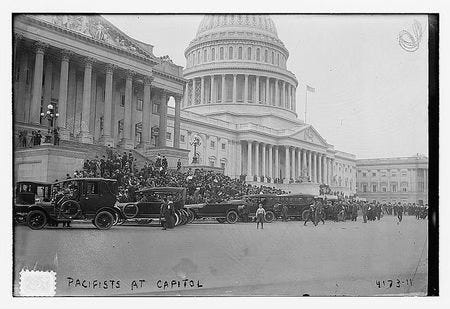
On January 9, 1919, the U.S. Supreme Court began hearing oral arguments in Schenck v. United States, a foundational case in American free speech law. Charles Schenck, the general secretary of the Socialist Party, had been convicted under the Espionage Act of 1917 for distributing leaflets urging resistance to the military draft during World War I. The case raised critical constitutional questions about the boundaries of the First Amendment in times of national crisis. Schenck’s defense argued that his actions were protected political speech. However, the government maintained that his words posed a threat to wartime recruitment and national security.
The Court would go on to unanimously uphold Schenck’s conviction in a decision authored by Justice Oliver Wendell Holmes Jr. Although the ruling came in March 1919, the arguments heard on January 9 and 10 set the stage for what became a pivotal moment in legal history. In his opinion, Holmes introduced the “clear and present danger” test, writing that the First Amendment does not protect speech that creates a clear and present danger of causing substantive evils Congress has a right to prevent. He famously noted that the most stringent protection of free speech would not protect a man falsely shouting fire in a crowded theater.
This standard marked the beginning of a more nuanced approach to free speech jurisprudence, where context and consequences mattered. It reflected the tensions between civil liberties and national security during wartime. Although later cases would refine or move away from the “clear and present danger” test, Schenck remains a foundational precedent in American constitutional law. The case also marked the rise of Holmes as a central figure in shaping First Amendment doctrine.
The U.S. Supreme Court is expected to issue at least one opinion this Friday, potentially including a highly anticipated decision on the legality of tariffs imposed by President Donald Trump. The case represents a significant test of presidential authority, especially in the context of Trump’s use of emergency powers under the 1977 International Emergency Economic Powers Act. Trump imposed these tariffs after returning to office in 2025, targeting nearly all U.S. trading partners and citing national emergencies such as trade deficits and drug trafficking, including fentanyl, as justification.
During oral arguments in November, justices from both ideological sides expressed skepticism about the legal basis for the tariffs. Lower courts previously ruled that Trump had exceeded his authority, prompting his administration to appeal. Trump has defended the tariffs as strengthening the U.S. economy and warned that a ruling against them would severely harm the country.
The case was brought by affected businesses and a coalition of 12 states—mostly led by Democrats—arguing that the tariffs were unlawfully broad. The outcome could have major implications for global trade and executive power. The Supreme Court, which currently holds a 6-3 conservative majority, is also considering other significant cases, including a challenge to part of the Voting Rights Act and a First Amendment dispute over a Colorado ban on “conversion therapy” for LGBT minors.
Supreme Court set to issue rulings as Trump awaits fate of tariffs | Reuters
A federal appeals court has ruled in favor of New York Yankees star Aaron Judge and the Major League Baseball Players Association, rejecting a Long Island man’s attempt to trademark the phrases “All Rise” and “Here Comes The Judge.” The U.S. Court of Appeals for the Federal Circuit upheld the U.S. Patent and Trademark Office’s decision that Michael Chisena’s filings infringed on Judge’s common law trademark rights.
Chisena filed for the trademarks in 2017 during Judge’s breakout rookie season, claiming he planned to use them on clothing. He denied any connection to professional sports and insisted he had never seen Judge play. However, the USPTO’s appeals board cast doubt on his good faith, noting the suspicious timing of the filings and their close link to Judge’s rising fame.
Judge and the MLBPA opposed the applications in 2018, arguing they would likely confuse consumers by associating the phrases with Judge’s well-known public persona. They emphasized that the baseball star’s last name, with its clear legal overtones, naturally lent itself to those phrases, which had become synonymous with him early in his career.
The appeals court affirmed that Judge had built strong common law trademark rights through commercial use, and that Chisena’s applications lacked merit. Chisena, who represented himself in court, also lost a related claim involving an image of a gavel and scales over a baseball diamond.
Yankees’ Judge clinches win in ‘All Rise,’ ‘Here Comes The Judge’ trademark case | Reuters
Luigi Mangione, accused of killing UnitedHealth CEO Brian Thompson in a high-profile Manhattan shooting in December 2024, is set to appear in federal court Friday to challenge the possibility of facing the death penalty. Mangione, 27, has pleaded not guilty to federal charges including murder, stalking, and firearms offenses, and remains in custody while awaiting trial.
His attorneys will argue before U.S. District Judge Margaret Garnett that prosecutors failed to meet legal standards for the firearm-related murder charge—the only count that could result in a death sentence. They are also seeking to dismiss the entire indictment, claiming Mangione’s constitutional rights were violated, which they argue should disqualify the government from pursuing capital punishment.
While New York outlawed the death penalty in 2004, the ban applies only to state prosecutions. Because Mangione is being tried in federal court, the death penalty remains a legal possibility. He also faces separate charges at the state level, where a conviction could carry a life sentence.
Judge Garnett has yet to decide on either the motion to dismiss the death-eligible charge or the broader request to throw out the indictment. No trial date has been set for the federal or state proceedings.
Mangione, suspect in health insurance CEO murder, fights death penalty charge in court | Reuters
Vice President JD Vance announced the creation of a new assistant attorney general role focused on fighting fraud involving taxpayer money. The position will have nationwide jurisdiction and is intended to strengthen federal oversight and enforcement against misuse of public funds. Vance stated that a nominee for the role will be named in the coming days, signaling the administration’s commitment to addressing financial misconduct within programs funded by taxpayers. The announcement was made during a White House press briefing, reflecting a broader effort to enhance government accountability—at least, ostensibly.
Vance announces new assistant attorney general role to combat taxpayer fraud | Reuters
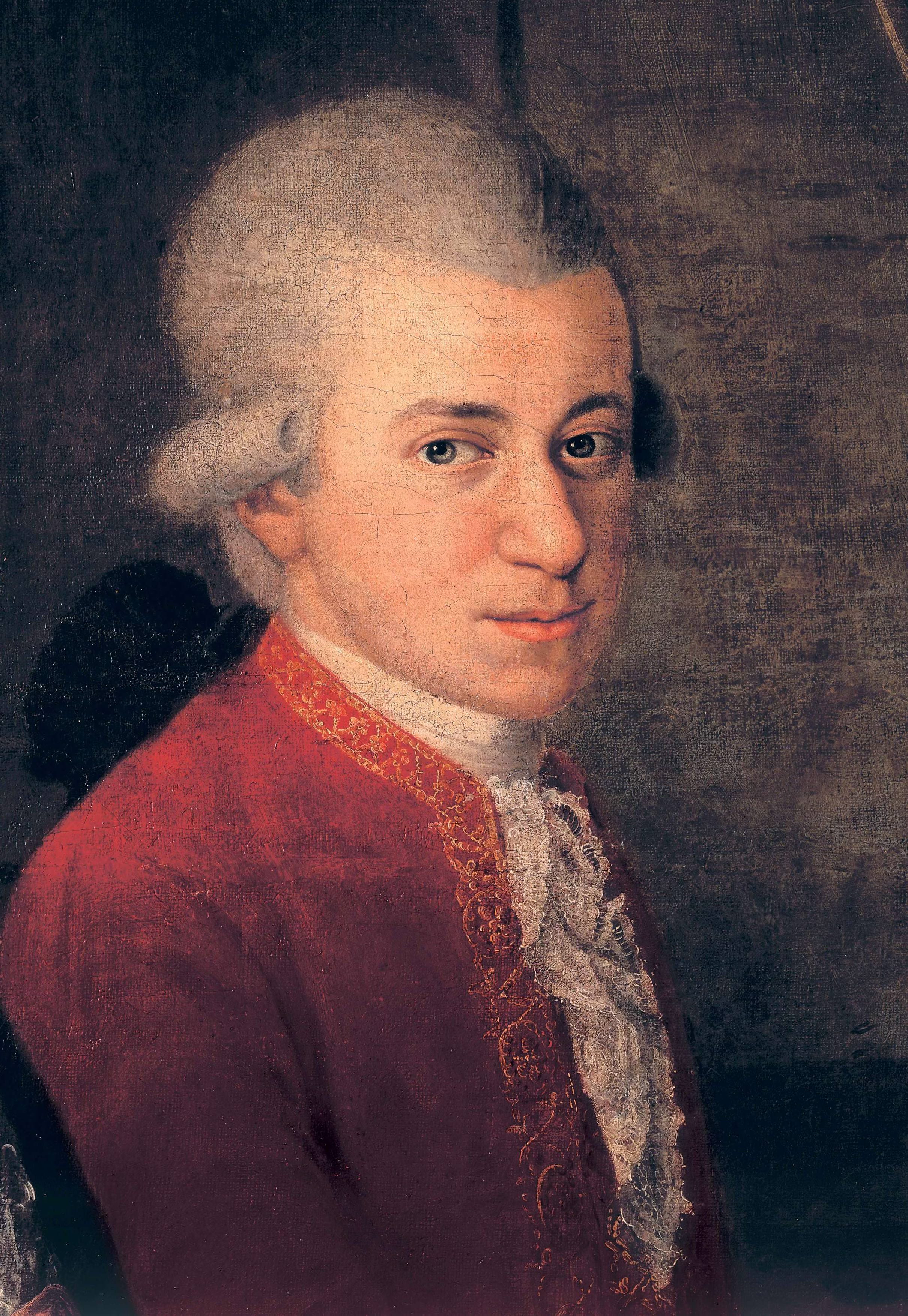
This week’s closing theme is by Wolfgang Amadeus Mozart.
This week’s closing theme features one of the most charming and instantly recognizable pieces in the classical repertoire: the first movement of Wolfgang Amadeus Mozart’s Piano Sonata No. 11 in A major, K. 331 – “Andante grazioso.” Composed around 1783, likely in Vienna or Salzburg, this sonata showcases Mozart’s extraordinary ability to blend elegance, wit, and emotional nuance with apparent ease. The opening movement is not a fast-paced sonata-allegro form, as one might expect, but rather a gentle theme and variations, a structure that allows Mozart to explore the same musical idea through shifting textures, moods, and embellishments.
“Andante grazioso” lives up to its title—graceful and moderately paced, it opens with a lilting, almost courtly theme that feels both poised and playful. As the variations unfold, Mozart’s genius becomes more apparent: he adds rhythmic complexity, dynamic contrasts, and increasingly virtuosic flourishes, while always keeping the original melody in sight. The movement is accessible but never simplistic, classical in form yet deeply expressive.
K. 331 is the same sonata that ends with the famous “Rondo alla Turca,” but it is in this opening Andante that we see Mozart at his most refined and imaginative. He draws the listener in not through drama, but through balance, warmth, and an almost conversational intimacy between performer and listener. This piece has been beloved for centuries, not only by pianists but also by those new to classical music.
As we close the week, the delicate ornamentation and unhurried beauty of “Andante grazioso” offers a kind of musical exhale—a moment of elegance and clarity in contrast to the noise of modern life. It’s a quiet reminder of why Mozart remains one of the most enduring voices in Western music.
Without further ado, Mozart’s Piano Sonata No. 11 in A major, K. 331 – “Andante grazioso” – enjoy!


