


This Day in Legal History: Madison Introduces the Bill of Rights
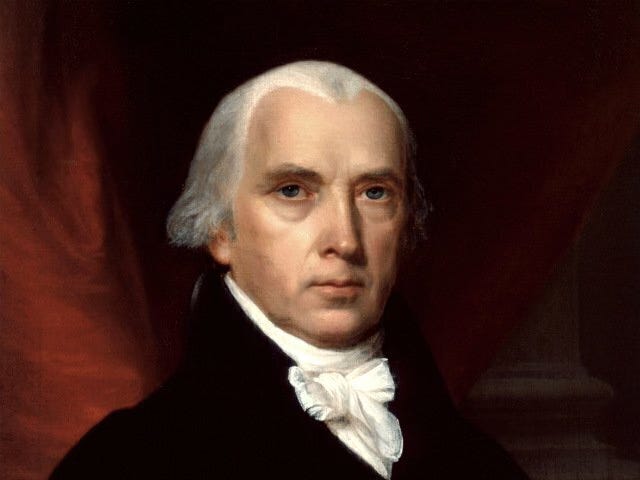
On this day in 1789, James Madison rose from his seat in New York’s Federal Hall — then the temporary capital of the new federal government — and gave the speech in which he introduced a list of amendments to the Constitution that we now know as the Bill of Rights. Madison had been, until quite recently, a skeptic of attaching a bill of rights to the federal Constitution: he had argued at the Constitutional Convention and in The Federalist that the structure of enumerated and separated powers was a better protection of liberty than a “parchment barrier” of textual rights, and he worried that any enumeration would be read to imply that whatever was not enumerated was not protected. What changed his mind was politics.
The Antifederalist opposition in several states had made ratification conditional on amendments protecting individual rights, and Madison — by then a member of the First Congress — concluded that introducing such amendments himself was the surest way to defuse a broader constitutional convention movement that might unravel the work of 1787. The list he proposed on June 8 was longer and somewhat different from what eventually became the Bill of Rights; the House debated it through the summer, passed seventeen amendments in August, the Senate reduced them to twelve in September, and ten of those — the ones we now call Amendments I through X — were ratified by the states on December 15, 1791. June 8 is the date a reluctant convert stood up and made the case that has carried American constitutional law ever since: the proposition that the government’s structural restraint is necessary but not sufficient, and that the rights of speech, conscience, due process, and the rest deserve to be written down where everyone can read them.
Chief Judge John J. McConnell, Jr., of the U.S. District Court for the District of Rhode Island on Friday vacated four U.S. Citizenship and Immigration Services policies that had, since late last year, frozen work permits, green-card adjudications, naturalization, and asylum claims for nationals of roughly 39 countries on the second Trump administration’s travel ban list. The case, Dorcas International Institute of Rhode Island v. USCIS, No. 1:26-cv-00132, was brought by a coalition of immigrant-service organizations and labor unions. Judge McConnell held that all four policies — a “Benefits Hold” freezing affirmative benefits for travel-ban country nationals, a Global Asylum Hold halting asylum processing across the board regardless of country of origin, a Comprehensive Re-Review Policy requiring USCIS to re-examine previously approved benefits, and a separate adjudicator-instruction policy treating travel-ban country origin as a negative factor — are unlawful under the Administrative Procedure Act.
The legal hook is familiar APA territory: the agency, McConnell concluded, failed to provide a reasoned explanation for the freezes and failed to account for the substantial reliance interests of hundreds of thousands of pending applicants. What makes this ruling stand out is the remedy. Other district courts that had blocked these policies in the last six months issued preliminary injunctions limited to named plaintiffs; McConnell vacated the policies themselves, which under standard APA practice means they cease to operate nationwide. That puts USCIS in the position of either rescinding the policies, going back to the drawing board with proper rulemaking, or appealing to the First Circuit and trying to get the vacatur stayed. Expect movement on all three fronts this week.
US Judge Strikes Down Trump Policies Targeting Immigrants From 39 Countries | US News
U.S. District Judge Leonie Brinkema of the Eastern District of Virginia entered a temporary restraining order on Friday blocking the Trump administration’s $1.8 billion “Anti-Weaponization Fund” from disbursing any money while the underlying lawsuit proceeds. The fund — created by executive order earlier this year and funded out of a settlement the administration brokered in the Trump-IRS litigation we covered in early June — was meant to compensate people the administration described as victims of the Biden Justice Department’s “weaponization” of federal law enforcement, with the first contemplated payments going to defendants and witnesses from the January 6 prosecutions. Plaintiffs include former DOJ attorney Andrew Floyd and other former federal prosecutors who argue, in essence, that the fund is an unauthorized expenditure of public money: Congress never appropriated it, the settlement that supposedly funds it is itself under judicial review for whether the United States was actually adverse to the President in his personal capacity, and the program’s payout criteria are based on political characterizations of past prosecutions rather than any neutral standard.
Judge Brinkema’s order, narrowly drawn to “ensure that no funds are irreversibly disbursed,” set a June 12 hearing on whether the freeze should be extended into a preliminary injunction. By the end of last week the situation had escalated further: on June 5 the Justice Department told two federal judges, in writing, that it would stop work on the fund altogether and that the lawsuits challenging it are now moot. That representation will be tested at this Friday’s hearing, because the plaintiffs are not satisfied with a unilateral DOJ promise and want a binding court order before they go away. Watch for what Brinkema does with that disagreement on Friday.
A divided Seventh Circuit panel on Friday upheld Indiana’s law restricting who may attend an execution at the Indiana State Prison, holding that the First Amendment does not give reporters a right of access to be present at the execution itself. Judge Michael Scudder wrote the 2-1 majority. The plaintiffs — the Associated Press, the Indiana Capital Chronicle, Gannett, WISH-TV, and TEGNA, represented by the Reporters Committee for Freedom of the Press — had argued that the long line of Supreme Court cases recognizing a First Amendment right of press and public access to criminal proceedings, from Richmond Newspapers forward, extends to the carrying out of capital sentences, particularly given Indiana’s recent resumption of executions after a long pause and a 2024 statute that omitted journalists from the list of permitted witnesses. The panel disagreed.
The majority emphasized that Indiana’s witness list — the warden, execution staff, the prison physician, a chaplain, the prisoner’s spiritual adviser, up to eight family members of the victim, and up to five unspecified additional witnesses — leaves journalists free to interview those who did attend, report on every other aspect of the proceeding, and comment on the state’s choice to impose or carry out the sentence, and that there is no constitutional difference between watching the execution and reporting on it secondhand. The opinion’s most striking passage, candidly weighed against the press claim: allowing “uninvited strangers with no immediate connection to the underlying crime” to watch a prisoner die “risks offending the dignity of their final moments.” The dissent argued the press’s structural role in informing public deliberation over the death penalty depends on first-hand observation. The split sets up a possible petition for rehearing en banc and, in the longer run, a circuit-split-ready vehicle if other circuits go the other way.
7th Circ. Says Ind. Can Bar Press From Attending Executions | Law360


