


This Day in Legal History: Wong Kim Ark
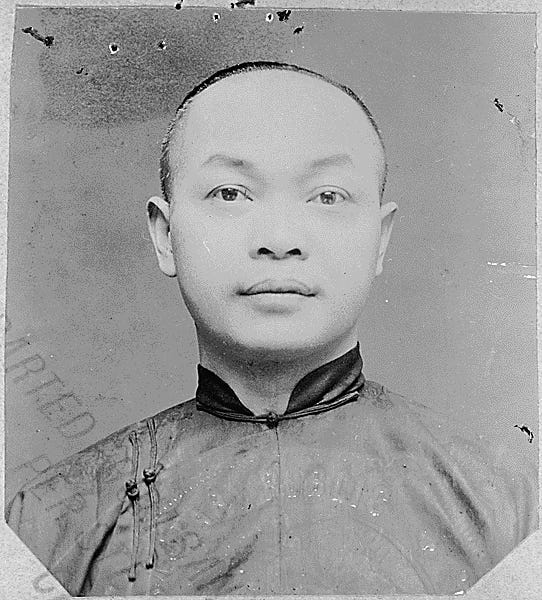
On January 14, 1898, the Supreme Court of the United States issued its landmark decision in United States v. Wong Kim Ark, firmly establishing the doctrine of birthright citizenship under the Constitution.
The case arose after Wong Kim Ark, born in San Francisco to Chinese parents who were not U.S. citizens, was denied reentry to the country following a trip abroad. Federal officials argued that because his parents were subjects of the Emperor of China and barred from naturalization, Wong Kim Ark was not a U.S. citizen.
The Court rejected that position, holding that citizenship is determined by place of birth, not by the nationality or immigration status of one’s parents. In a 6–2 decision, the Court relied heavily on the text and history of the Fourteenth Amendment.
The majority emphasized that the Amendment codified the common-law rule that nearly all persons born on U.S. soil are citizens. This interpretation directly limited the government’s ability to deny citizenship based on race or ancestry.
The decision came at a time of intense anti-Chinese sentiment and restrictive immigration laws, including the Chinese Exclusion Act. By ruling in Wong Kim Ark’s favor, the Court drew a clear constitutional boundary around congressional power over citizenship.
The case has since served as the cornerstone for modern citizenship law in the United States. It remains one of the most frequently cited precedents in debates over immigration, nationality, and constitutional identity.
The Supreme Court of the United States is expected to release one or more decisions as it resumes issuing opinions, while several major cases remain unresolved. Among the most closely watched is a challenge to sweeping tariffs imposed by President Trump. The justices typically do not announce in advance which cases they will decide, adding uncertainty to each decision day. The tariffs case, argued in November, raises significant questions about the scope of presidential authority and its economic consequences worldwide.
Trump relied on a 1977 emergency powers statute to justify tariffs on nearly all U.S. trading partners, framing trade deficits and drug trafficking as national emergencies. During oral arguments, both conservative and liberal justices appeared skeptical that the statute authorized such broad trade measures. Lower courts have already ruled that Trump exceeded his authority, and his administration is now seeking reversal. The lawsuits were brought by affected businesses and a coalition of states, most led by Democrats. Other pending cases involve voting rights, religious liberty, campaign finance limits, the firing of a Federal Trade Commission official, and the legality of conversion therapy bans. Together, these disputes reflect a Court grappling with the limits of executive power and regulatory authority.
Supreme Court set to issue rulings, with Trump tariffs case still pending | Reuters
Conservative justices on the Supreme Court appeared inclined to uphold state laws that bar transgender athletes from competing on female sports teams. The Court heard lengthy arguments in cases from Idaho and West Virginia, where lower courts had ruled in favor of transgender students challenging the bans. A majority of the justices expressed concern about adopting a nationwide rule amid ongoing debate over whether medical treatments can eliminate sex-based athletic advantages. Conservative members of the Court emphasized fairness and safety in women’s sports, while liberal justices largely signaled support for the transgender challengers. The states argued that their laws lawfully classify athletes by biological sex and are necessary to preserve equal athletic opportunities for women and girls. Lawyers for the challengers contended that the bans discriminate based on sex or transgender status in violation of constitutional equal protection and federal education law. The Trump administration defended the state laws, urging the Court to leave policy decisions to legislatures rather than judges. The outcome could have far-reaching effects beyond sports, influencing other restrictions on transgender people in public life. A decision is expected by the end of June.
US Supreme Court conservatives lean toward allowing transgender sports bans | Reuters
A federal judge has ruled that Cornell University, Georgetown University, and the University of Pennsylvania must continue defending against a lawsuit alleging collusion in financial aid practices. The case claims that elite universities worked together to limit competition and give preferential treatment to wealthier applicants. U.S. District Judge Matthew Kennelly rejected the schools’ efforts to dismiss the lawsuit, finding enough evidence for the claims to proceed to trial. The plaintiffs argue that the universities violated federal antitrust law over two decades by breaching promises not to consider applicants’ financial circumstances. Several other prominent universities previously settled similar claims for a combined total of nearly $320 million, though the remaining defendants deny any wrongdoing. The lawsuit represents more than 200,000 current and former students seeking substantial damages. The judge pointed to evidence suggesting the schools coordinated financial aid policies to avoid competing against one another. He also concluded that the plaintiffs properly defined a nationwide market for elite private universities and filed their claims within the allowable time frame. The decision clears the way for a jury to determine whether the schools unlawfully inflated the cost of attendance.
Cornell, Georgetown, UPenn must face lawsuit over financial aid | Reuters
The British Broadcasting Corporation has moved to dismiss Donald Trump’s $10 billion lawsuit stemming from its editing of a January 6, 2021 speech. The broadcaster argues that a Florida court lacks authority over the case because the program was not broadcast in that state. It also contends Trump cannot show he suffered harm, noting that he was re-elected after the documentary aired. Trump alleges the BBC misleadingly combined excerpts of his speech in a way that implied he encouraged supporters to storm the U.S. Capitol, while excluding remarks calling for peaceful protest. The lawsuit asserts violations of Florida’s deceptive and unfair trade practices law and seeks billions of dollars in damages across two claims. The BBC has acknowledged the editing error and apologized but maintains the lawsuit is legally flawed. In court filings, the broadcaster argues Trump failed to plausibly allege “actual malice,” a requirement for defamation claims brought by public officials. The BBC also disputes Trump’s claim that the documentary was available to U.S. audiences via streaming platforms. It has asked the court to pause discovery while the dismissal motion is pending, citing unnecessary expense if the case is thrown out.
BBC seeks to have Trump’s $10 billion lawsuit dismissed | Reuters


