



This Day in Legal History: Morgan v. Virginia
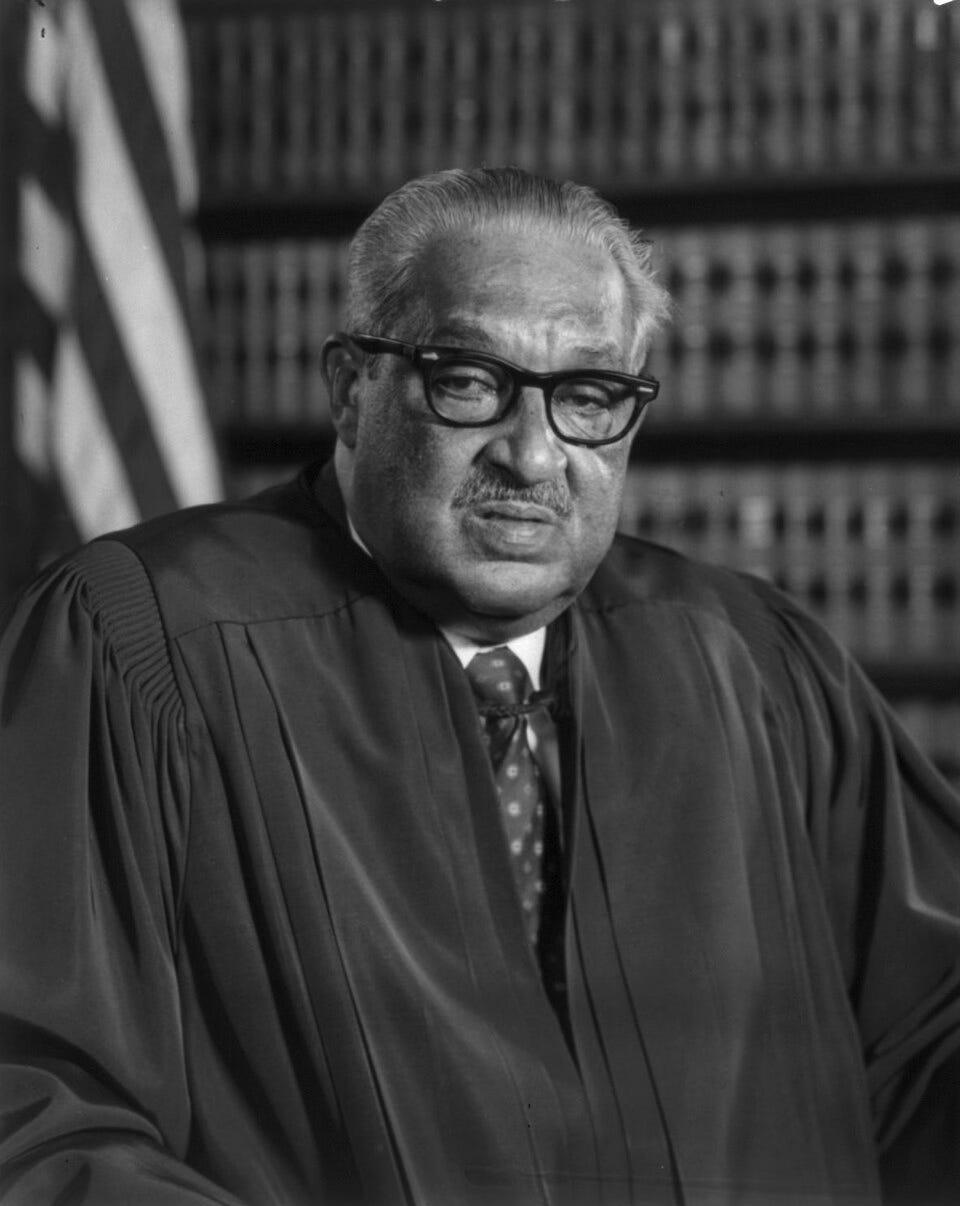
On December 3, 1946, the NAACP filed the pivotal case Morgan v. Virginia, challenging state-enforced segregation on interstate buses. The case arose after Irene Morgan, a Black woman, refused to give up her seat to a white passenger on a Greyhound bus traveling from Virginia to Maryland in 1944. Arrested and fined under Virginia law, Morgan appealed her conviction with the support of the NAACP Legal Defense Fund. Thurgood Marshall, who would later become the first Black Supreme Court Justice, argued the case before the U.S. Supreme Court.
The legal argument hinged on the Commerce Clause of the U.S. Constitution, which grants Congress—not individual states—the power to regulate interstate commerce. Marshall argued that Virginia’s segregation law placed an undue burden on interstate travel and was thus unconstitutional. In a 7–1 decision issued in June 1946, the Court agreed, holding that states could not impose segregation on interstate passengers.
Though the ruling did not end segregation on all public transportation, it was a critical legal breakthrough. It limited the reach of Jim Crow laws and marked one of the earliest Supreme Court victories for the civil rights movement. The decision also served as a foundation for future rulings, including Boynton v. Virginia (1960), and inspired direct action like the Freedom Rides of the early 1960s.
Morgan v. Virginia helped establish a constitutional framework for challenging racially discriminatory laws under federal authority. It demonstrated the NAACP’s strategy of incremental legal challenges and the importance of judicial victories in the broader civil rights struggle.
A federal judge has blocked the Trump administration from enforcing a law that would strip Medicaid funding from Planned Parenthood and similar organizations in 22 states. U.S. District Judge Indira Talwani ruled that the provision, part of the Republican-backed One Big Beautiful Bill Act, likely violates the Constitution’s Spending Clause by retroactively imposing ambiguous conditions on state Medicaid participation. The law bars Medicaid funding for nonprofit reproductive health providers that offer abortions and received over $800,000 in Medicaid funds during fiscal year 2023.
Talwani issued a preliminary injunction, temporarily halting the law’s enforcement in the states that sued, including California, New York, and Connecticut, along with the District of Columbia. However, she stayed her ruling for seven days to allow the Trump administration time to appeal. The judge warned that enforcing the law would increase healthcare costs and reduce access to preventive services like birth control and screenings.
Planned Parenthood welcomed the ruling, calling the law unconstitutional and harmful. The organization reported that at least 20 health centers have closed since the law began taking effect in September. States argued the law forced an unexpected change to Medicaid operations and undermined their authority to choose eligible healthcare providers.
US judge blocks Trump from cutting Medicaid funding for Planned Parenthood in 22 states | Reuters
The Trump administration has dismissed at least seven immigration judges from New York City’s immigration court, located at 26 Federal Plaza, a central site for immigration enforcement and protests. This move is part of a broader pattern under President Trump’s second term, with over 100 immigration judges reportedly removed nationwide since January, according to the American Immigration Lawyers Association. Critics say these firings are worsening backlogs at a time when arrests and deportations are increasing.
Immigration judges operate under the Department of Justice, not the independent federal judiciary, and are considered inferior officers who can be dismissed by the president or attorney general. The Justice Department declined to comment on the terminations. Among those fired was Amiena Khan, the court’s assistant chief immigration judge and former president of the National Association of Immigration Judges, who had previously opposed efforts to dismantle the judges’ union.
Khan and six other judges, all women, had their names removed from the court’s staff directory, with five appointed by Democratic administrations and two during Trump’s first term. These dismissals follow similar firings in San Francisco, Boston, and elsewhere. One former judge in Ohio has filed a lawsuit, alleging her termination was due to discrimination based on sex, national origin, and political beliefs.
Trump administration fires numerous New York immigration judges | Reuters
Rahmanullah Lakanwal, the suspect in a deadly Washington, D.C. ambush that killed one National Guard member and critically injured another, pleaded not guilty during his first court appearance. He participated remotely from a hospital bed and was ordered held without bond due to the violent nature of the attack, which occurred just blocks from the White House. The judge cited the “sheer terror” of the incident in denying release.
Prosecutors allege that Lakanwal, a 29-year-old Afghan national, traveled from Washington state to D.C. with the intent to carry out the shooting. He reportedly opened fire while shouting “Allahu akbar,” fatally shooting 20-year-old Sarah Beckstrom and injuring 24-year-old Andrew Wolfe, both West Virginia National Guard members deployed to aid law enforcement. Lakanwal was subdued by military personnel and a Secret Service officer after being shot.
He faces four charges, including first-degree murder and assault with intent to kill while armed. Lakanwal’s defense highlighted his lack of criminal history, but prosecutors emphasized the premeditated nature of his actions. His immigration status has drawn political attention—he entered the U.S. under a resettlement program launched during the Biden administration and was granted asylum under Trump, making the case a focal point in renewed debates over immigration policy.
Washington shooting suspect pleads not guilty to murder, ordered detained | Reuters


